
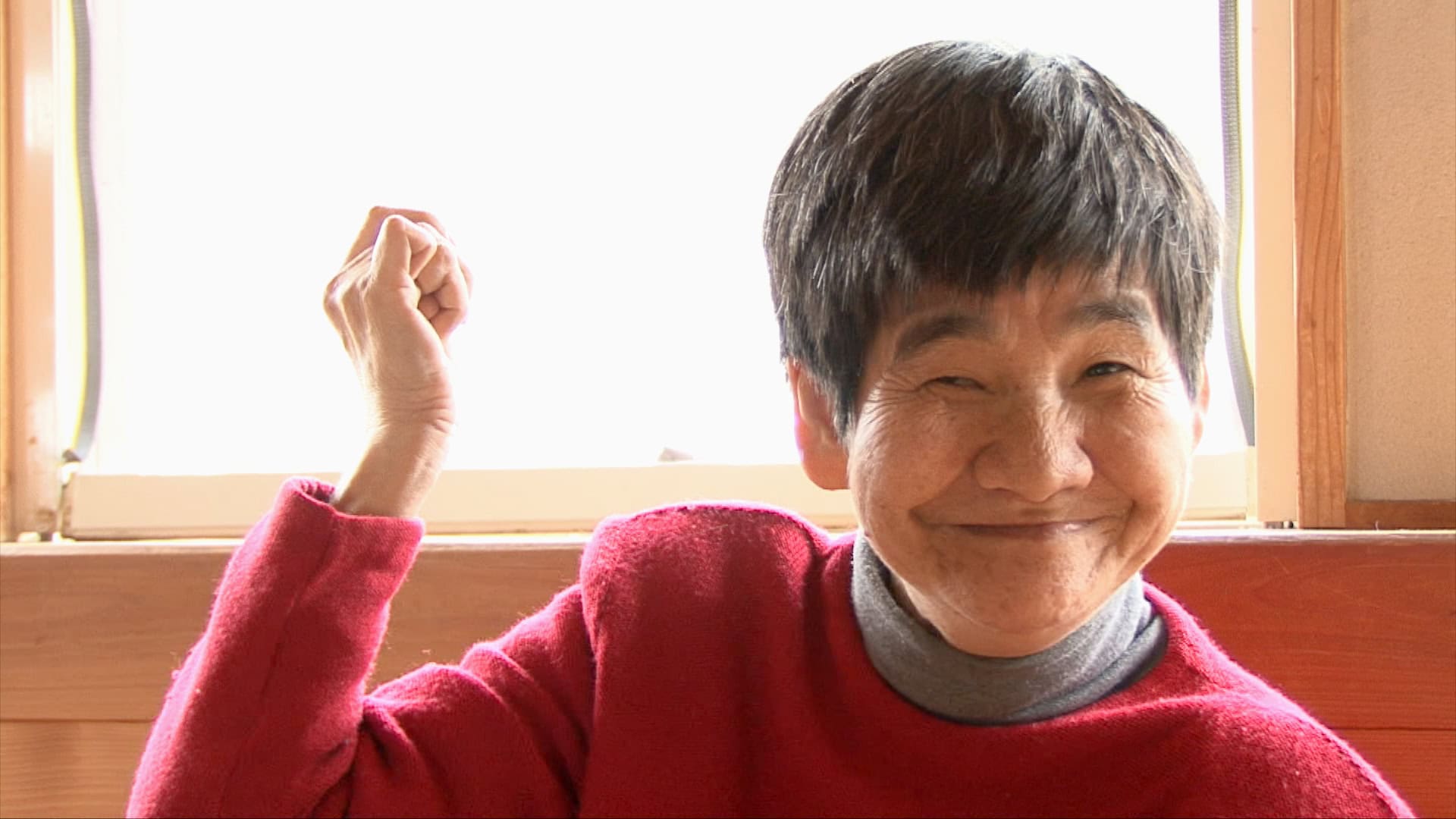
Hara Kazuo’s Minamata Mandala is a testament to how the body becomes politicized when it’s subjected to the ruinous practices of industry. The documentary’s overall effect is similar to Claude Lanzmann’s Shoah for its painstaking interest in the aftermath of human-made catastrophe, and its refusal to sentimentalize or exploit those whose lives have been inexorably altered—and in many cases defined—by corporate malfeasance and corruption.
Minamata disease, a neurological disorder caused by mercury poisoning, gets its name from the Japanese city where it was first discovered. Starting in the 1930s, a chemical factory owned by Chisso Corporation began releasing toxic chemicals into industrial wastewater, and five years after the factory, in 1951, changed the co-catalyst in its acetaldehyde-producing system, of which mercury is a byproduct, the first case of what is now known as the disease was detected.
Divided into three parts, Minamata Mandala begins, following a brief overview of the disease’s timeline, in 2004, with various members of Japan’s environmental ministry listening to community grievances. Members in the audience accuse them of murder, and of neglecting to take proper responsibility for the deadly errors made years ago. While Koike Yuriko, the country’s Environment Minister, bows in apology, it’s a paltry display of compassion, as the government hasn’t created any wide-ranging plan for diagnosing or treating the disease.
As in his no less confrontational documentary classic The Emperor’s Naked Army Marches On, Hara’s focus remains on how an atrocity slowly unfolds and is perpetuated, fanning a maddening sense of injustice. Across a series of observational scenes in which we hear from doctors, professors, and scientists, we learn that the strict set of requirements for registering an official case of the disease means that very few patients are properly diagnosed with it.
Hara stitches scenes together with a certain objective distance, his camera maintaining a seemingly unblinking stare as, for example, professors deliver papers about abnormalities. The filmmaker, who spent 15 years making Minamata Mandala, reinforces that sense of patience and duration through the documentary’s protracted and deeply empathetic interviews with patients and their families, often talking about topics that have nothing to do with the disease.
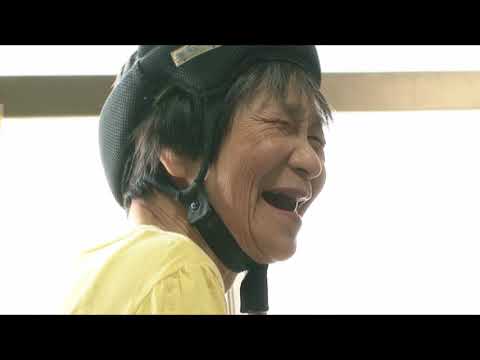
That sense of humanity defines much of the film’s second part. At one point, Mr. Mizoguchi, an undiagnosed patient who’s been bankrupted by medical bills, laments his ordeal while sitting next to his wife. But, then, the couple smile and laugh as they recall a large cow they used to own that cried in response to a plowing accident that injured Mr. Mizoguchi. It’s an evocative, almost fable-like story, which Hara caps with shots of snow falling over orange groves. These quieter moments provide a counterpoint to the film’s numerous, heartrending courtroom scenes, in which victims plead for justice and compensation in class-action lawsuits, often to little avail.
Elsewhere, an elderly man explains how it’s impossible for the layperson to win against the government, and Hara intricately documents how that claim isn’t mere sentiment, but supported by the continued belittling of people clearly affected by the disease. To make matters worse, a court will often rule in favor of the plaintiffs, only for it to overturn the ruling months later, continuing a horrific cycle of physical and psychological torment.
Minamata Mandala’s third part focuses on several members of one class-action lawsuit, who are charged with emotion and passion as they speak to stone-faced bureaucrats representing the government’s environmental agency. When the bureaucrats stand and acknowledge the suffering that the plaintiffs have endured, their concession is decidedly unfeeling. Hara’s camera frames the proceedings in a variety of wide shots and close-ups, and the balanced visual strategy highlights the plaintiffs’ emotions without heightening or exploiting their pain.
One of the film’s most memorable passages, also in part three, involves Sakamoto Shinobu, a Minamata patient since birth who collaborates with singer-songwriters on songs about the disease and her struggles with it. She will also come to speak, near Minamata Mandala’s end, at the court hearings. Hara’s scope proves devastating in how it displays such a range of people who’ve been affected by the disease and in so many ways. The term “mandala” in the film’s title literally means “circle” in Sanskrit, and it takes on a two-fold connotation. While the victims form a collaborative bond throughout their ordeal, the government’s hard-hearted decision-making process forms a cycle of abuse that can never be fully repaired.
Since 2001, we've brought you uncompromising, candid takes on the world of film, music, television, video games, theater, and more. Independently owned and operated publications like Slant have been hit hard in recent years, but we’re committed to keeping our content free and accessible—meaning no paywalls or fees.
If you like what we do, please consider subscribing to our Patreon or making a donation.


Ahhhh, Clayton Dullard. There is no one quite like you. <3