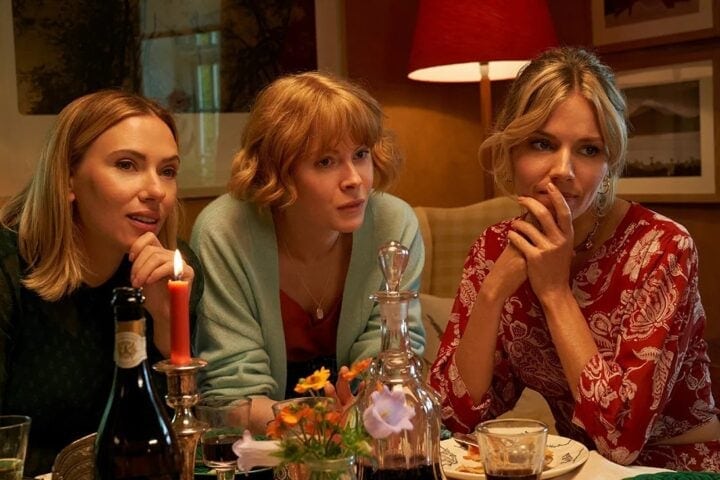
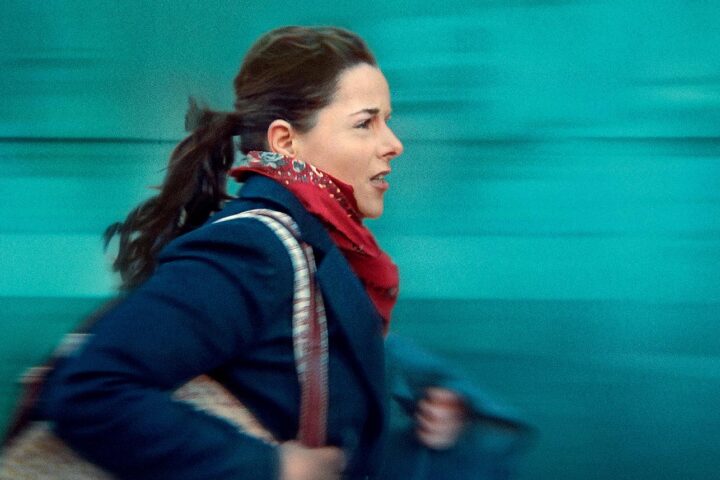
In Marc Fitoussi’s Two Tickets to Greece, former besties Blandine (Olivia Cotê) and Magalie (Laure Calamy) cross paths after 30 years and decide take a trip to Greece together. Blandine, as if in homage to her name, has become timid and conservative over the years, while Magalie has an active sex life, likes to shake her tailfeather in nightclubs, and tries to ingratiate herself with just about anyone. Cue the drug-related hijinks and misunderstandings between the women and the Greek locals, threatening to jeopardize their trip.
This by-the-numbers travel comedy is nothing if not corny in its repeated attempts to wring humor from Blandine’s prudishness. In one scene, Magalie gets fully nude in their hotel room, with Blandine, trying to look away, repeatedly peeking to see if her friend has finally put some clothes on. While there’s an obvious queer dimension to that and other scenes, including one set at the extravagant home of Magalie’s friend Bijou (Kristin Scott Thomas), Fitoussi’s film mostly fixates on Blandine’s dazed reaction to seeing other woman naked around her.
Two Tickets to Greece can never quite decide to what extent it wants to be either a light-hearted raunchy comedy or a darker comedic assessment of contemporary life. In particular, Fitoussi makes a point of setting the film in 2019, presumably to avoid having to acknowledge the impending Covid-19 pandemic. The timeline, though, raises questions about perspective that are never addressed. Given that the characters are oblivious to what lies ahead, their largely frivolous antics carry an ironic weight, as they’re free to sing, dance, and move around in public without fear of infection. But because Fitoussi’s script makes little of this context, the pre-pandemic setting winds up playing like a thoughtless nostalgic gesture.
On the heels of Calamy’s excellent work in Eric Gavel’s Full Time, which sees her character struggling to make ends meet for her and her children amid a national transit strike, Two Tickets to Greece works best as a showcase for her seriocomic talents. In a late scene, when Magalie smashes a man over the head with a beer bottle after she’s pushed to the ground, the look of anger in Calamy’s eyes contains multitudes, suggesting that Magalie’s drinking and freewheeling behavior is an attempt to anesthetize repressed emotions.
Sadly, and symptomatic of how the script works against the talents of the actors, the sequence devolves into a squabble between Blandine and Magalie over which one is sleeping with a certain man. The film might have soared had Fitoussi cared to flesh out his characters and their dilemmas in unique or at least more precise ways instead of reducing them to clichés.
Since 2001, we've brought you uncompromising, candid takes on the world of film, music, television, video games, theater, and more. Independently owned and operated publications like Slant have been hit hard in recent years, but we’re committed to keeping our content free and accessible—meaning no paywalls or fees.
If you like what we do, please consider subscribing to our Patreon or making a donation.