Nacho Vigalondo’s Daniela Forever is the second notable film this year to propose an unorthodox, hyper-modern treatment for grief. In David Cronenberg’s The Shrouds, a widower played by Vincent Cassel obsessively monitors his interred wife’s bodily decomposition via live video feed—the closest he can get to being with her in the grave. Vigalondo’s idea, less outwardly perverse, is no less emotionally freighted: dream therapy.
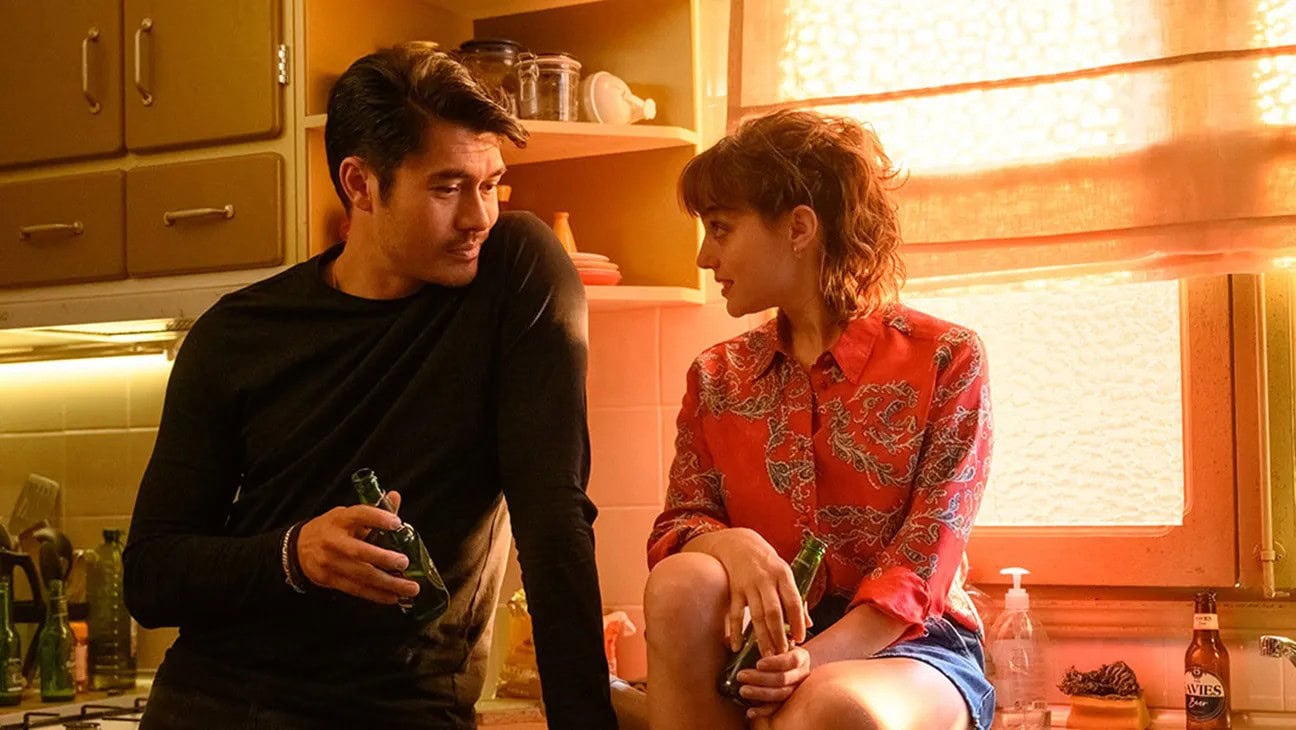
Nick (Henry Golding) is a British DJ living in Madrid whose artist girlfriend, Daniela (Beatrice Grannò), an expat from Italy, was recently killed in an accident. At the suggestion of his divorced friend Victoria (Nathalie Poza), Nick enrolls in a clinical trial for an experimental new drug that induces lucid dreams. Although Nick agrees to follow the program exactly, with each dream session arising from a given prompt, he ignores his instructions and uses these realer-than-real excursions of the mind to be with his deceased lover.
Some aspects of the dream world are left vague, with Vigalondo mostly eschewing the protracted exposition dumps that Christopher Nolan’s Inception, one of Daniela Forever’s thematic cousins, is given over to. But the core idea is that Nick’s dreams are constructed on the foundation of actual memories, and are therefore limited by the boundaries of his own experience. When he encounters an alleyway in Madrid that he hasn’t walked down, it’s blocked off by an amorphous gray border. And so, in order to enhance his dream life, Nick spends his time awake soaking in the sensory details of his surroundings—a life lived in service to fantasy.
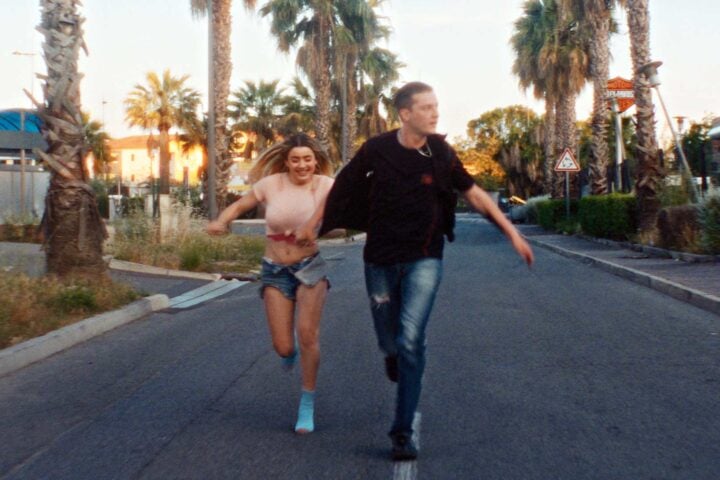
The film realizes Nick’s widescreen dreams in crisp high definition and vivid colors while his waking moments, which were shot using Betamax video technology in 4:3 aspect ratio, are desaturated and claustrophobic. It’s an obvious aesthetic and thematic conceit—grim reality contrasted with the limitless possibility of the imagination—but as Nick’s mental life begins to insinuate into his “real” experiences, a thrilling collision takes place between the primitive video format and the more grandly surrealistic imagery, the two visual realms mixing together like songs in one of Nick’s DJ sets and providing the film with its most striking moments.
Nick seems to understand intuitively that everyone in his dreams, including Daniela, is a projection of his own mind. Like the physical environment, other people are only as richly detailed as his mind allows them to be. Theoretically, nobody in a dream should be able to tell him anything he doesn’t already know. But as the dream world becomes more filled in, and as Nick’s control of time and space becomes more powerful, “Daniela” seems to be developing a mind of her own. When she creates a new piece of digital art that doesn’t exist in reality, Nick wonders aloud how she was able to do so. Then, he follows Daniela to a place he’s never been, where, to his dismay, she reconnects with an ex-lover, Teresa (Aura Garrido).
Metaphysical implications about the nature of reality or the possibility of shared consciousness are left mostly unspoken, as the film spends more time developing a surface-level study of the desire for romantic possession and control. Technically, the only Daniela we ever see is Nick’s version of her, and in the process of altering her memory to suit his needs, Nick reveals his limited grasp of, or interest in, the inner life of his loved one. In this respect, the dynamic of their relationship is best captured by a scene in which, following a threesome that he’s engineered with Daniela and another woman, Nick responds to Daniela’s request for group sex in a M/M/F configuration in the future by creating a double of himself.
As heady as the subject matter is, Vigalondo stages it all with a lightness and sense of wonder befitting an evening of blissful dreams. The whimsical humor mostly flops but helps to sidestep mawkishness, especially as the film builds toward Nick’s personal growth, which is unearned in its hastiness. And even if Daniela Forever both falls short of the delirious originality of Vigalondo’s Colossal and fails to transcend its most obvious antecedent, Eternal Sunshine of the Spotless Mind, it’s still a compelling enough vision to reward our sustained engagement.
Since 2001, we've brought you uncompromising, candid takes on the world of film, music, television, video games, theater, and more. Independently owned and operated publications like Slant have been hit hard in recent years, but we’re committed to keeping our content free and accessible—meaning no paywalls or fees.
If you like what we do, please consider subscribing to our Patreon or making a donation.