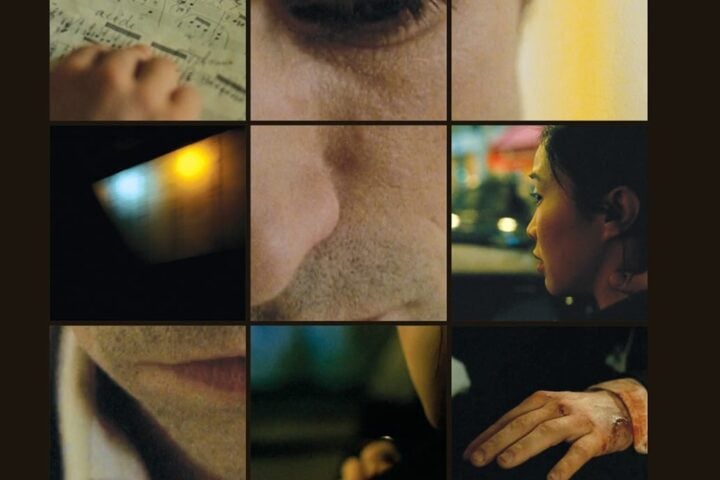
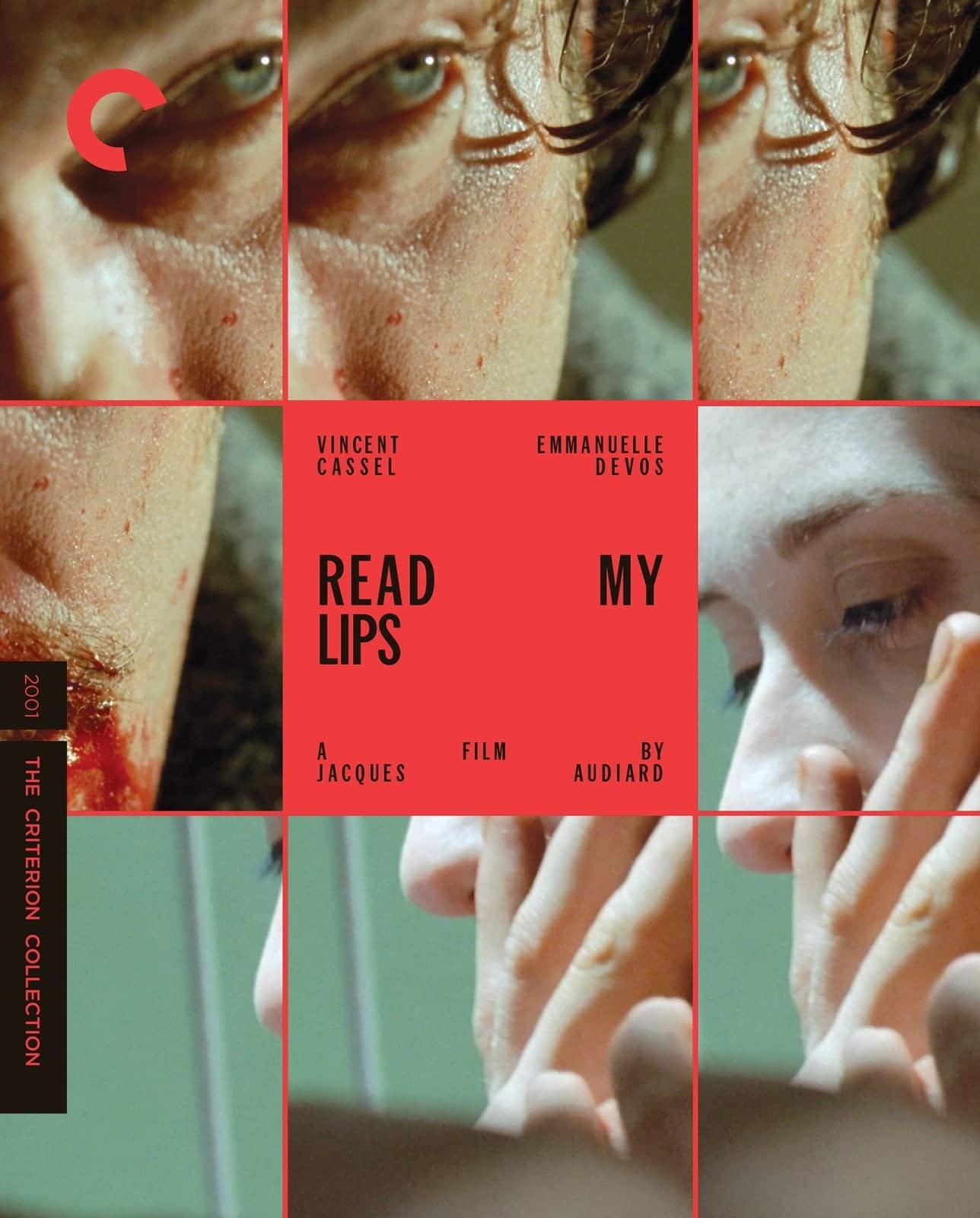
 At the heart of Jacques Audiard’s Read My Lips is the relationship between an ex-con, Paul (Vincent Cassel), and a nearly deaf, overworked secretary, Carla (Emmanuelle Devos), that’s redolent of the one between Ingrid Bergman and Cary Grant’s characters in Alfred Hitchcock’s Notorious. Paul recognizes Carla’s loneliness and she takes comfort in trying to make him go straight, and their interdependency gives way to a power struggle built on unspoken trust and a series of daring demands.
The film is as aware of the absurdity of a secretary needing an assistant as Carla is of her lack of social graces. Carla willingly shuts herself out from the rest of world by removing her hearing aids. Indeed, she seems more comfortable in silence; an expert lip-reader, she can decode the world around her, from a co-worker’s condemnations to a crook’s master plan. She never thinks herself better than Paul though both seem overly conscious of how they can exploit each other’s “talents” to overcome personal dilemmas. If it weren’t already clear, Audiard and Tonino Benacquista’s doesn’t lack for granular specificity.
Just as mysterious as the nature of Carla’s detachment from the world is the film’s own resistance to genre classification; if the passive-aggressive Carla refuses to ever be seen as a victim, the film itself refuses to ever be taken purely as awkward office comedy, romantic drama, or suspense thriller. Carla uses Paul to beat up a co-worker and fears that her newly gained power in the workplace will be compromised as soon as he leaves for a full-time job as a bartender. Paul uses Carla to decipher a scheme being planned by his employer, Marchand (Olivier Gourmet). That he doesn’t ask her permission to borrow her lips is indicative of the expected demands of their unspoken business relationship. “I’m not your fax machine,” she says, perhaps suggesting that his demands are best served with some affection.
There’s a haunting grace to Devos’s performance. In one scene, Carla shoos away a deaf man begging for money, and Devos makes plain that the woman’s discomfort is only with her own disability. Audiard situates a naked Devos before a full-length bedroom mirror a few times throughout the film, and though she’s only shown from the neck down, Devos’s awkward stance suggests that the woman is as distanced from her body as she is from much of the world.
If Hitchcock was keen on letting the spectator know more than his characters, Audiard takes a more realistic approach by never letting the audience see, hear, or know more than Carla and Paul. The director evokes Carla’s limited hearing and frequently obscured gaze via unflashy manipulations of the film’s soundtrack and careful placement of his camera.
Nonetheless, the suspense that the film so painstakingly whips up is cheapened by a series of sloppy edits during a scene where Carla and Paul infiltrate Marchand’s office. More lethal, though, is a superfluous subplot involving Paul’s parole officer (Olivier Perrier) that functions neither as red herring nor as an existential mirror to Carla or Paul’s plights. Still, Audiard tackles the film’s plot twists with incredible brio, taking them not so much to their logical ends as he does to a place that feels, intelligently and sexily, like the consummation of the inevitable.
Image/Sound
Jacques Audiard and cinematographer Mathieu Vadepied use a lot of tight medium shots and close-ups in Read My Lips, and the new 4K digital restoration that the Criterion Collection used for this transfer beautifully captures the minutest of details. The image is crisp, rendering everything from the dirt under Vincent Cassel’s fingernails to the loose threads at the edge of Emmanuelle Devos’s sweater visible. There are occasional signs of the color grading pushing the whites to teal, particularly in some of the early office-set scenes, but by and large, colors are true to the film’s naturalistic palette. The 5.1 surround audio expertly captures the background ambience while dialogue remains perfectly clear in the mix.
Extras
In the audio commentary, recorded in 2002, actors Cassel and Devos have the same great chemistry as they do on screen, joking around as they talk about their preparation for Read My Lips, how they approached their characters, and the importance of physical actions in their performances. Elsewhere, Audiard shows up in two new extras, an interview and a 40-minute making-of program on the film. In the first, he discusses his early career works and the influence of Honeymoon Killers, Gun Crazy, and Italian comedies on Read My Lips.
For the featurette, Audiard is joined by Vadepied and co-writer Tonino Benacquista, who touch on the challenging process of writing the film and specific scenes that were difficult to cut. The disc also includes a handful of deleted scenes featuring commentary by Audiard and an interview with composer Alexander Desplat discussing the connection between film grammar and his scores. Lastly, there’s a foldout booklet with a new essay from film scholar Ginette Vincendeau, who explores the challenges of approaching Audiard via the auteur theory and nicely contextualizes the film within the neo-noir subgenre.
Overall
Jacques Audiard’s early-aughts breakthrough film still pulsates with passion and urgency.
Since 2001, we've brought you uncompromising, candid takes on the world of film, music, television, video games, theater, and more. Independently owned and operated publications like Slant have been hit hard in recent years, but we’re committed to keeping our content free and accessible—meaning no paywalls or fees.
If you like what we do, please consider subscribing to our Patreon or making a donation.