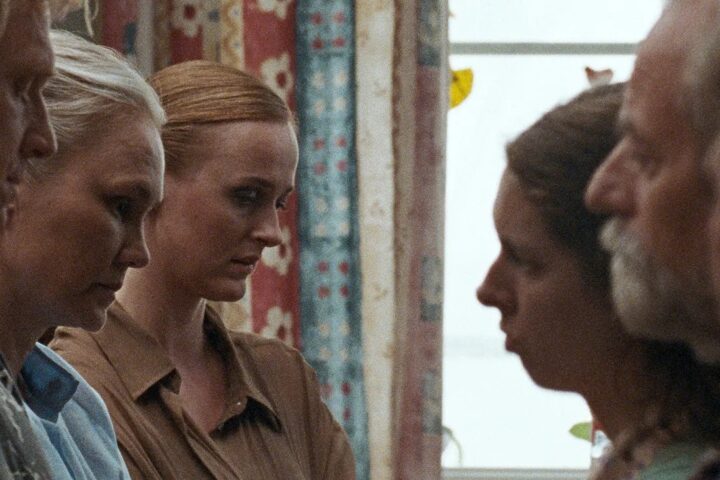
There’s a good gag in Sentimental Value that functions as a neat encapsulation of the film’s themes. Having welcomed their father, Gustav Borg (Stellan Skarsgard), an acclaimed film director, back into their lives after a years-long absence, Nora (Renate Reinsve) and Agnes (Inga Ibsdotter Lilleaas) react with understandable dismay during a birthday party for the latter’s preteen son, Erik (Oyvind Hesjedal Loven), when the boy unwraps his grandfather’s gift: DVDs of The Piano Teacher and Irréversible. This gesture seems typical for Borg, a man dependent on storytelling and art to connect emotionally with others, and who appears to have passed down to Nora, a successful stage actor, many of the demons he wrestles with in his work.
The joke also unintentionally exposes both the appeal and limitations of director Joachim Trier’s oeuvre. His films have a kind of sanitized elegance to them, and rarely do they feature a character that doesn’t plausibly scan as, well, the target audience for a Joachim Trier film. Although not straying far from this trademark restraint, Sentimental Value is perhaps the director’s most mature and emotionally complex work, its multilayered structure supporting a familiar but often profoundly affecting tale of intergenerational family conflict.
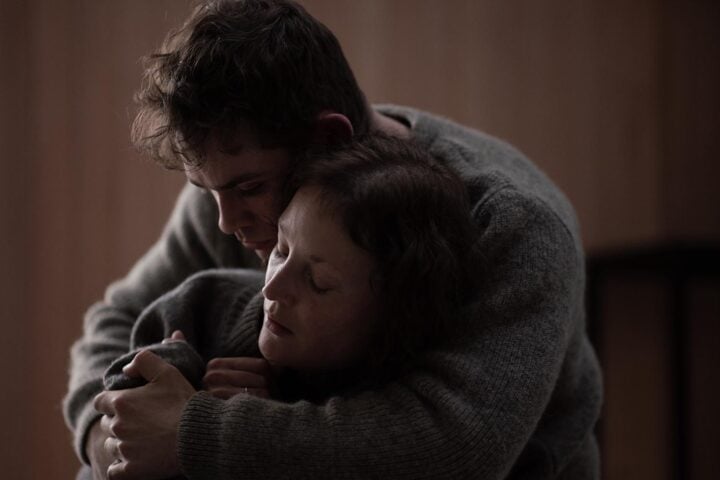
A significant role is played by the house that Gustav, his daughters and several previous generations of their family grew up in, which connects the film’s various plot strands. Shortly after his belated reunion with his children at the funeral of their mother, the patriarch reveals his plan to make a new film in the house. He offers the lead role to Nora, who’s struggling with stage fright and a love life limited to an ongoing fling with a married co-star, Jakob (Anders Danielsen Lie). Meanwhile, the tragic story of Gustav’s mother (Vilde Søyland) and her persecution by Nazis occupying Oslo is illustrated through occasional flashback sequences.
Voiceover at the start of the film references an essay that a young Nora wrote from the point of view of the house, imagining it as a living thing that can feel the pains and joys of its occupants. Spelled out a little too literally here, the idea of a family’s psyche impacting the bricks and mortar of the space they occupy becomes more potent as Sentimental Value progresses. Late in the film, a shot of Gustav’s mother hiding in an upstairs room and using the heating pipes to keep an ear out for soldiers on the floor below, rhymes with an earlier one of Nora doing the same thing as a child to eavesdrop on adult conversations, linking the two across time and suggesting that the granddaughter has inherited her grandmother’s sense of isolation.
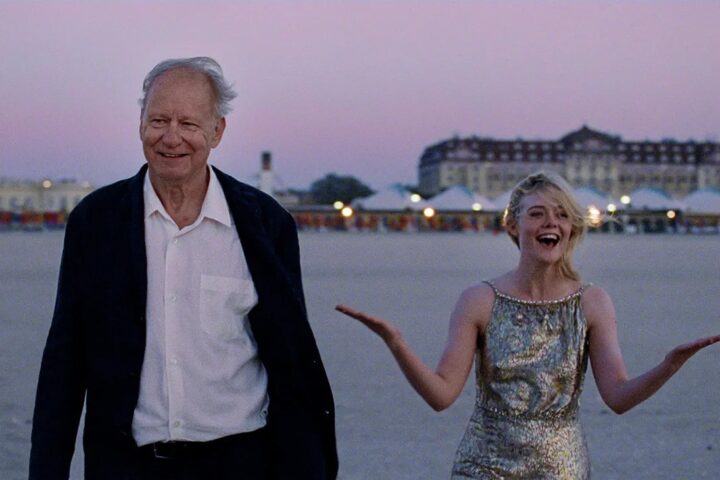
As for Gustav, his cranky charm is darkened by guilt about the sacrifices he’s made for his career, as well as fears about his mortality. These are alluded to shortly after a retrospective of his work at a film festival, when a blissful beach party culminates in an evocative image of the aging director alone and hungover at sunrise, isolated in the center of a wide shot. The latter event is also where Gustav encounters Rachel Kemp (Elle Fanning), to whom he offers the lead role in his film, after being rebuffed by Nora. The exuberant sincerity of this successful Hollywood actress contrasts amusingly with the low-key Nordic reserve that surrounds her, Fanning bringing a gentle levity to a film that’s prone to navel-gazing.
Despite his foregrounding of the specific details of the filmmaking process, Trier mostly abstains from a deeper exploration of the psychology of acting here, leaving Nora’s professional difficulties a little opaque. However, Reinsve is magnetic throughout, and she benefits from one of the director’s key strengths: a willingness to let a scene breathe. She conveys fragile desperation and weary sadness in a refreshingly unaffected way, from an opening scene in which Nora demands that Jakob slap her out of an anxiety attack backstage at a show, to the character’s more subdued interactions with family members.
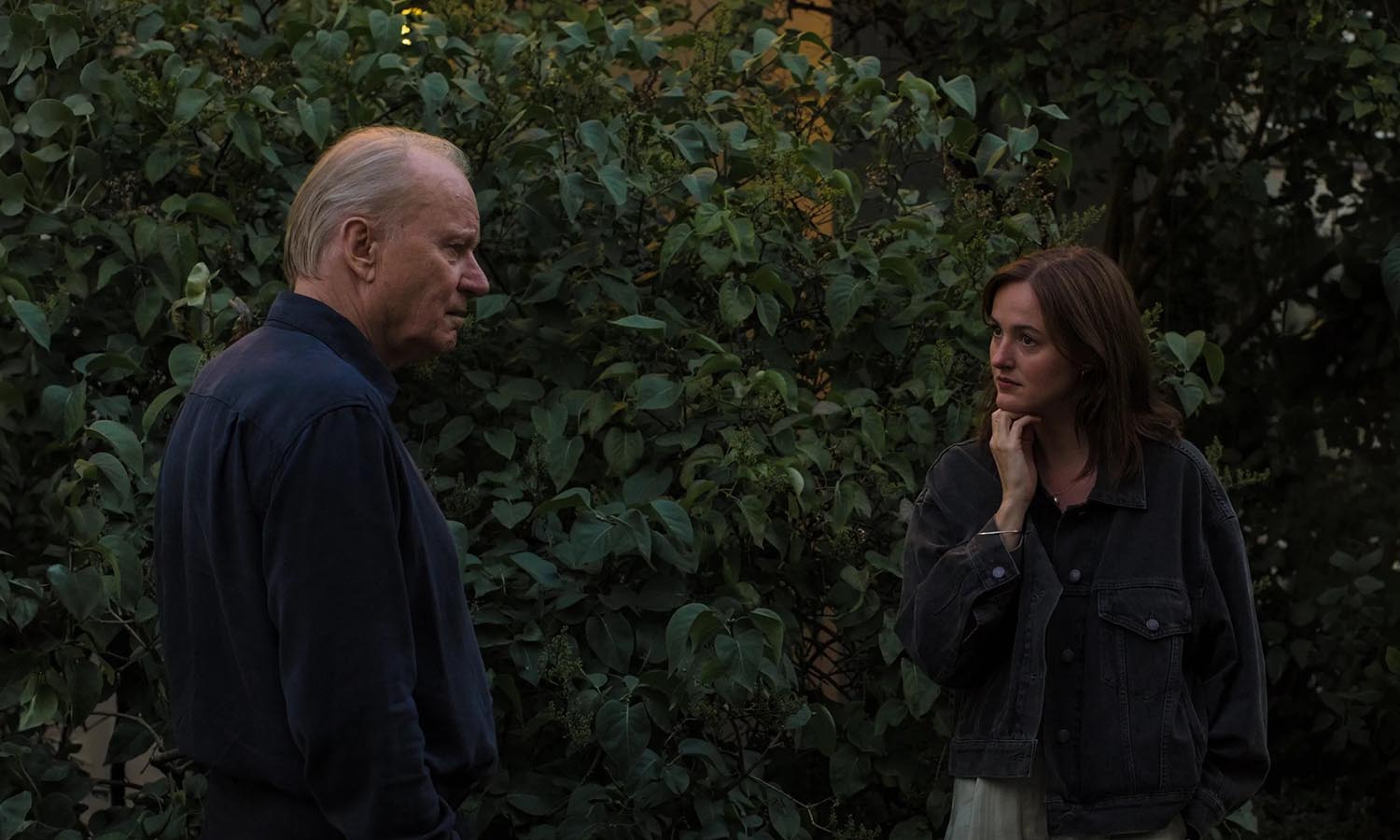
Indeed, for all of Sentimental Value’s intelligent dissection of historical trauma and creativity, its most resonant scene is an intimate heart-to-heart between Nora and Agnes, as they reflect on the ways in which their lives have diverged since childhood. Potent in its simplicity and directness, it’s the clearest expression of the film’s emotional core, in which lies a genuine melancholy that Trier’s artisanal compulsions can never fully obscure.
Since 2001, we've brought you uncompromising, candid takes on the world of film, music, television, video games, theater, and more. Independently owned and operated publications like Slant have been hit hard in recent years, but we’re committed to keeping our content free and accessible—meaning no paywalls or fees.
If you like what we do, please consider subscribing to our Patreon or making a donation.