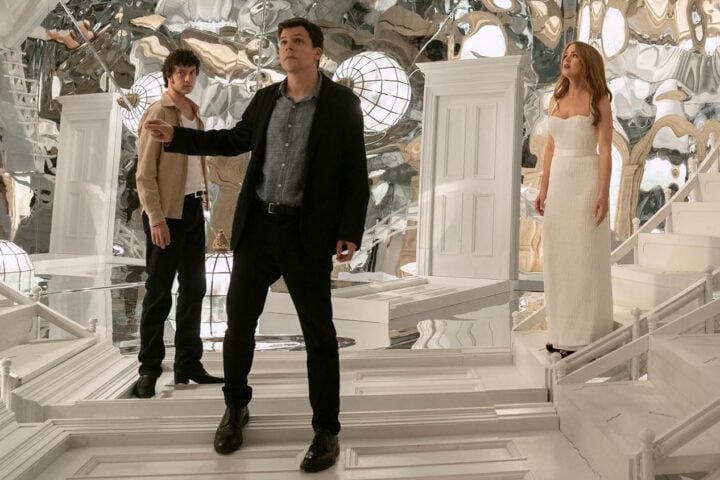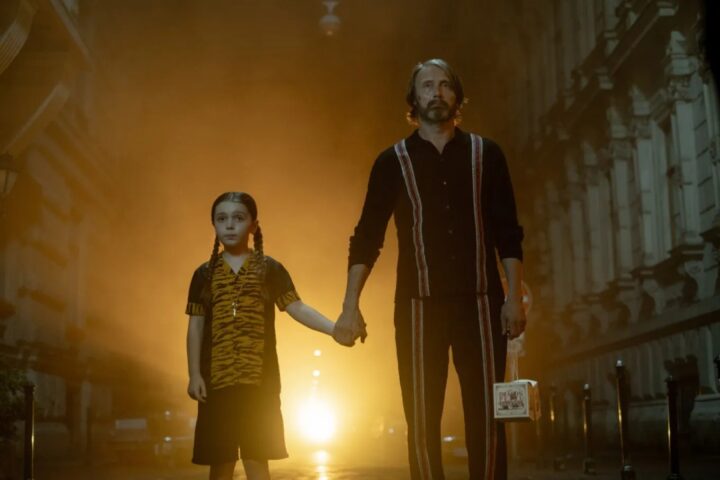
James L. Brooks’s characters have always operated with unshakable conviction, swimming upstream in a world that tries to drag them down. Ella McCay (Emma Mackey), a young politico working in a cynical environment, is no exception, but in a first in Brook’s career, it feels like his new film is also swimming upstream. Ella McCay tasks itself with proving that there’s still space in the current media landscape for the sentimentality and empathy that define Brooks’s greatest works, including Broadcast News, and the results are decidedly mixed.
Brooks’s optimism is reflected in Ella, the lieutenant governor of an unnamed state, who tries with every fiber of her being to change people’s lives for the better. Governor Bill’s (Albert Brooks) sudden departure from office leads to Ella taking over his job, and soon she’s putting out fires in both her personal life and political life. Between a sex scandal, security personnel leeching unauthorized overtime payments, and the target on her back for trying to implement actual policy change, her tenure as governor is threatened just as it’s begun.
As it follows Ella navigating these political and personal waters, the film finds itself poised between sincerity and artificiality. While Brooks proves that he still has it in him, by way of his characters, to offer one-liners that cut to the heart of the human experience, these mic drops can be more awkward than profound. Mackey delivers her lines with an almost robotic affect, and while this may play into her Lisa Simpson-esque idealism, it’s but one of many instances where the film feels cool and inhuman, despite the warmth that the material exudes.
Ella McCay seeks to project optimism in a time of unrelenting divisiveness, and it does so by taking us back in time. The film takes place in 2008, with flashbacks to Ella’s childhood in the early ’90s. The turmoil of the 2008 financial crisis is clearly intended as a surrogate for the general strife of today, but Julie Kavner’s narration also romanticizes the period as a time when people knew how to get along. In such moments, it’s unclear if the film is showing us what we’ve lost as a society or if it’s offering a model of behavior that’s still attainable.
The real trouble is that, at its core, Ella McCay paints in broad strokes. Ella’s husband, Ryan (Jack Lowden), is a charismatic but self-centered man not unlike Jeff Daniels’s Flap from Terms of Endearment. But unlike Flap—or Jack Nicholson’s Garrett from the same film, or William Hurt’s Tom from Broadcast News—Lowden is never afforded the opportunity to reveal a semblance of humanity or insecurity beneath Ryan’s two-dimensional entitlement. The only glimpse we get into to his inner life exists to underline his cartoonish selfishness, when his mother (Becky Ann Baker) instructs him to milk his wife’s governance for all he can.
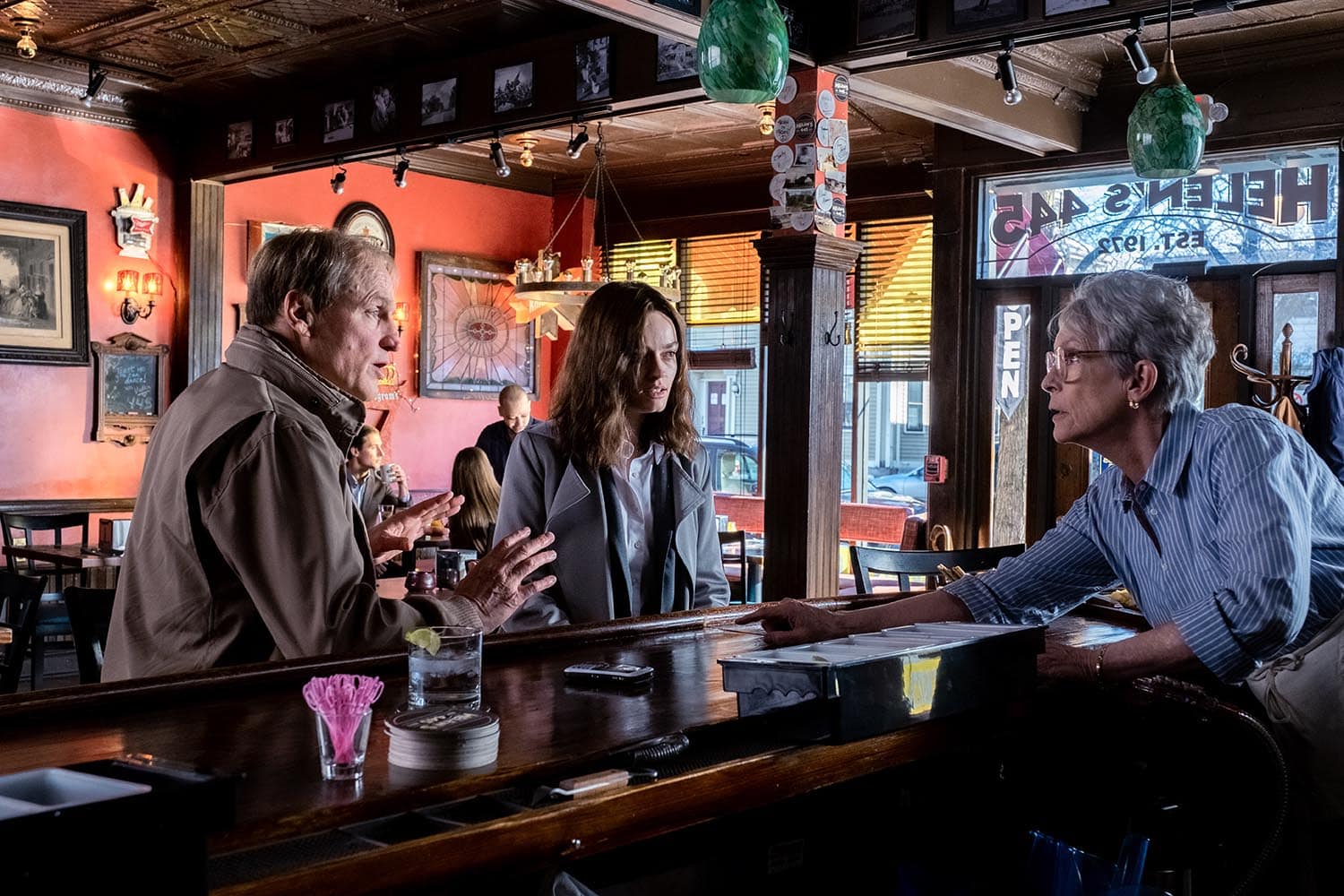
Ella’s father, Eddie (Woody Harrelson), also fails to develop into more than the superficial, adulterous coward he’s initially made out to be. Having resurfaced in Ella’s life after years of estrangement, he’s on a mission to prove to his daughter that he’s changed. She swats him away every time he shows up, certain that this is all a performance at the behest of his new girlfriend, and over time, he eventually only confirms her suspicions. This caps off Ella’s journey of overcoming her people-pleasing nature, but without illustrating a strong, genuine connection Ella might have had to these caricaturized straw men, Brooks makes it far too easy for his already morally sound protagonist to sever ties with them.
Maybe if Brooks had given us an actual sense that Ryan and Eddie had their emotional hooks in Ella, then it would have felt as if her growth, however small-scale, was hard-won. But, then, Brooks’s film is precisely interested in the small-scale, and how fundamental change, both within people and government, isn’t guaranteed. Take Ella’s commitment to passing one very meaningful bill during her comically short stint in office, with the hope of ushering in some kind of change. The optimism that Ella preserves as she takes life one day at a time is compelling enough that it’s hard to get too mad about how shallow the world around her can seem.
Since 2001, we've brought you uncompromising, candid takes on the world of film, music, television, video games, theater, and more. Independently owned and operated publications like Slant have been hit hard in recent years, but we’re committed to keeping our content free and accessible—meaning no paywalls or fees.
If you like what we do, please consider subscribing to our Patreon or making a donation.