
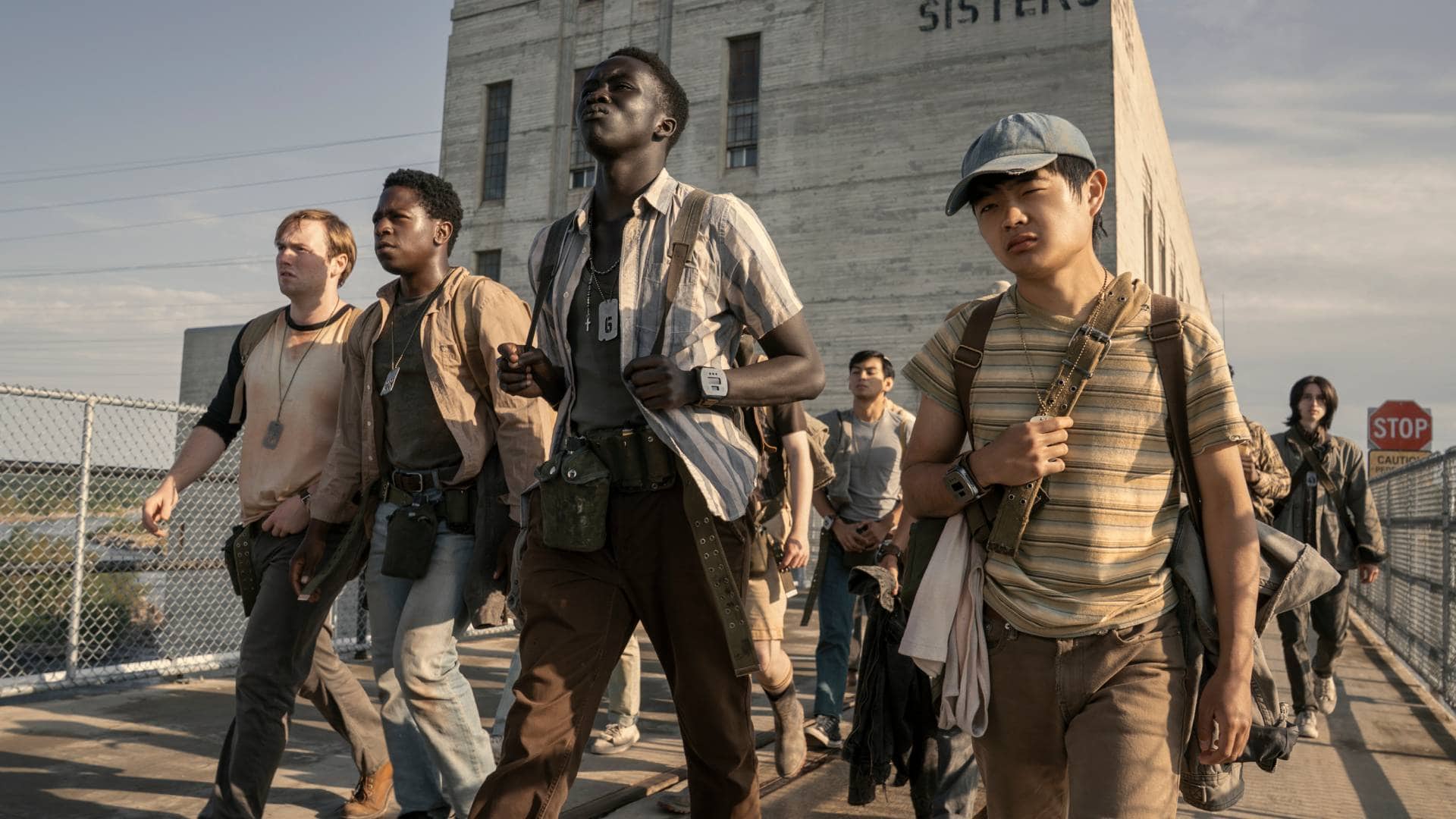
Ostensibly, The Long Walk takes place in an America that’s been made great again. The fascists have won, leaving a nation so thoroughly cleansed of humanist joy and art that the only way to express thanks to its heroes is a trial of eugenics where 50 boys from across the country volunteer for an endurance race to inspire a weary country.
The boys will walk on an empty stretch of road in the heartland at a pace of three miles per hour. Anytime someone drops below speed, no matter the reason, they’re issued a warning. Three warnings and the boy is shot dead. The last boy standing after the rest have been shot gets a life-changing amount of money and one wish. The unspoken subtext is clear: that the thankless death march is the only way anyone can hope to attain worth in this brave new world.
Armed with a script by JT Mollner that hits with the force of a blast from a sawed-off shotgun, director Francis Lawrence stages this adaptation of Stephen King’s novella, which the author wrote in 1979 under the pseudonym Richard Bachman, as a passion play about class solidarity. Its diverse characters are made to suffer, and every single one of them is worthy of remembrance. There are no backstabbers or betrayals here, nor are there villains among the boys. Even when it comes to Barkovich (Charlie Plummer), a kid with a mental illness who needles the others, the script is clear about its empathy for him.
Early on, even with death all but certain for 49 of the boys, Pete McVries (David Jonsson) starts to make friends, gathering and carrying details about them for hundreds of miles down the road. In contrast to the way many of the others intend to survive the titular walk, Pete is indomitable in the face of the hopelessness ahead. He holds his comrades dear, with their reasons for volunteering, their paranoias, their medical problems, and even the threat of them falling behind becoming his burden. In turn, he inspires that same care in others—particularly Cooper Hoffman’s Ray Garratty—until that act of custodianship turns into a radical show of defiance, and it’s there that these characters, as well as the film, find their power.
Watching The Long Walk, its cruelties feel inevitable. The engine of fascism that sends young men marching on screen is real, and the way the film sees it, it’s loud and demands a populist reckoning that will only ever come by putting audiences face down in the mess we’re in.
Since 2001, we've brought you uncompromising, candid takes on the world of film, music, television, video games, theater, and more. Independently owned and operated publications like Slant have been hit hard in recent years, but we’re committed to keeping our content free and accessible—meaning no paywalls or fees.
If you like what we do, please consider subscribing to our Patreon or making a donation.


Is this film violent?
I would have thought you turds at Slant would have perceived this movie to be a comedy about what happens to those of us who aren’t smart or connected enough to find a way to worm into the good graces of Peter Thiel and his bushels of money available to those eager to whore themselves out to him. I mean, isn’t that 75% of the people who work at Slant?