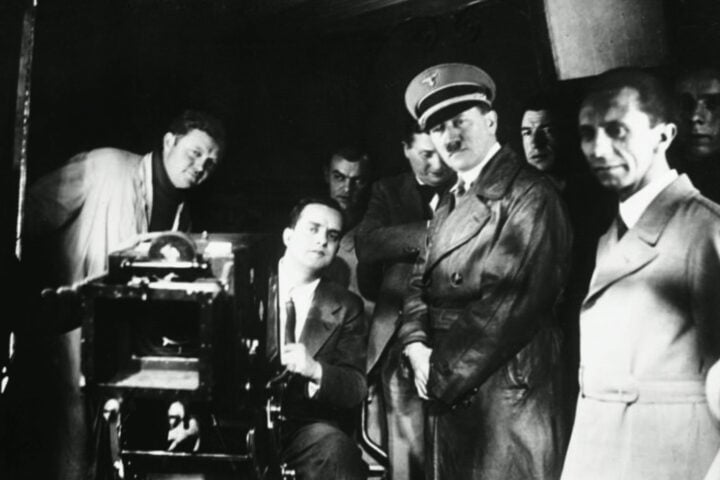
In a thematically load-bearing scene from Andres Veiel’s Riefenstahl, German filmmaker and Nazi propagandist Leni Riefensthal reflects on her relationship with Joseph Goebbels. This archival interview was recorded at Riefensthal’s cozy Bavarian mountain cottage, where she lived to the ripe old age of 101. Over photographs of the two laughing and dining together, and immediately following excerpts from Goebbels’s most virulently antisemitic speeches, Riefenstahl boasts of the Nazi propaganda chief’s mad desire for her, both artistic and erotic, and of the “adventures” and “affairs” they had together. She then, almost as an afterthought, suggests ruefully that he sexually assaulted her on two occasions.
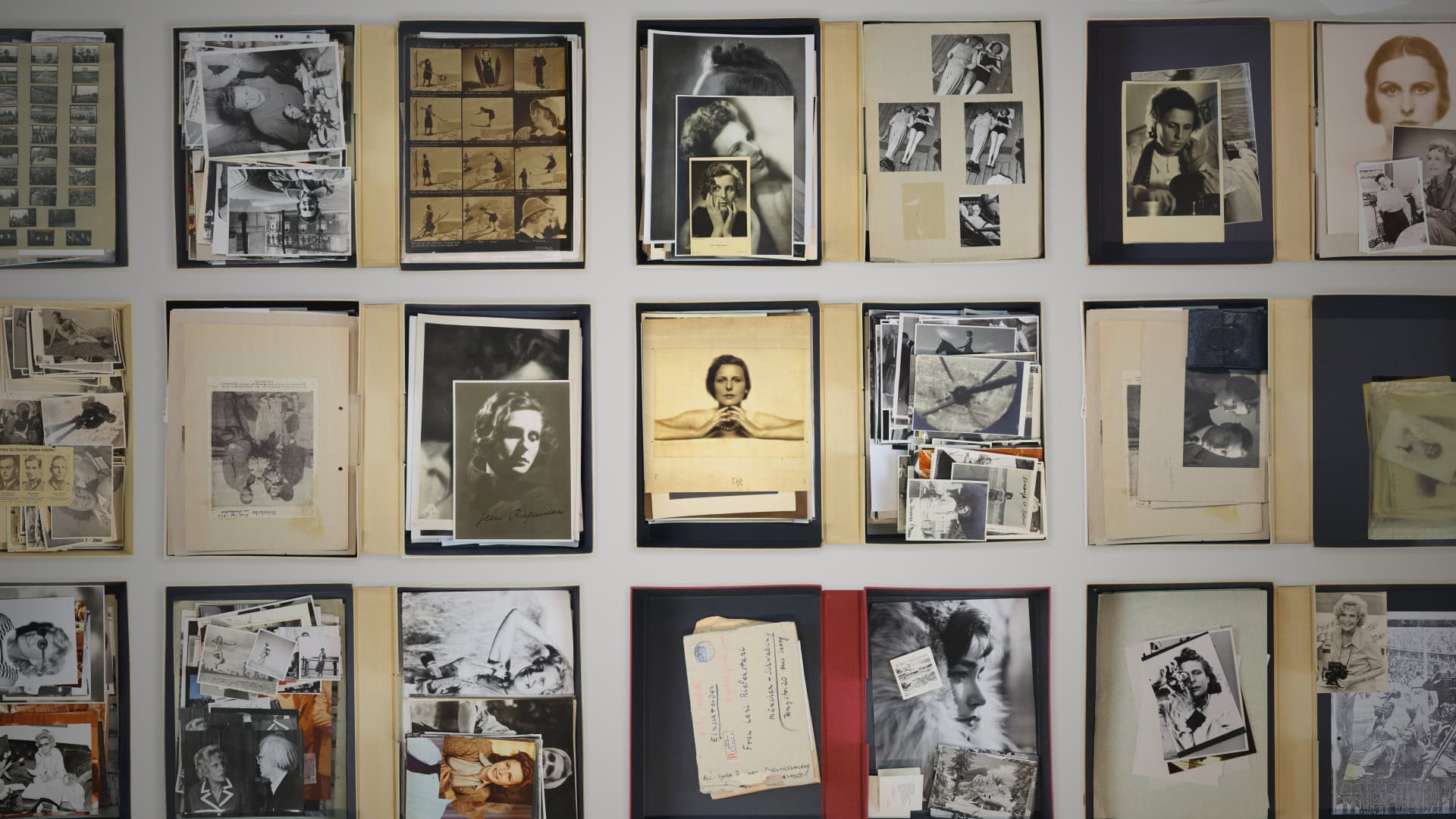
Veiel’s meditative, ominous documentary eschews contemporary talking heads and minimizes didactic narration; it lets a beautifully restored collection of photos, audio, film strips, documents, and video segments relating to Riefenstahl and her colleagues speak largely for themselves. But the Goebbels segment is emblematic of the film’s guiding interrogations: who Riefenstahl was politically, personally, and as an artist.
While much discourse on Riefenstahl has focused on the aesthetic value of her work (most notably, Triumph of the Will has been canonized as one of the greatest propaganda films ever made), Veiel is only passingly interested in her art, preferring to critically examine the woman herself. In particular, his film seems eager to challenge her postwar self-portrayal as a “pure artist” free of any ideological commitment and as an innocent seduced by the Nazi regime.
To this end, Veiel repeatedly juxtaposes public statements made by Riefenstahl—that she had no personal relationship with the Nazi elites, no interest in their ideology and no knowledge of their plans or activities—with damning evidence to the contrary. There are photos and accounts of her wining and dining with the Reich’s truest believers, and we see personal documents, conversations with admirers, and on-camera outbursts that suggest that she believed herself (and Germany) to be a victim of defamatory Jewish and communist conspiracy.
Particularly chilling is evidence that the production of her film Tiefland, which was filmed between 1942 and 1945, was deeply embedded in the Holocaust: Roma children were extracted from a nearby internment camp for use as extras (her scrapbooks reveal that she took a particular shine to one terrified-looking child whom she called “My Little Gypsy”) and carted to Auschwitz the moment she was done with them. A crew of Jewish slave laborers were allegedly massacred because she complained they were unsightly. If there’s still anyone uncritically repeating Riefenstahl’s narrative of naïveté, they’ll find it hard to sustain by the end credits.
For all her transparent lies and obvious narcissism, one gets the sense that Riefenstahl wasn’t totally dishonest in portraying herself as a romantic guided by the unconscious; this was, arguably, what attracted her to fascism, a backward-looking romantic ideology that valorizes myth and elevates instinct over reason. Veiel gives us the moral certitude of her guilt, but it’s the psychological mechanisms that led her to Hitler that raise deeper questions about the semiotic constitution of fascism and the relationship between aesthetics and morality.
One wishes for more forensic detail about Riefenstahl’s artistic theories and technique, how and why she created the exact images that she did. Riefenstahl is stomach-churning and engrossing, but it plays more as a familiar warning about German complicity than a challenging exploration of our potentially conflicting admirations for beauty and goodness.
Since 2001, we've brought you uncompromising, candid takes on the world of film, music, television, video games, theater, and more. Independently owned and operated publications like Slant have been hit hard in recent years, but we’re committed to keeping our content free and accessible—meaning no paywalls or fees.
If you like what we do, please consider subscribing to our Patreon or making a donation.