Accompanying the Weeknd’s album of the same name, Trey Edward Shults’s Hurry Up Tomorrow plays, in many ways, like an extended music video, with a thinly sketched plot painted in broad and illusory strokes. The Weeknd, né Abel Tesfaye, plays a fictionalized version of himself who begins to suffer from sudden voice loss while in the midst of a world tour and encounters a mysterious and troubled young fan named Anima (Jenna Ortega), who’s fleeing a traumatic past. The film suggests that these two characters are destined to meet and spend one really wild night together, wherein Abel comes to term with the person he really is.
In other words, Hurry Up Tomorrow is a full-blown self-therapy session, specifically concerning Tesfaye’s feelings about the public’s perception of him in the wake of The Idol. The HBO series, created by Tesfaye, Sam Levinson, and Reza Fahim, is referenced early on, when Abel’s boisterous Irish manager and longtime friend, Lee (Barry Keoghan), commiserates with him about “that television thing not working out,” before offering up some positive spin: “Well, at least you can go back to music now!” Abel, though, is growing increasingly disillusioned with his musical fame, his inner turmoil becoming so fraught that he loses his voice mid-performance and flees the stadium, where he literally bumps into the transparently named Anima.
Of course, most of Abel’s issues revolve around women. The chief cause of his psychological stress stems from a failed relationship with an unnamed ex-girlfriend (Riley Keough, in a role played exclusively through voicemail messages and old photos). He spends a good chunk of the first half of the movie incessantly screaming into the phone when she won’t answer his calls. Later, after a rejuvenating night on the town with Anima that caps off with an emotional exchange between the two when Abel plays her a sample of his song “Hurry Up Tomorrow” (“I feel like that song was about me,” she says through teary eyes), he callously attempts to blow her off the next morning, which causes her unhinged side to violently emerge.
These underwritten roles are the film’s only two significant female characters. Hurry Up Tomorrow may take pains to call out Abel’s abusive behavior, but as he’s the unwavering hero in this fantasy of a tortured artist’s psyche, any attempts to really dig into that behavior are surface-level. In the end, it’s more or less excused as part of the tumultuous temperament that, like it or not, fuels Abel’s musical brilliance, a clichéd notion that represents an easy way out.

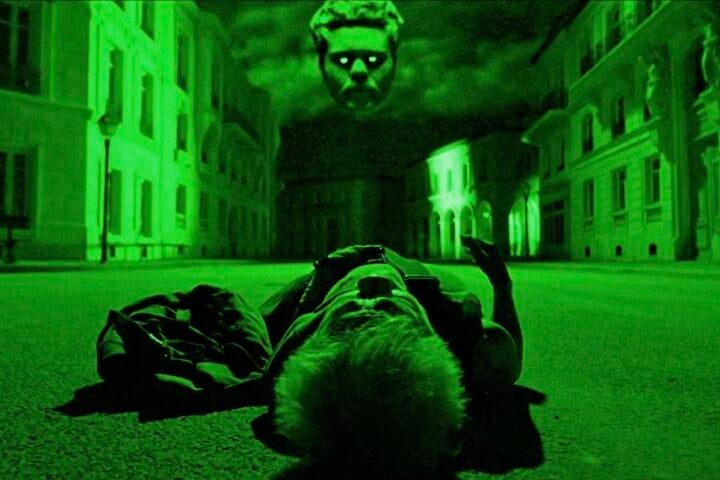
As vapidly as Hurry Up Tomorrow unfolds, it at times makes for a ludicrously compelling vanity project in terms of how spectacularly it goes off the rails. The second half of the film abruptly switches gears to plunge our hero into a prolonged nightmare sequence full of uninspired horror-movie freak-outs and dime-store surrealism. This is followed by an even crazier and astonishingly narcissistic stretch that suggests Misery by way of American Psycho, in which Abel wakes up tied to a bed before Anima proceeds to lecture him about the meaning of his songs while imploring him over and over to “be honest.”
It’s almost a little refreshing how sincerely all of this lunacy unfolds, and the performances from both Tesfaye and Ortega are so achingly earnest that they possess a certain kind of hypnotically cringeworthy spell. Hurry Up Tomorrow approaches the level of unadulterated camp when Anima plays the Weeknd’s synth-pop banger (her words) “Gasoline” and then ominously asks Abel, “Is this really about a toxic relationship? Or is it about you? Are you the toxic one?”
Unfortunately, that energy gets bogged down by the insistence with which the script by Shults, Tesfaye, and Fahim strives for a sense of profundity, making Hurry Up Tomorrow’s 105-minute runtime feel at times interminable. Meanwhile, Shults’s direction lacks the operatic verve that elevated his prior work, such as Waves, as he relies here on derivative, show-off-y aesthetic maneuvers like intermittently shifting aspect ratios or upside-down cityscapes.
Even with a little more visual panache, though, it would be hard to cover up the shallow void at the film’s center. Hurry Up Tomorrow desperately tries to convince us that it’s peeling back the layers of the Weeknd’s persona in order to show you what’s really going on inside his head. But, in defiance of Anima’s wishes, the film lacks the honesty to confront what, if anything, is there.
Since 2001, we've brought you uncompromising, candid takes on the world of film, music, television, video games, theater, and more. Independently owned and operated publications like Slant have been hit hard in recent years, but we’re committed to keeping our content free and accessible—meaning no paywalls or fees.
If you like what we do, please consider subscribing to our Patreon or making a donation.