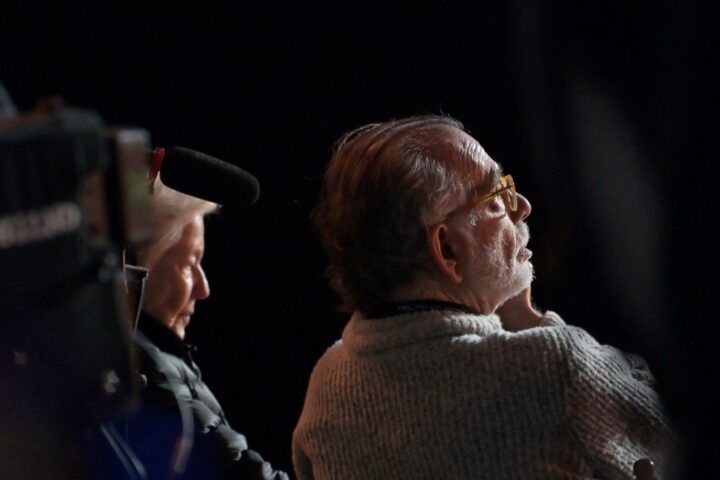
“All the wrong things are kept secret, and that destroys people,” observed Nan Goldin in Laura Poitras’s All the Beauty and the Bloodshed. Now, as if in response to the American photographer’s words, Cover-Up, Poitras’s follow-up to her 2022 documentary, takes us on a journey through the work of investigative journalist Seymour Hersh to reveal how disclosures of major institutional scandals do little to steer America back on track.
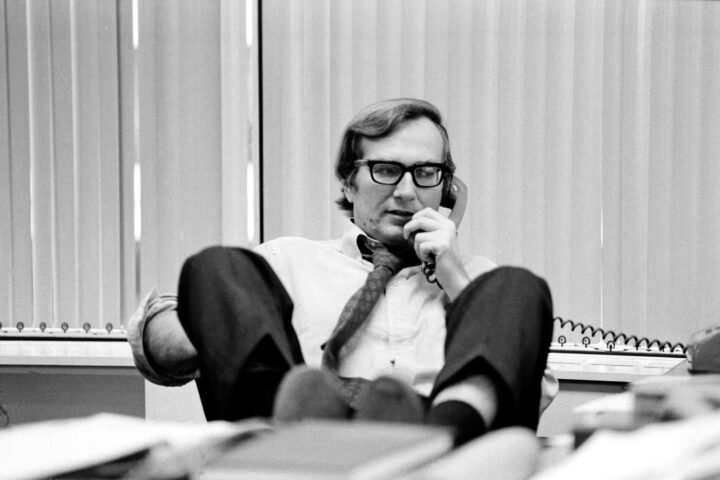
The foundation of the documentary, which Poitras co-directed with Mark Obenhaus, is Hersh’s recounting of these depressing developments. It took 20 years from the filmmakers’ first outreach to convince the Pulitzer Prize winner to sit down for an interview. “I was very happy not talking about myself,” he deadpans at one point. So it’s a sign of respect that, apart from a brief aside about his early life and family, the conversation between Hersh and the filmmakers centers squarely around his work as a journalist devoted to transparency.
Poitras and Obenhaus, themselves journalists in Hersh’s mold, probe the highs and lows of his career with a sense of mutual respect that never crosses into obsequious reverence. To further ensure their subject’s legend doesn’t take greater precedence than the facts he brought to life, the filmmakers devote significant space to the copious documentation Hersh keeps of his reporting. They shoot the entirety of their interview with Hersh inside his office, with the man surrounded by folders and file cabinets containing decades’ worth of his records.
Hersh’s reporting of the post-World War II world is a diagnosis of systemic rot. He uncovers a cancer that infects institutions and inspires individuals to take actions that respond to perverse incentives. “We are a culture of tremendous violence,” Hersh somberly declares, and Cover-Up provides over a half-century’s worth of substantiation for his claim.
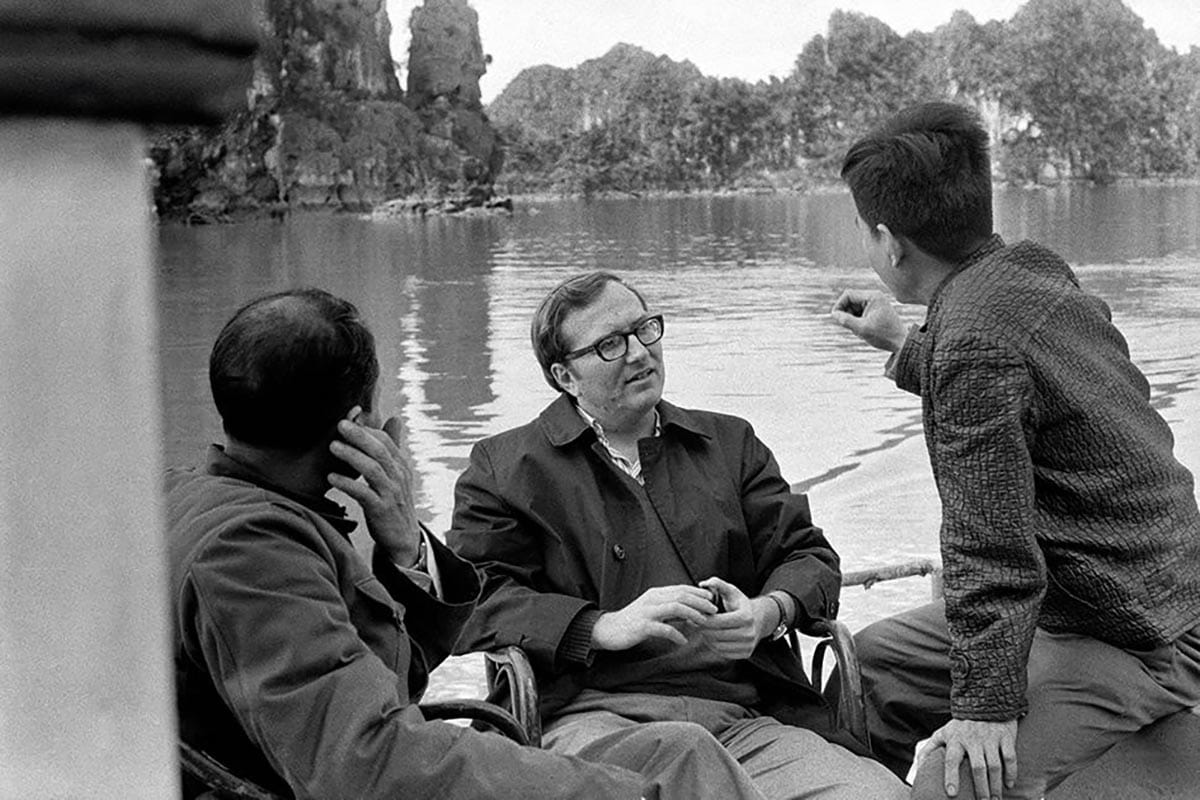
Throughout the documentary, Poitras and Obenhaus string together a highlight reel of Hersh’s greatest stories, brought to life through his words, archival footage, and insights from a few collaborators—as well as one source making herself known for the first time. Any one of these would be enough to make a legend out of a journalist. From the My Lai massacre to the Watergate scandal, from corporate fraud and abuse at Gulf and Western to the torture at Abu Ghraib, Hersh worked his sources to get scoops that helped reframe narratives and mobilize opposition to malfeasance. By the man’s estimation, he achieved this all because he threw off the self-censoring shackles that he sees as defining the cowardice of the mainstream press.
Poitras and Obenhaus respect Hersh’s preference for resisting psychoanalysis of himself, but even he must recognize the centrality of his iconoclastic style to securing such monumental exposés. Hersh claims his sources might have hated him personally. Still, people in power spoke with him because they couldn’t deny the way he ruthlessly upheld his principles.
Hersh’s dependence on the truthfulness of his sources does leave him vulnerable to making errors in judgment, such as when he predicted that Bashar al-Assad wouldn’t gas the Syrian people. Earlier in his career, a complex web of forged documents in his investigations of the Kennedy clan put Hersh at the center of a scandal rather than reporting on one. While he caught the error before his book made it to press, the affair put a dent in his unimpeachability.
Still, Hersh persisted through fallow periods, and the film closes with a discussion of the investigative work produced by the octogenarian as an independent entity on Substack. On the one hand, this self-publishing model feels like the logical endpoint of a career for a journalist who long abandoned writing for major legacy publications that prioritize speed over substantive reporting. Yet there’s a hint of irony in Hersh joining a platform where cults of personality take root, given his personal reluctance to put himself in a position to become the story.
No matter how one interprets this concluding chapter in Hersh’s career, that someone’s work in holding malevolent actors to account spans from wars in Vietnam to Gaza lands with a staggering impact. Cover-Up is a sweeping, if tempered, tribute to investigative journalism, attesting to its enduring importance at a time when resources for it have substantially declined.
Since 2001, we've brought you uncompromising, candid takes on the world of film, music, television, video games, theater, and more. Independently owned and operated publications like Slant have been hit hard in recent years, but we’re committed to keeping our content free and accessible—meaning no paywalls or fees.
If you like what we do, please consider subscribing to our Patreon or making a donation.