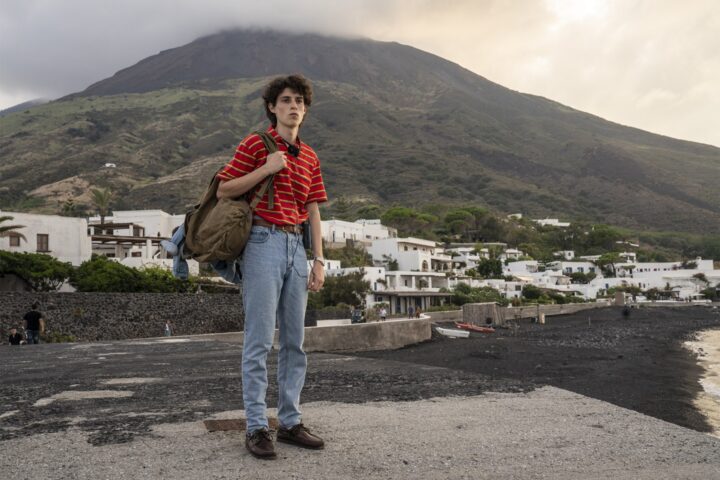
Francesco Sossai’s The Last One for the Road is a grungy love letter to the Veneto region of Italy that feels as if it’s wrenching itself back from the cusp of saying something more profound about the place and the people who inhabit it. Centered around the drunken escapades of two middle-aged slackers and an accidental hanger-on, the film is a gene splice of road movie and coming-of-age story, and it’s as whimsical as it is frustratingly disjointed.
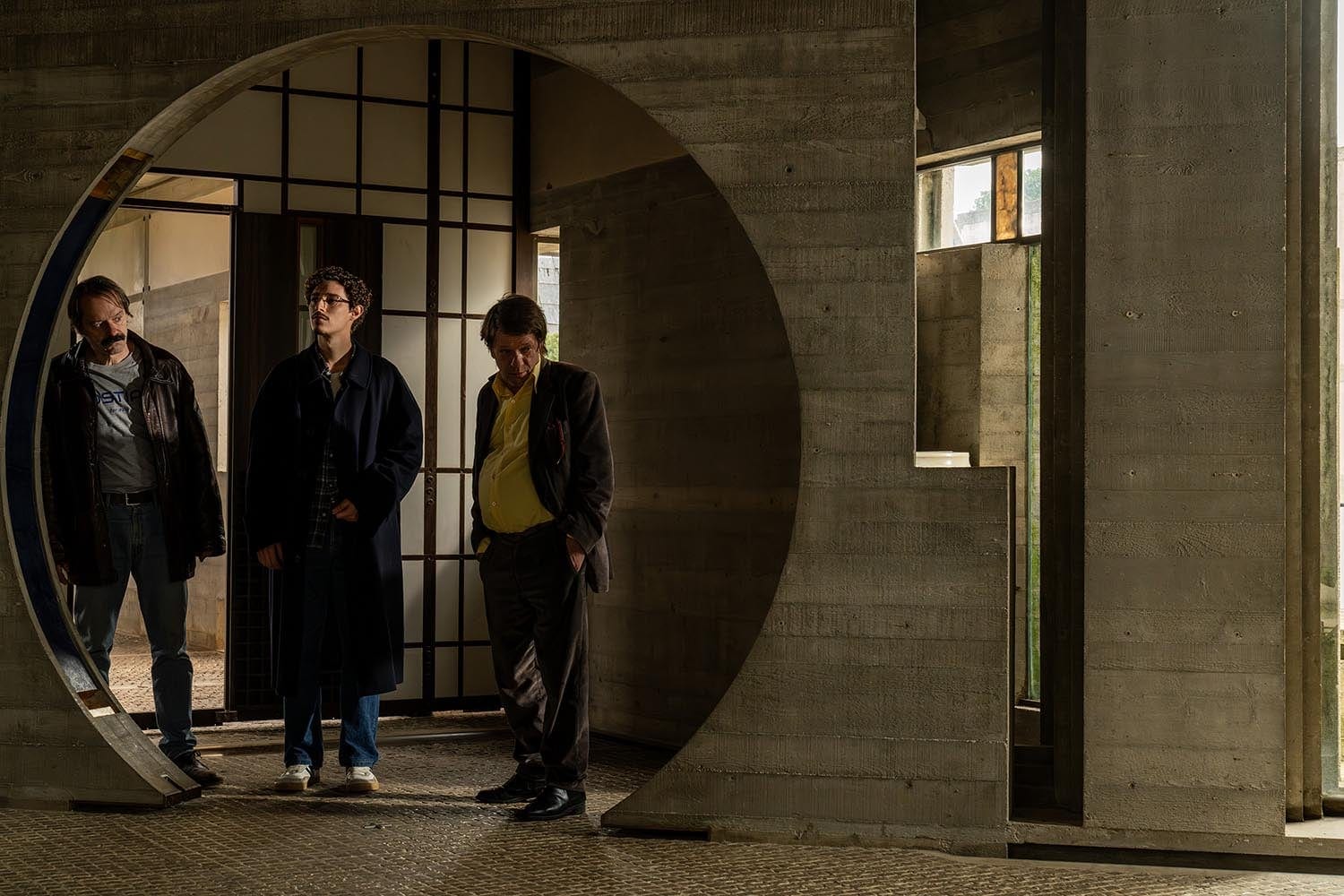
Carlobianchi (Sergio Romano) and Doriano (Pierpaolo Capovilla) are two uninhibited, cash-strapped petty criminals who seem to live every moment of their lives in anticipation of their next drink. On their way to surprise their old friend, Genio (Andrea Pennacchi), at the airport, the two fiftysomething men befriend a shy college architecture student, Giulio (Filippo Scotti), and a series of hijinks derails what should have been a short trip into a long journey that touches on but never lingers for very long on the characters’ social realities.
Early in Sossai’s film, you get the sense that Carlobianchi and Doriano both represent a type of person who’s going the way of the dodo. But, then, upon the two men meeting Giulio, The Last One for the Road begins to zero in on the not-so-wide chasm between generations united in their disillusionment. The only difference between the older men and Genio is that the architecture student just hasn’t figured out how to let life’s frustrations roll off of him. But as the two older men commit themselves to bringing Giulio out of his shell with their old-school irreverence, The Last One for the Road fully gives itself over to an aimlessness that doesn’t so much reflect the characters’ lives as it does the script’s lack of commitment to interiority.
At one point, the film’s central flashback opens a window into the sunglasses-laundering operation that Carlobianchi and Doriano ran with Genio, and somewhat implausibly made them a fortune. As Giulio listens to his new friends’ stories, he imagines himself as Genio, who vacated to Argentina with the money he managed to keep, in a moment that we glimpsed early in The Last One for the Road. It’s maybe not the strangest digression in the film, but it’s the most confounding. That is, Giulio is such a cipher that you can’t tell if this act of projection is a reflection of his shyness or of his fascination with Carlobianchi and Doriano’s crimes.
The Last One for the Road isn’t without its flashes of humor, like the moment where Carlobianchi and Doriano learn that they’ve been drinking non-alcoholic beer at a rest stop and just roll with the punch, and here and there it shows us a surprising side to the men. In a notable scene, our trio of main characters weasel their way into a count’s (Denis Fasolo) rundown villa posing as architects. The count laments that “barbarians” are about to build a highway through his garden, the men discuss the fleeting nature of architecture, and, somewhat out of nowhere, Doriano ends up making out with the count. Like so many other things in this chilled-out film, Sossai is only too happy to let the subject of Doriano’s sexuality hang in the air.
Throughout, The Last One for the Road flips back and forth in time and between perspectives, as if trying to suggest the remembrance of a dream. We increasingly get a clearer picture of Carlobianchi and Doriano’s relationship to Genio and their connection to the company exec in the opening scene who swoops in on a helicopter to gift a loyal factory retiree with an expensive watch. But even as things cohere, it isn’t with emotional catharsis, perhaps because nothing ever feels at stake for the characters. Will Giulio ever summon the courage to ask the girl he likes on a date? If he does, one imagines that film will just shrug it off as a matter of no consequence.
Since 2001, we've brought you uncompromising, candid takes on the world of film, music, television, video games, theater, and more. Independently owned and operated publications like Slant have been hit hard in recent years, but we’re committed to keeping our content free and accessible—meaning no paywalls or fees.
If you like what we do, please consider subscribing to our Patreon or making a donation.