The fourth and final season of Killing Eve begins in typical fashion, with a tense, slowly unfurling lead-up to a murder. We see a woman who appears to be Villanelle cruising on a motorcycle through a barren Russian town, breaking into an office, and pointing her gun at her latest mark. Past seasons have primed us to take this setup at face value, but when the biker removes her helmet, it’s revealed to be Eve (Sandra Oh).
More than ever, Killing Eve is about the various ways in which Villanelle (Jodie Comer) and Eve’s lives mirror and counterpoint each other in their emotionally unstable tango toward inhabiting the same persona. Villanelle, tired of being a killer for hire, pursues a semblance of a normal life and truly seems to be showing signs of an emerging consciousness. The three episodes provided to press mark a sea change for the show’s central duo as their dynamic gets flipped in terms of who has the most power to realize their goals.
Unburdened from last season’s more languid subplots, such as Konstantin’s relationship with his daughter and Kenny’s workplace investigating his death, the new season homes in on the show’s central premise of bringing down the Twelve. The principal characters have drifted apart following Kenny’s tragic demise, with Carolyn (Fiona Shaw) and Eve conducting separate investigations into the Twelve and Villanelle spending time at a Christian homestay.
A wide-eyed Twelve recruit, Pam (Anjana Vasan), echoes Villanelle both in her eagerness to become a killer for hire and the ease with which she kills. It’s a grim reminder that despite being exceptional, Villanelle is only one of many in Twelve’s ceaseless conveyor belt of hired killers. But unlike past assassins like Rhian, Pam exhibits an agency as an assassin that’s typically afforded only to Villanelle, especially as the story zeroes in on her abusive family life and how working for Hélène (Camille Cottin) represents an out for her.

It’s telling that the search to take down the Twelve and find out who killed Kenny is divided between Eve and Carolyn. Liberated from the political labyrinth of the mole-infested MI6 and the people working there, Eve tracks down leads on the Twelve through Villanelle’s signature methods of violence, deceit, and stylish disguises. There’s a sense that Eve sees taking down the Twelve as a thrilling challenge as she trots around the globe for leads on Hélène’s location.
Eve’s transformation has felt inevitable since Villanelle first gifted her with that tasteful suitcase of clothes and perfume. The casualness with which she inhabits her new persona, finally unshackled from work and a boring husband, suggests that Villanelle was right that Eve was meant to be this person from the start. Ironically, whereas last season saw Villanelle try to climb through the ranks of the Twelve like a corporate employee, it’s the unburdened Eve who realizes that the only way to reach the Twelve is through breaking the rules.
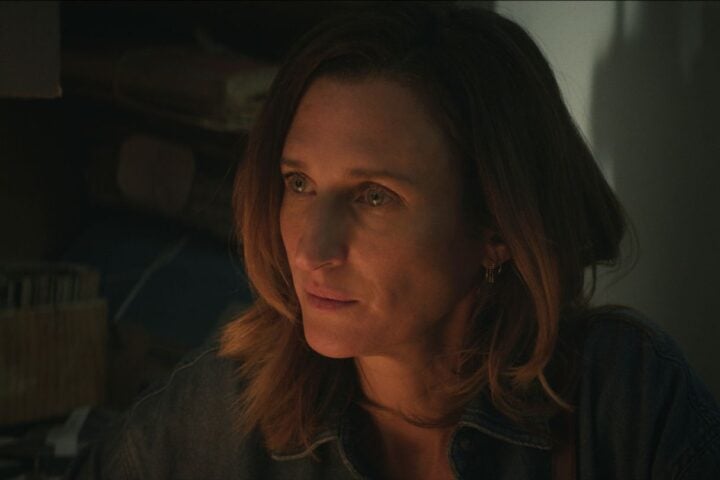
In an exhilaratingly tense sequence that calls back to a moment in season one, Eve tracks down Hélène at her home and invites herself inside to cook Shepherd’s pie. The two tensely extract information from one another before their exchange turns into a series of power plays involving a slowly heating electric stovetop, a frozen lobster tail, and Eve reading a bedtime story to Hélène’s young daughter. As Eve promises to reveal more information over dessert, it becomes apparent that she’s almost fully grown into a new assurance.
And just as Eve reaches the peaks of her powers, Villanelle grows smaller as she mulls what her life and feelings mean now that she’s done with contract killing but still feels the urge to kill. More importantly, she realizes that Eve will never care about her unless she changes. “Is this what being insecure feels like?” she asks MI6 psychologist Martin (Adeel Akhtar) in one of the many humorous but revealing hostage-therapy sessions between the two.
As written, Villanelle has always circled around the question of whether a psychopath can learn to feel. Comer’s performance has emphasized the childlike aspects of Villanelle since her façade of confidence began to crumble last season, and her journey this season presents a darkly humorous take on what faith and forgiveness mean for someone whose brain is hardwired to not feel remorse. At one point, Eve compares Villanelle to a scorpion, somebody who can’t change their nature, to which Villanelle retorts, “Maybe you are the scorpion.”
Since 2001, we've brought you uncompromising, candid takes on the world of film, music, television, video games, theater, and more. Independently owned and operated publications like Slant have been hit hard in recent years, but we’re committed to keeping our content free and accessible—meaning no paywalls or fees.
If you like what we do, please consider subscribing to our Patreon or making a donation.