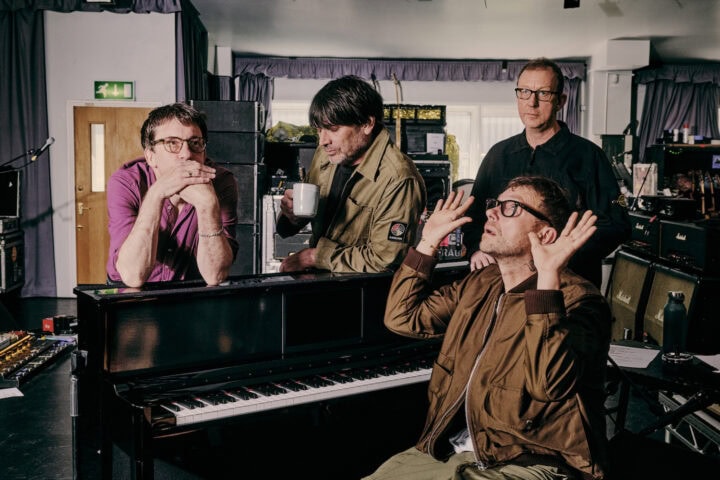
Pulp’s first single in over a decade, “Spike Island,” grapples with Jarvis Cocker’s mixed feelings about the song’s very existence. He reflects about the unhappiness that seeped into the band’s music after they hit it big in the mid ’90s: “I was heading for disaster/And then I turned back.” Yet he remains torn between rejecting the glare of the spotlight and feeling that “I was born to perform/It’s a calling.” It’s a hell of a way to reintroduce the Britpop icons.
Some oddly deconstructed influences pop up on More, Pulp’s first album in 23 years. “Got to Have Love” nods toward disco, and the slapped bassline of “Slow Jam” tips its hat at funk. But with the exception of the latter track, the album’s second half feels slow and lumbering, like a night at the club as seen through the eyes of an aging lounge lizard.
Luckily, Cocker’s skill at crafting layered character studies remains undiminished. “Tina” resembles a love song but is ultimately more about an unhealthy infatuation: “Although we’ve never met or exchanged email/We got a strong connection, it just can’t fail.” Similarly, “Hymn of the North,” an ode to Cocker’s roots in Sheffield that brings Pulp’s baroque-pop leanings to full flourish, could be directed to a lover, a child, or even the singer himself: “Northern lights will guide you home…Don’t forget your northern blood.”
Several songs on More display a dark wit reminiscent of Leonard Cohen. On “My Sex,” Cocker laughs at his own penchant for singing about his sexual fantasies, aided by female backing vocals. His declaration that his cock is “hand-reared” is pretty damn amusing, as is the chaos of the song’s dissolution into jarring strings and a recitation of numbers. While that song ponders the ambiguity of desire, “Got to Have Love” offers a contrary take on the perennial subject of Cocker’s sex life: “Without love, you’re just jerking off inside someone else.”
But More runs out of steam far too quickly. “Farmers Market” hovers quietly, threatening to turn into a power ballad—“Ain’t it time to start living?” Cocker begs—but never really gets there. While the track lengths aren’t unreasonable, with none running past six minutes, the songs feel overextended, lacking the propulsive force and shifting dynamics of Pulp’s best work.
Since 2001, we've brought you uncompromising, candid takes on the world of film, music, television, video games, theater, and more. Independently owned and operated publications like Slant have been hit hard in recent years, but we’re committed to keeping our content free and accessible—meaning no paywalls or fees.
If you like what we do, please consider subscribing to our Patreon or making a donation.