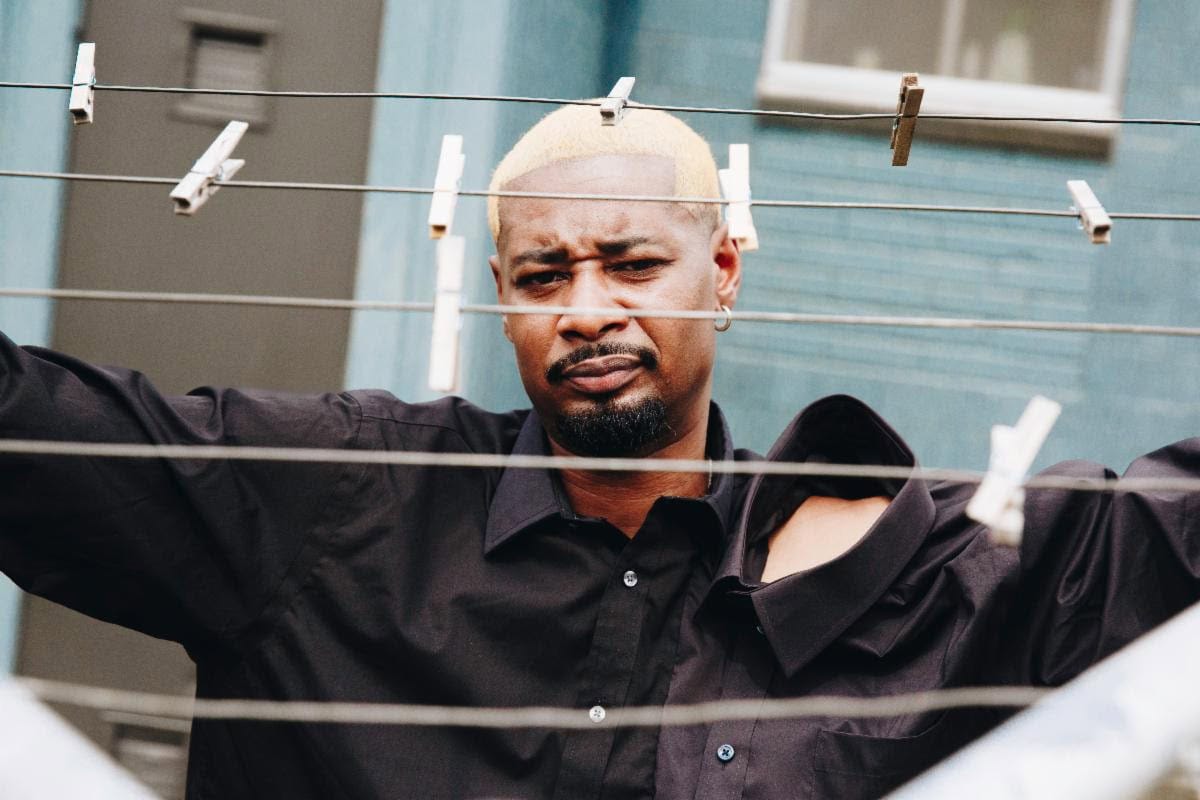
Danny Brown’s Quaranta serves as a sort of spiritual sequel to 2011’s XXX: That project was completed right when he turned 30, and “quaranta” means 40 in Italian. But the album that Quaranta is most comparable to, at least on a thematic level, is 2016’s Atrocity Exhibition, as both depict addiction as a life-or-death struggle. And unlike the EDM on 2013’s Old, you’d be hard-pressed to start raging to much of the material here.
While Atrocity Exhibition’s production was hectic and borderline bonkers, Quaranta’s is far more subdued. Tracks like “Tantor” are classic off-the-wall Danny Brown joints featuring the rapper-singer’s traditional leftfield vocal delivery and compositional quirks, but that’s more the exception than the rule. The remaining songs are largely contemplative and heavy, with slower, spacier beats that complement Brown’s understated and gravely flow.
One gets the sense that time has caught up with Brown, that the weight of his past mistakes and lingering regrets have become too heavy to bear. The misfit MC’s rapping isn’t as sprightly as it once was, and his once-outrageous love for zany wordplay is noticeably toned down.

Emblematic of the personal depths the album explores, the first bar that Brown raps on the opening title track finds him questioning the very profession that took him out of poverty: “This rap shit done saved my life/And fucked it up at the same time.” He builds on that further on the sparse “Hanami,” where he soberingly acknowledges that he’ll probably never earn mainstream acceptance. “We doin’ this even without a record deal,” he humorously remarks at the start of “Dark Sword Angel,” as “half the shit I say can’t be understood by executives.” In classic Brown fashion, he knows how to balance out serious-minded musings with bawdy humor.
That equilibrium is thrown off toward the album’s back end, where the funereal tone is laid on so thick that it becomes suffocating. Brown details the unraveling of a romantic relationship on “Down wit It” in austere terms—“Thought that everything was sweet/Now I belong to the streets”—and the album’s final four tracks in particular operate closer to pure confessional than anything resembling traditional rap songs. But while it’s satisfying to hear Brown exorcising his demons, one wishes that he was able to accomplish it with at least some sense of immediacy.
Still, Brown has far greater success when rapping about his own struggles than when he tries to tackle problems from the outside world. “Jenn’s Terrific Vacation,” whose title is an already too cutesy play on the word “gentrification,” approaches its nominal subject manner by listing a litany of easy signifiers for modern-day urban development, from Starbucks to a dog park, but the track never delves into what makes any of those things necessarily bad.
It’s clear throughout Quaranta that Brown has found some semblance of inner peace, which is worthy of celebration in its own right. But while there’s something admirable with how much Brown believes in the healing power of music, it’s often at the expense of compelling narratives. Thus, Quaranta makes for an often frustrating experience, where tracks will circle around a topic with some level of pathos but seem incapable of ever reaching their full potential.
Since 2001, we've brought you uncompromising, candid takes on the world of film, music, television, video games, theater, and more. Independently owned and operated publications like Slant have been hit hard in recent years, but we’re committed to keeping our content free and accessible—meaning no paywalls or fees.
If you like what we do, please consider subscribing to our Patreon or making a donation.