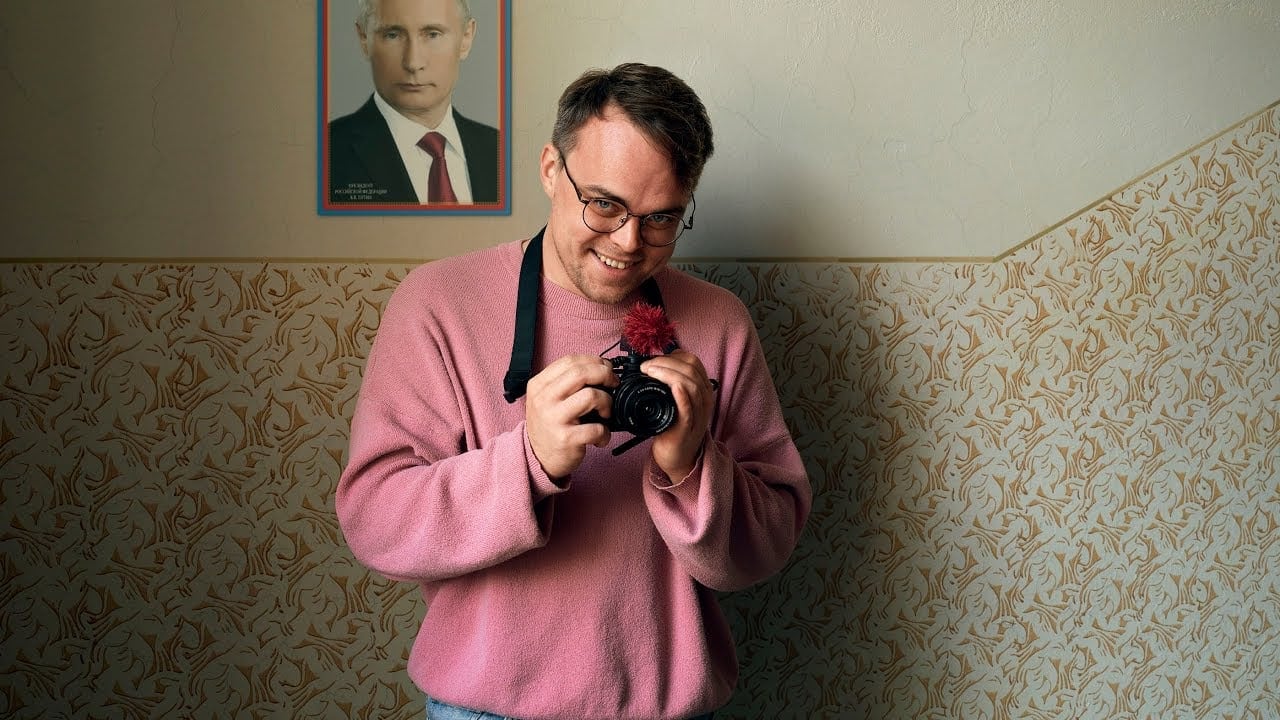
David Borenstein’s Mr. Nobody Against Putin has the makings of a very dark sitcom. The documentary focuses on Pavel “Pasha” Talankin, a fun-loving and caring primary school teacher in Karabash, a toxic mining town in Russia that became YouTube famous for being one of the most polluted cities in the world. Pasha also serves as the school’s videographer and has turned his office into a hangout for students—the safe space he wished he’d had when he attended that very school. (In fact, his mother is still the librarian there.)
Pasha, who’s also credited as a co-director on the film, gets along well with his colleagues. They’re mostly female and equally dedicated to the calling of education, save for one ominous-looking male instructor who teaches—preaches—a Russian nationalist, revisionist history class that’s even scarier than his vampire visage. And then the real terror begins—first for Ukraine and then for any Russian citizen who dare stand with that country’s “neo-Nazi regime.”
While the thirtysomething Pasha is undoubtedly a freethinking pro-democracy liberal, just like most of his young charges and the former students he continues to mentor, he’s no frontline activist. On the contrary, like the majority of his fellow countrymen he’d just as soon keep his head down and focus on the mundane activities of daily life that he can control, which for him include filming his students so they can have a record of their lives. Until, that is, Putin’s “special military operation” metastasizes, and the happy-go-lucky cameraman suddenly finds himself enlisted in the war effort at home—tasked with shooting footage of the new “patriotic education” in action to be sent to the propaganda bureaucrats above.
Instead of reading and writing, there’s now marching and anthem singing. Lessons include the non-history of Ukraine. As the war drags on, Pasha’s former students, along with the older siblings of his current ones, get called up to serve, ratcheting up the pressure to support the troops with ostentatious support. Or, at least, keep silent about the madness of it all, neither of which Pasha can ultimately force himself to do. By then, his passion for filming is turned against him, with his camera merely a weapon to promote an unjust war.
So, Pasha stages his own rebellion, transforming from small-town videographer to documentary filmmaker, secretly collecting hundreds of hours of evidence of the propaganda monster bent on devouring the innocent hearts and minds of his hometown. And then he makes a decision that’s both brave and reckless: He confides in another filmmaker, an American based in Europe, beginning a treasonous collaboration that will change both their lives.
It’s an inspired pairing, made possible by a Russian colleague of the Copenhagen-based Borenstein who connected the two online. Like Pasha, Borenstein seems like both a goofy oddball—his bio includes a stint playing “saxophone in a hotel lounge band in Sichuan”—and a serious journalist. Having spent nearly a decade in China working on long-form projects for networks ranging from the BBC to CNN to PBS, the Chinese-fluent expat also knows how to navigate around the crosshairs of an authoritarian regime. (This reasonably includes not notifying subjects that they’re in the film, out of concern for their safety, but this raises ethical questions of consent—not to mention confirming Putin’s “foreign agent” warnings.)
Remarkably, for over two years the duo managed to speak weekly through encrypted phone calls, while Pasha also securely transferred video files for Borenstein to then edit. Smartly, Borenstein decided to keep the focus on the unlikely hero’s deep love for his students, his country, and his long-derided hometown as he shaped the suspenseful narrative. The result is a film that starkly reveals the toll propaganda takes on the everyday individuals and communities held hostage by its deployers—whether they buy it or not—while never forgetting to laugh at the stupidity and absurdity to keep sane. For poking fun equals preserving dignity, as master practitioner Alexei Navalny well knew. Which, in the end, is the biggest “fuck you” of all.
Since 2001, we've brought you uncompromising, candid takes on the world of film, music, television, video games, theater, and more. Independently owned and operated publications like Slant have been hit hard in recent years, but we’re committed to keeping our content free and accessible—meaning no paywalls or fees.
If you like what we do, please consider subscribing to our Patreon or making a donation.