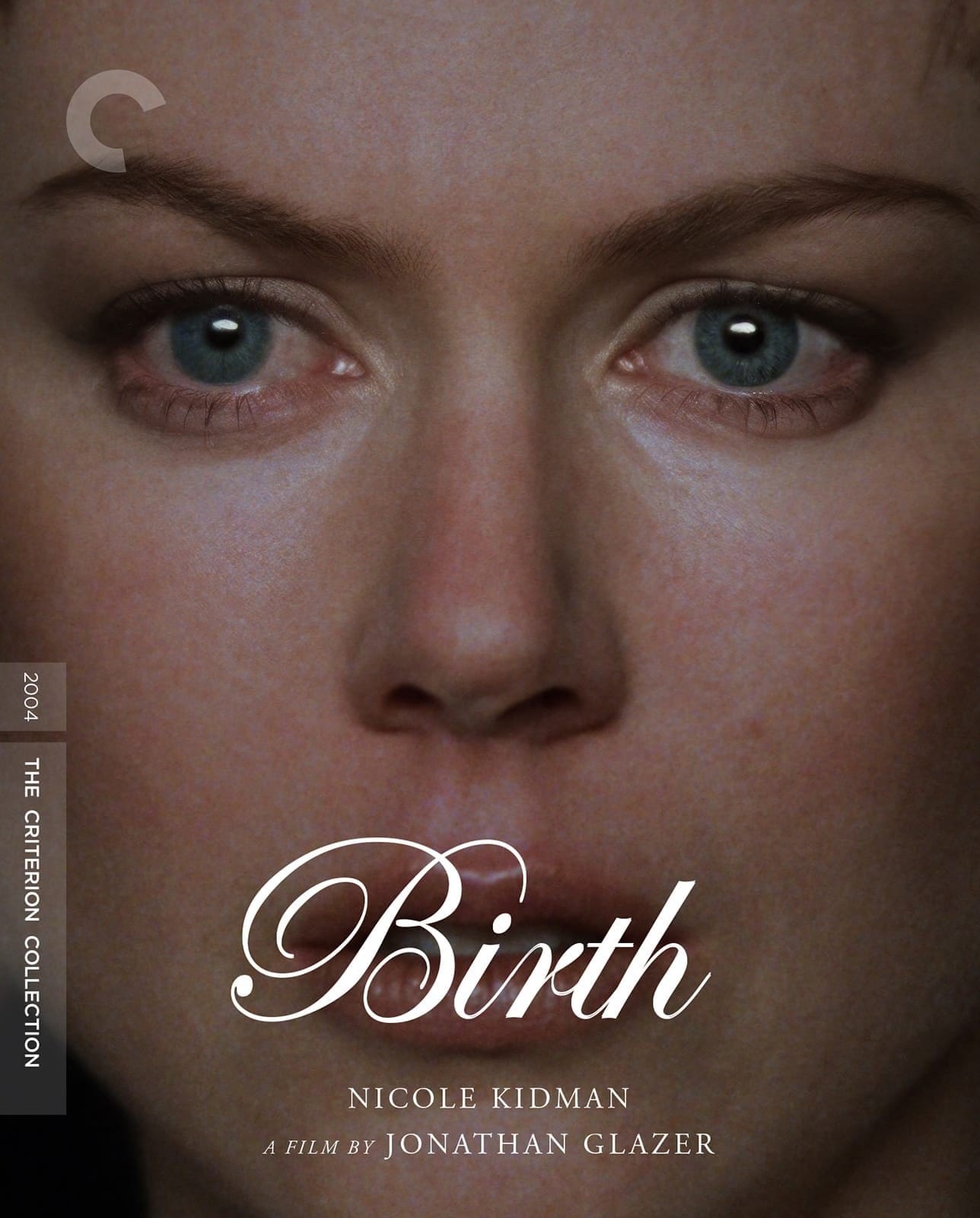
 It’s not difficult to see why Jonathan Glazer’s Birth sharply divided critics upon its release. Its premise—a woman, Anna (Nicole Kidman), meets a 10-year-old boy (Cameron Bright) who claims to be the reincarnation of her dead husband, Sean—is at once absurd and wildly problematic. As Anna increasingly believes the boy, her family and friends—to say nothing of her bewildered and outraged new fiancé, Joseph (Danny Huston)—fear for her sanity.
Kidman and Bright make compelling foils for one another in their muted performances. Bright plays Sean with a detached inquisitiveness that walks the knife edge between childlike innocence and a hint of wisdom no one his age could possibly have, which does as much to raise the plausibility of his claim as his ability to divulge intimate details of the dead Sean’s past. Kidman adopts that same arch quality but as a defense mechanism, always maintaining an outward calm perhaps born of the residual, numb pain of loss that leaves Anna wide open to believing the boy.
The clearest tonal point of reference to the atmosphere that Glazer conjures is the work of Stanley Kubrick, which is invoked throughout with various stylistic echoes. Steadicam shots through wintry New York parks naturally recall The Shining, while a scene of Joseph finally losing his cool with the unwelcome intrusion of Sean into his life is nearly a beat-for-beat recreation of Barry Lyndon’s most chaotic scene. But the Kubrick film it most resembles is the one Kubrick never made, as Birth may be the closest one can come to seeing a vision of A.I. Artificial Intelligence completely shepherded by Kubrick from start to finish, one lacking the dashes of sentiment of Steven Spielberg’s completed version and warping the fairy-tale, dreamlike quality of the released film into something more outwardly nightmarish.
Part of the film’s ambient unease stems from the difficulty of defining what genre it belongs to. Roger Ebert’s perceptive comparison of Birth to Roman Polanski’s Rosemary’s Baby opens the door to viewing the film as outright horror, a reading that makes even more sense in retrospect when one looks at Glazer’s subsequent features, Under the Skin and The Zone of Interest. Certainly, Bright’s mannered blankness produces many ambiguities, all of them troubling in their implications, and the film never shies away from the idea that it would be just as terrifying if Sean were telling the truth as it would if he were fibbing for abstruse reasons.
The term “fearless” is usually attached to performances of raw intensity, and Kidman does have her moments even early in the film where Anna betrays a wild-eyed panic at the possibility that her husband may have returned as this strange child. But the enduring power of Kidman’s performance is its restraint. While everyone around Anna, including her mother (Lauren Bacall), views Sean with disbelief, if not outright disgust, Anna looks oddly calm as she states with conviction that Sean is who he says. Critically, the decade that separates her husband’s death from Sean’s entrance into her life presents Anna outside the immediate mania of fresh grief, and Kidman stresses how Anna has rationalized this completely irrational situation.
That Anna believes so calmly and after so much reflection only deepens Birth’s unease and complicates its climactic revelations. If the film ostensibly clears up the question of Sean’s identity, it does so in a way that rattles both Anna and the boy so violently that no simple conclusions can be drawn from it. In some ways, Birth forms a diptych with Kubrick’s Eyes Wide Shut, as an initially risible, increasingly abject exploration of the irreconcilable contradictions of love and the fundamental madness of one our most basic emotions.
Image/Sound
This release marks a quantum leap forward in picture quality for Birth from its 2002 DVD release. The stark whites and soft yellows that dominate the palette retain the intentional color bleeding of the impressionistic images, as well as show a greater range of gradation than they did on standard-definition video, and the depth and accuracy of the black levels is outstanding during nighttime shots. The audio track reveals the subtle richness of the film’s sound design, from the off-screen noises inside the central Upper East Side apartment complex to the urban din of city. Most noticeable is the added sonority lent to Alexandre Desplat’s score, with its deft bits of orchestration spotlighting every instrument in the recording ensemble.
Extras
Criterion’s disc comes with a new making-of documentary assembled from unreleased EPK footage taken during Birth’s shoot and various interviews conducted with cast and crew. It’s fascinating to see everyone from producers to crew to the actors discussing then-fresh reactions to such a unique idea for a film, as well as how surprisingly improvisatory Jonathan Glazer could be, as he revised ideas based on what energy the actors brought to the set each day.
In a new interview, camera operator Craig Haagensen and first assistant cameraman Eric Swanek unpack Harris Savides’s approach to the film’s at once naturalistic and dreamlike cinematography. They thoroughly break down several key shots, getting into the technical camera settings used but also offering up explanations of the effects each calibration achieved.
The disc also includes a 2004 episode of Charlie Rose featuring Glazer and Nicole Kidman. As with many of Rose’s interviews, the questions are superficial but often provoke considered answers, particularly from Kidman, who offers a route into the film’s imposingly arch exterior by seeing it as a story about love in all its chaotic impact. A booklet essay by author Olivia Laing analyzes the way that the film’s ostensibly concrete answer to Sean’s identity only deepens the mystery. Laing also calls attention to ideas about the struggle of people to fully relate to one another that Glazer would recycle in radically different iterations in his later films.
Overall
Jonathan Glazer’s eerie, melancholy, unclassifiable film maudit finally makes its way to high-definition home video courtesy of the Criterion Collection.
Since 2001, we've brought you uncompromising, candid takes on the world of film, music, television, video games, theater, and more. Independently owned and operated publications like Slant have been hit hard in recent years, but we’re committed to keeping our content free and accessible—meaning no paywalls or fees.
If you like what we do, please consider subscribing to our Patreon or making a donation.