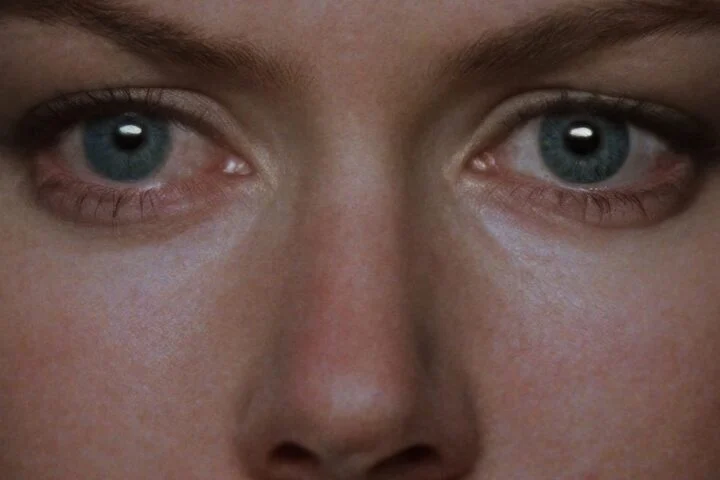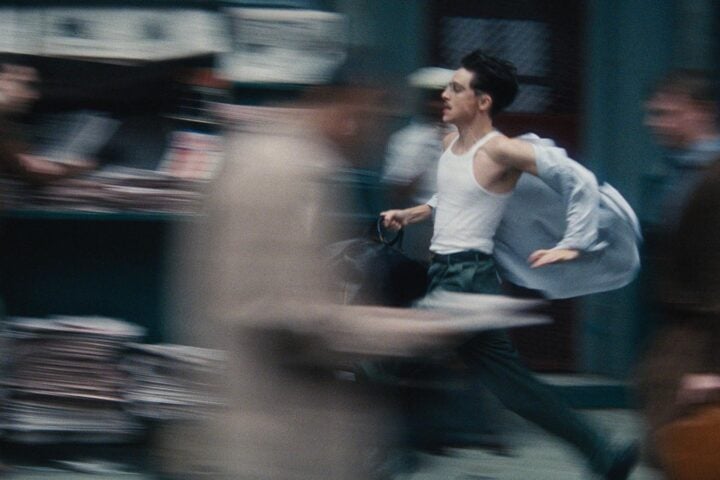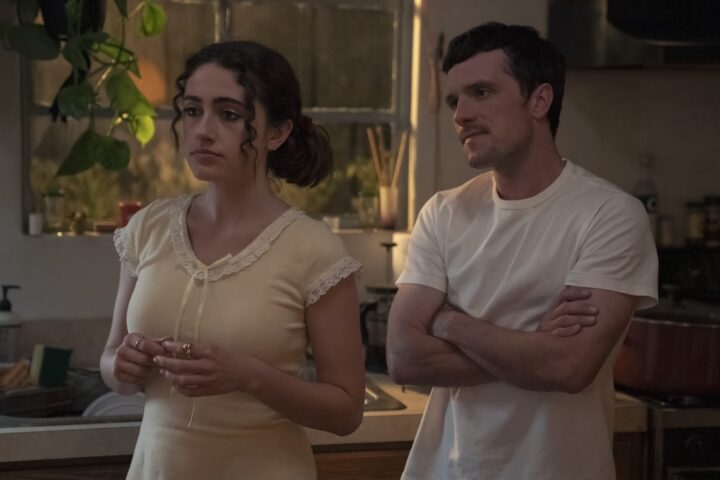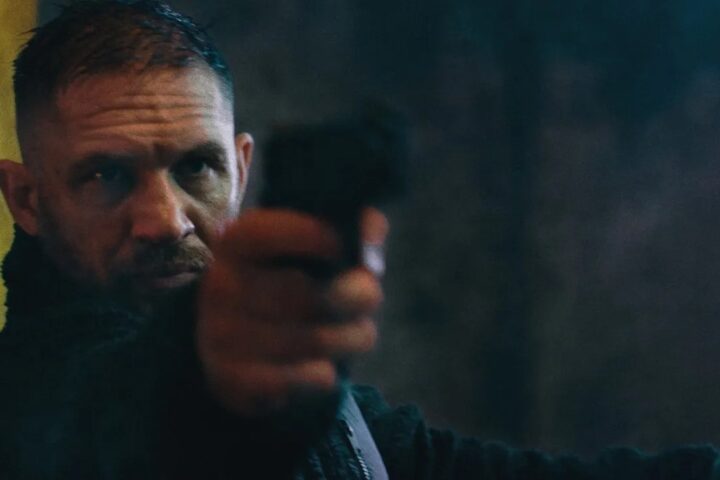
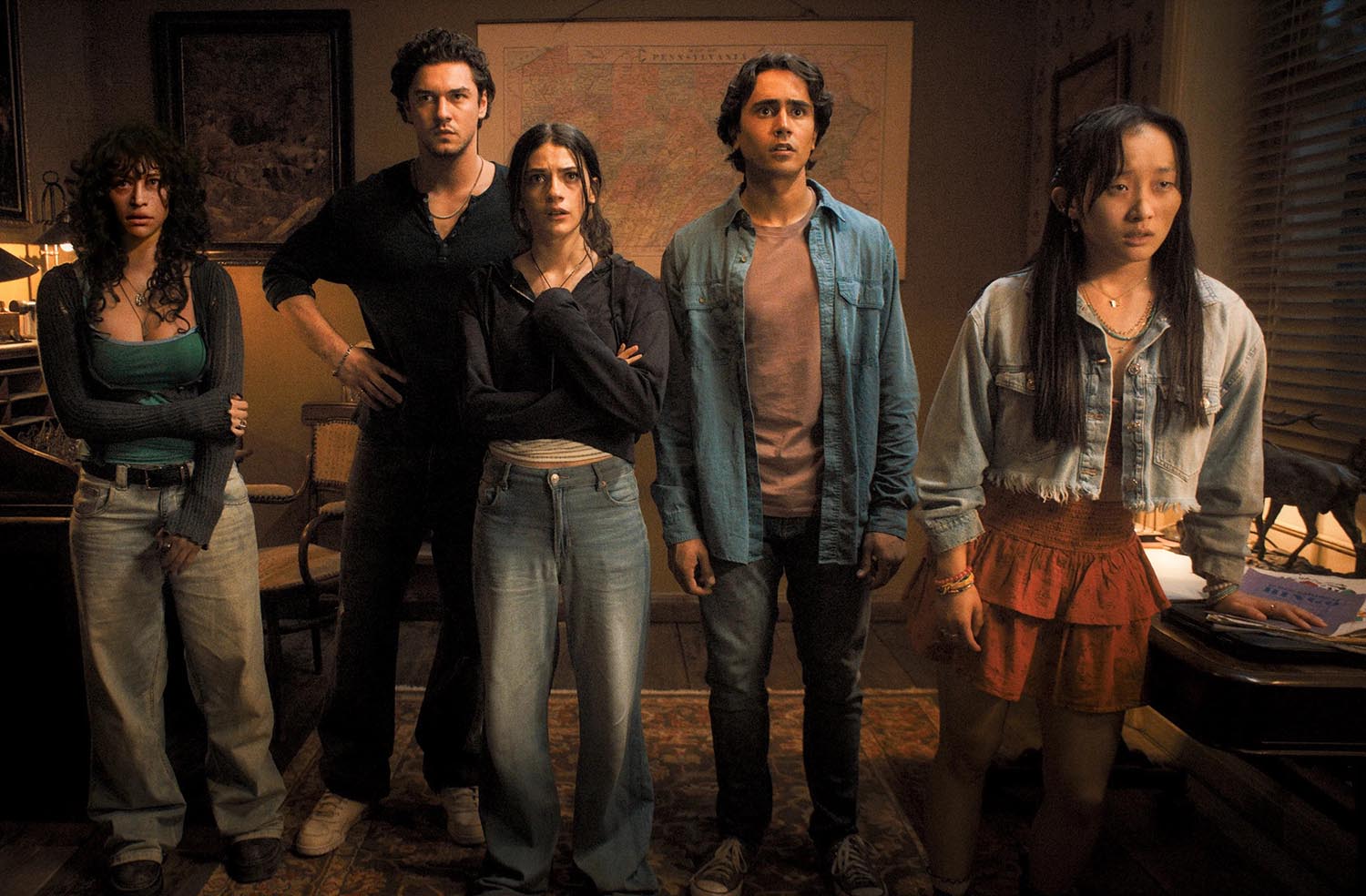
The opening of David F. Sandberg’s Until Dawn will feel eerily familiar even to those who haven’t played the 2015 vivdeo game of the same name that it’s based on. The camera floats upward, giving us a god’s eye view of a car traveling along a straight road, surrounded by a thick forest. It carries a group of young friends who, after receiving cryptic directions from the unsettling attendant of a remote gas station, wind up at a mysterious house in the middle of the woods where a night of unimaginable horror awaits them.
Until Dawn’s story, as written by Gary Dauberman and Blair Butler, is far from original and its attempts to graft deeper meanings about grief and trauma on to it—the group is led by Clover (Ella Rubin), who’s on a mission to track down her missing sister—are hackneyed. Clover’s friends assume fairly typical roles: Max (Michael Cimino) is the lovelorn, sarcastic one; Megan (Ji-young Yoo) is the new-age type whose beliefs in “spirits” and “energy” quickly start to seem a lot less out there; and Nina (Odessa A’zion) is the designated pragmatist. Elsewhere, Nina’s new boyfriend, Abel (Belmont Cameli), is basically living through the worst possible version of what might happen if you go on a trip with your partner’s friends too early in the relationship.
Clover and her pals quickly discover that they’ve been trapped in a time loop that will keep resetting unless they can make it to daybreak in one piece—a task that’s made difficult by the sinister forces that the house throws at them. While Sandberg’s film isn’t trying to cover any new ground, it treats the world of horror cinema as a kind of haunted toy box, grabbing tropes and archetypes from across the genre so that it can play with them all at the same time.
As the night repeats itself again and again, the gang are attacked by creepy dolls and orc-like creatures, jumpsuit-clad Michael Myers types who lurch around wordlessly before pulverizing their victims with superhuman strength, and Blair Witch wannabes. It’s an almost Cabin in the Woods-esque approach, only Until Dawn isn’t trying to deconstruct the genre so it can poke at its insides and figure out how they work—it’s just having fun playing with the pieces.
While the story here diverges drastically from that of the video game, the film successfully translates elements of game logic to the big screen. The characters quickly figure out roughly how many “lives” they have, adding some tension to the time-loop scenario, and it often feels like they’re up against an especially vindictive A.I. as the evil forces find devious ways to thwart the new survival strategy that the friend group comes up with. When Clover and company barricade themselves in the bathroom and attempt to wait for the sun to rise—exactly the sort of sensible strategy that horror characters are often ridiculed for not employing—the house comes up with a hilariously unexpected and extraordinarily gruesome way of driving them out.
The joy that Until Dawn takes in allowing its characters to respawn just so that it can kill them again also feels true to the game that inspired it. Across the interactive horror games that Supermassive Games has become synonymous with, including The Dark Pictures Anthology, the player is often tasked with saving everyone from their doom, but there’s at least as much fun to be had discovering all the grisly ways in which you can go wrong (these games simply roll on when a character dies, so there’s no fear of a “game over” screen to ruin your session). The film also takes great pleasure in these failures, repeatedly dispatching its cast with special effects that are gruesome but never overly gratuitous, using violence to provide a sharp shock or a bit of black humor without lingering too long over the bloody scenes left in its wake.
Aside from a couple of reasonably well-executed jump scares, Until Dawn is never an especially frightening film, as the horror tropes and archetypes that it’s playing with don’t have the full infernal power that they once summoned, and its set pieces are more thrilling than chilling. In its best moments, though, Until Dawn does manage to effectively capture the heart-hammering rush of battering frantically on a gamepad, trying to keep yourself alive.
Since 2001, we've brought you uncompromising, candid takes on the world of film, music, television, video games, theater, and more. Independently owned and operated publications like Slant have been hit hard in recent years, but we’re committed to keeping our content free and accessible—meaning no paywalls or fees.
If you like what we do, please consider subscribing to our Patreon or making a donation.