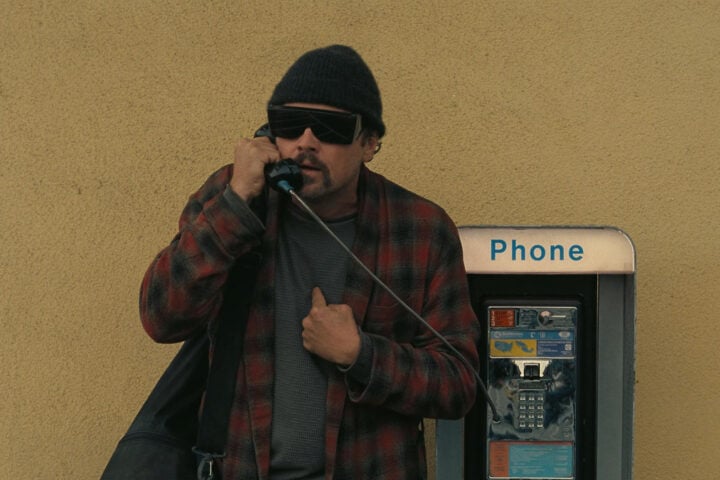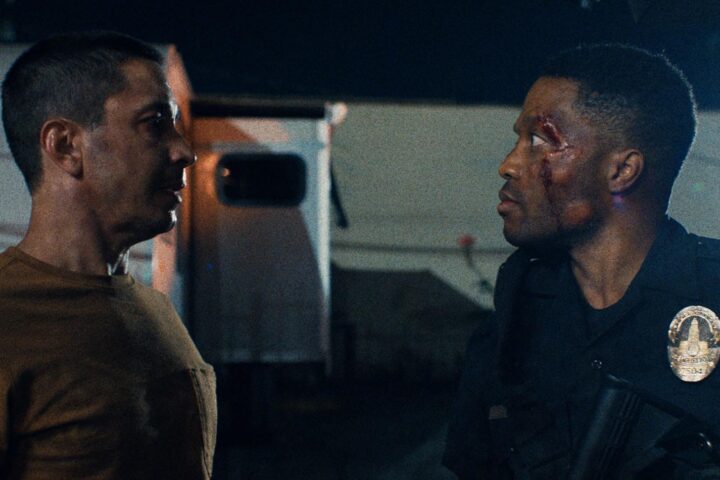

Joe Carnahan is the kind of sturdy, reliable workman that Hollywood used to keep at the ready but is now as rare as hen’s teeth. The Rip, his latest action thriller, is a meat-and-potatoes genre picture that, for all its twists and double crosses, offers no real surprises, but its legible direction and steady escalation of tension makes for an enjoyably retro diversion.
The film begins with a Miami police captain (Lina Esco) being murdered by masked assailants, prompting an investigation by feds who suspect her colleagues as much as they do any cartel or gang member. This is a hoary trope of cop fiction: the idea that one of the least accountable jobs in America is actually subject to an invasive level of oversight. Here, though, no pretense is made to absolve the police of corruption; even while stonewalling internal affairs, Lieutenant Dane Dumars (Matt Damon) and Detective JD Byrne (Ben Affleck) cannot deny how dirty law enforcement departments in and around Miami have become. That one of the investigators (Scott Adkins) is JD’s brother doesn’t preclude him from throwing out baiting insinuations.
Compounding the moral ambiguity, Dane assembles JD and a few other cops as soon as he gets through questioning to carry out a raid on a dubiously sourced tip about a stash of cartel funds hidden in a house. No sooner does the team arrive than they realize they’re in over their head, discovering not a modest six-figure stash but barrels full of money that they know will immediately make them the target of criminals and crooked cops alike. There isn’t even a brief moment of triumph on any of the officers’ faces—only a visible rush of anxiety as each cop instantly sinks into paranoia over the temptation of skimming from such a large score.
Carnahan ratchets up a feeling of dread that positions The Rip closer in spirit to the work of John Carpenter than your run-of-the-mill crime thriller. The house that the cops raid is blanketed by a fog so thick that not even streetlights can illuminate much more than a few feet past the driveway, and the metallic tint of the film’s color timing gives the impression that the characters are standing in a giant gun barrel waiting for the bullet at the other end to be fired. And when the drug cartel whose money the squad found makes it clear that they will not run the risk of prison or death to reclaim it, the tension only deepens instead of lessening as the cops are left with no one to fear but each other and any colleagues who may hear of the lucrative bust.

As the crew stays in the modestly sized house to count the seized money per regulations, Carnahan takes his time to map out the limited space in which the characters move. The cops, too, explore the house, many to find areas to secret themselves to contact the outside world over strict instructions of radio silence. Not a single member of Dane’s squad, including the lieutenant himself, acts in a way that doesn’t elicit suspicion from their comrades or the viewer.
Damon and Affleck play on their long real-life friendship to lend a sense of shared history to Dane and JD that makes the characters’ rising mutual distrust that much more fraught. Each circles the other menacingly, suddenly seeing a lifelong friend in a new light. Amusingly, the only remotely innocent person here is the house’s resident, Desi (Sasha Calle), who knew about the money but is nothing more than a tertiary pawn in a large, fraught game.
It takes a full hour for the hammer to drop and gunfire to erupt, at which point it comes almost as a cathartic relief from the suffocating anticipation of violence. From there, The Rip barrels through a series of action sequences that bring to light just how deep corruption runs in Miami. At one point, the characters move from Desi’s home to the even more claustrophobic setting of an armored DEA carrier, its cramped dimensions putting everyone at risk when a brawl erupts.
Through it all, the gunfights are filmed with an unfussy clarity that not only keeps the action coherent but also the rapid series of twists that recontextualize most of the characters’ behavior to that point. None of the revelations come as a shock, but the film uses each new penny drop as a way to recontextualize earlier scenes without sapping the momentum of the final act.
Since 2001, we've brought you uncompromising, candid takes on the world of film, music, television, video games, theater, and more. Independently owned and operated publications like Slant have been hit hard in recent years, but we’re committed to keeping our content free and accessible—meaning no paywalls or fees.
If you like what we do, please consider subscribing to our Patreon or making a donation.