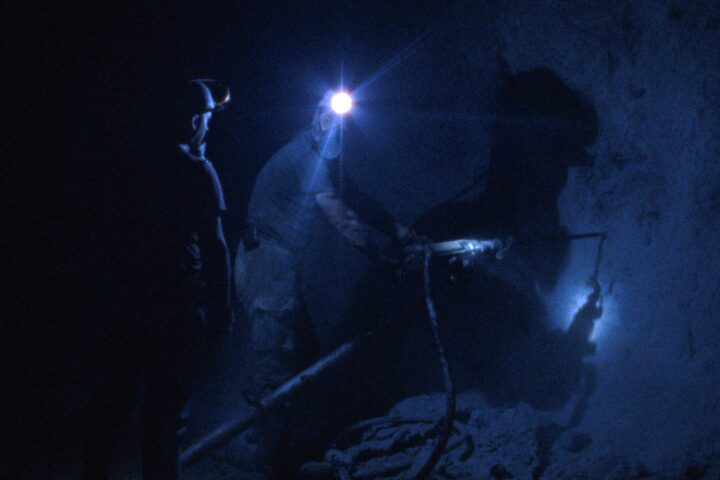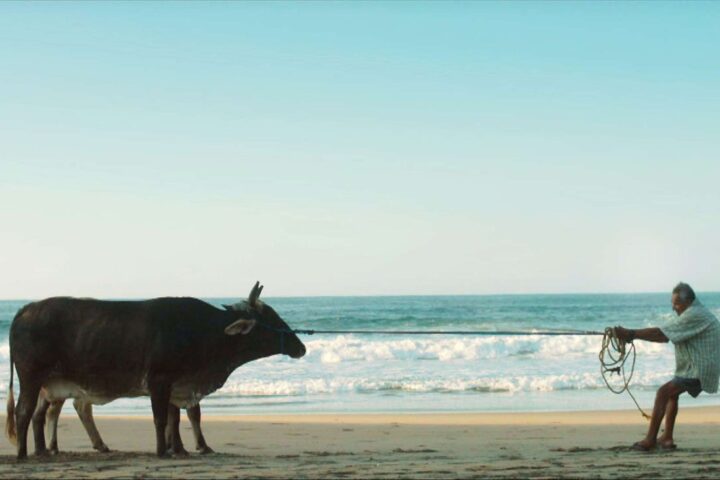
In the 2010s, a coalition of farmers and eco-activists declared Notre-Dame-des-Landes, a commune in western France, a Zone to Defend (Z.A.D.) and occupied the region to block the construction of an airport. Over the next decade, they resisted multiple attempts by the state to evict them, attracting supporters in the tens of thousands, until Emmanuel Macron yielded to their demands in 2018. Guillaume Cailleau and Ben Russell’s Direct Action aims to now answer the question of what happens to a movement after it triumphs, by documenting the self-sustaining community that sprang up after the occupation became permanent.
To this end, the film draws on the slow cinema of Andrei Tarkovsky, Béla Tarr, and, above all, Chantal Akerman with an assemblage of long takes—some shorter, some longer, all several minutes in length—that depict the work processes, leisure activities, and ongoing mobilization efforts of the Z.A.D.’s members. A low-angle shot of a watchtower early in the film’s 216-minute runtime is indicative of what’s to come. Over some five minutes, the only movement is that of clouds traversing the sky, to a soundtrack of nothing but birdsong. Perhaps the best way of generating patience is to test it, and Direct Action rewards the patience it demands.
In another shot, a woman reads for minutes on end from a manual on how to withstand interrogation techniques, until Cailleau and Russell’s camera zooms out and we realize that her audience is a pig. In the context of this particular long take, the zoom is dramatic, almost shocking—and funny besides. Such techniques make the minutest details feel momentous, showing how “direct action” isn’t only a spectacle of clashes with riot police but also quieter moments of work and freedom that keep a movement alive.
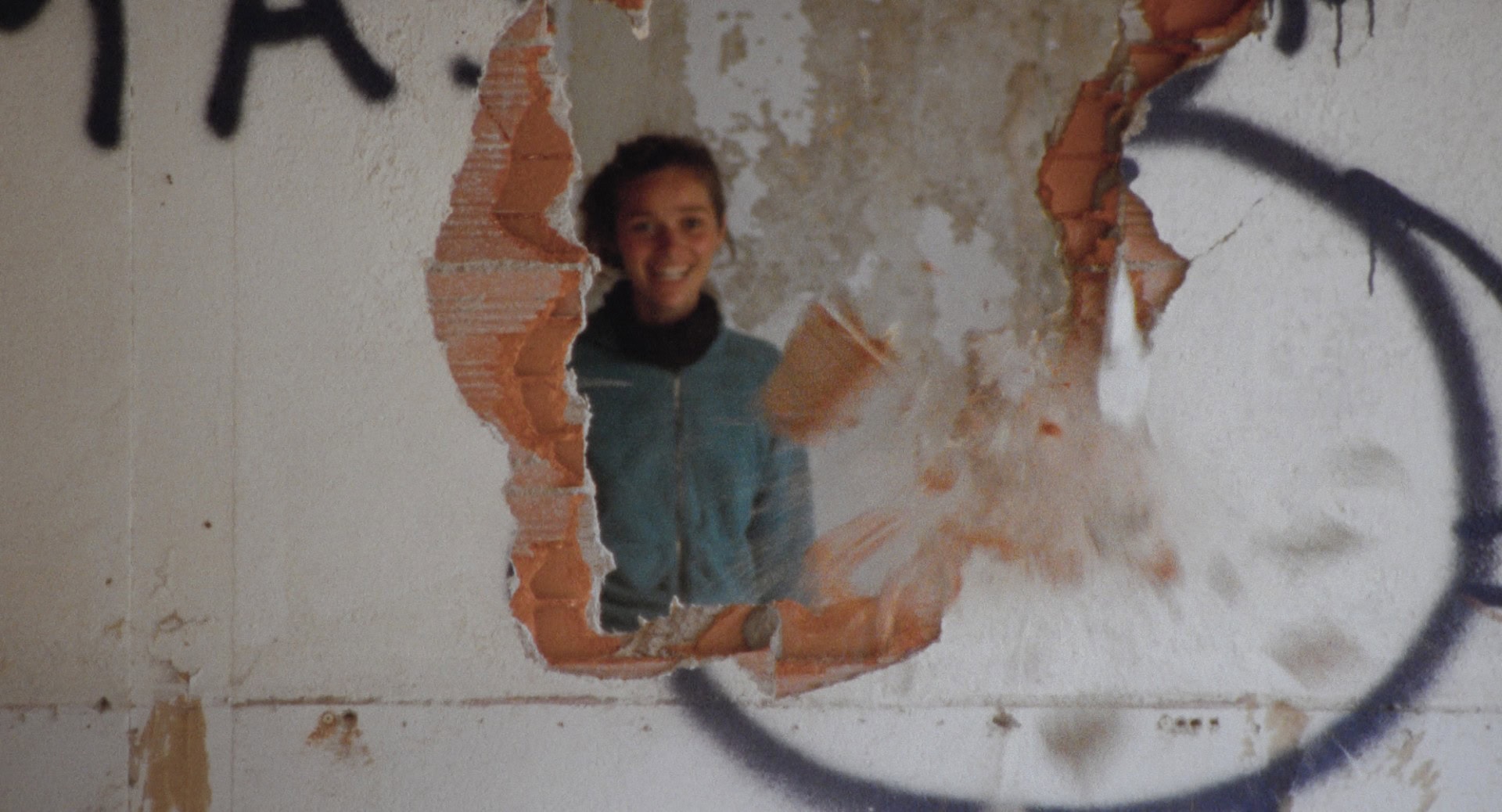
Subtle patterns in shot composition emerge over the course of the film. The camera is almost always fixed at a low height to center hands and torsos in the frame. Wider shots take advantage of frames within the frame—doorways, holes knocked through a wall, even the space between a punk rocker’s legs. The action typically progresses from the camera into the distance, and into depth. From this unified perspective, the furrows made by a horse-drawn plough, a series of hot plates for frying crepes, the ranks on a chessboard, and the keys on a piano become graphic matches of one another, dissolving the hard distinction between work and play while placing visual emphasis on the horizontal instead of the vertical to reflect anti-hierarchical politics.
Whereas in Akerman’s Jeanne Dielman, 23 quai du Commerce, 1080 Bruxelles, long takes dramatize the tedium of domestic labor, in Direct Action, the same technique uncovers the meditative quality of self-sustaining labor carried out in the workers’ own time, unbeholden to overseers, quotas, or benchmarks. In a shot of a baker mixing dough, the methodical, rhythmic movement of their hands slowly comes to resemble a sticky ballet.
Inevitably, the mind wanders from these images, returns, and wanders off again, so that Direct Action functions as ambient cinema—a scaffolding for our train of thought. The rapid-fire barrage of horrific images interrupted by ads and fleeting distractions that our social media feeds have made us addicted to won’t save us from environmental collapse or resurgent fascism. In Direct Action, the contemplative stance is in fact the compliment of organized resistance. If we are to think critically, we must not fear the sound of our own thoughts.
Cailleau and Russell’s film doesn’t supply what would seem to be pertinent specifics on the Z.A.D. movement’s composition, its overarching aims, its organizational structure, or its relationship to other resistance movements. But Direct Action’s images are provocative enough that sympathetic viewers will likely go to the trouble of filling in those gaps themselves. After all, this is a work that’s very much about going to the trouble.
Things are especially dire in the United States and the world at large at the moment, with center-left political parties capitulating everywhere to nakedly authoritarian oligarchs. As such, we sorely need documentaries like Direct Action that can show not only the real leverage that militant mass movements can exert, but how that power can be redirected from protest to the building of autonomous communities and back again.
Since 2001, we've brought you uncompromising, candid takes on the world of film, music, television, video games, theater, and more. Independently owned and operated publications like Slant have been hit hard in recent years, but we’re committed to keeping our content free and accessible—meaning no paywalls or fees.
If you like what we do, please consider subscribing to our Patreon or making a donation.