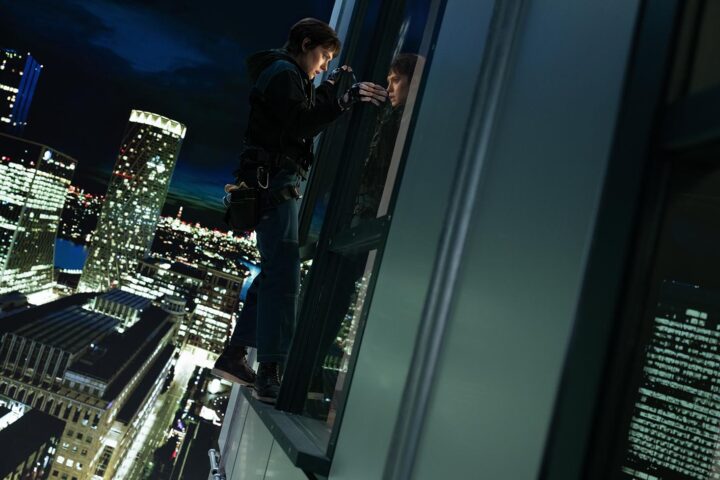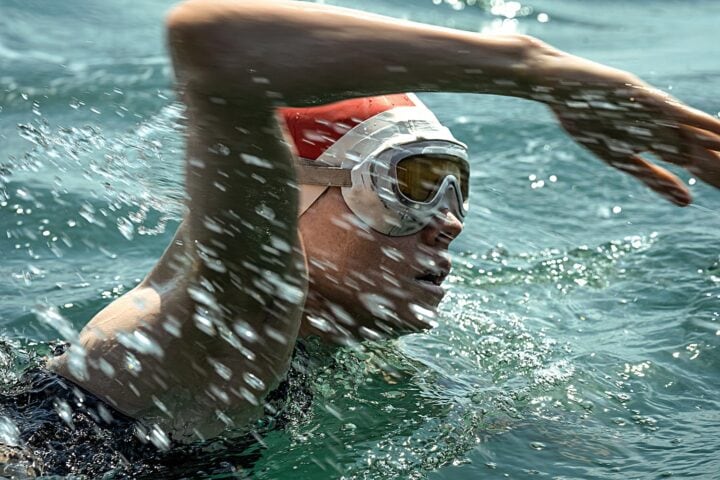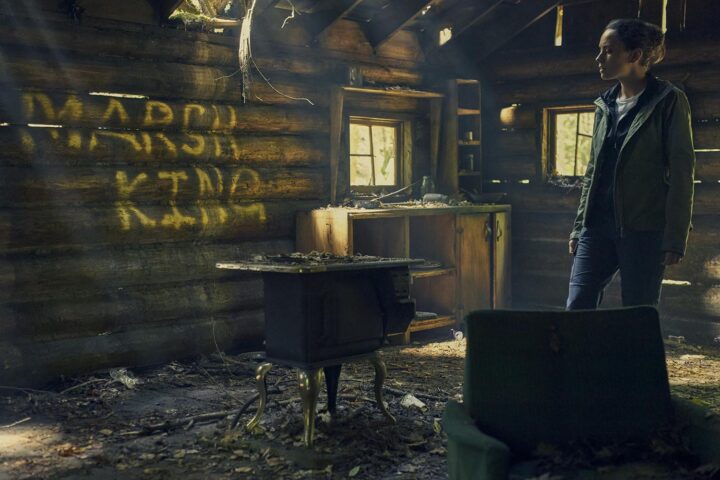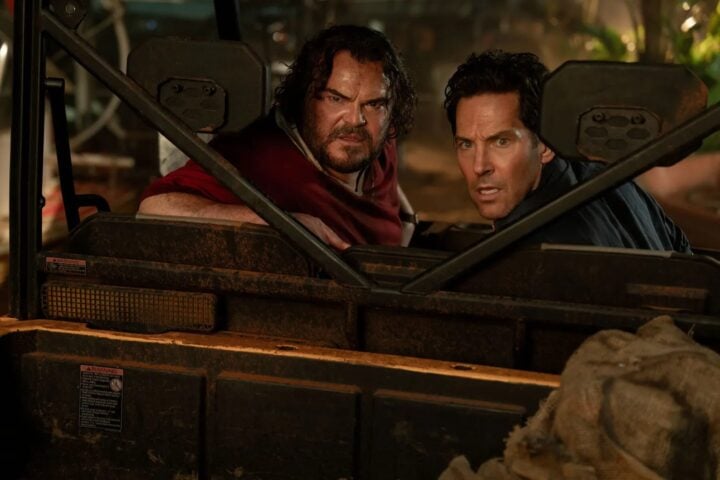
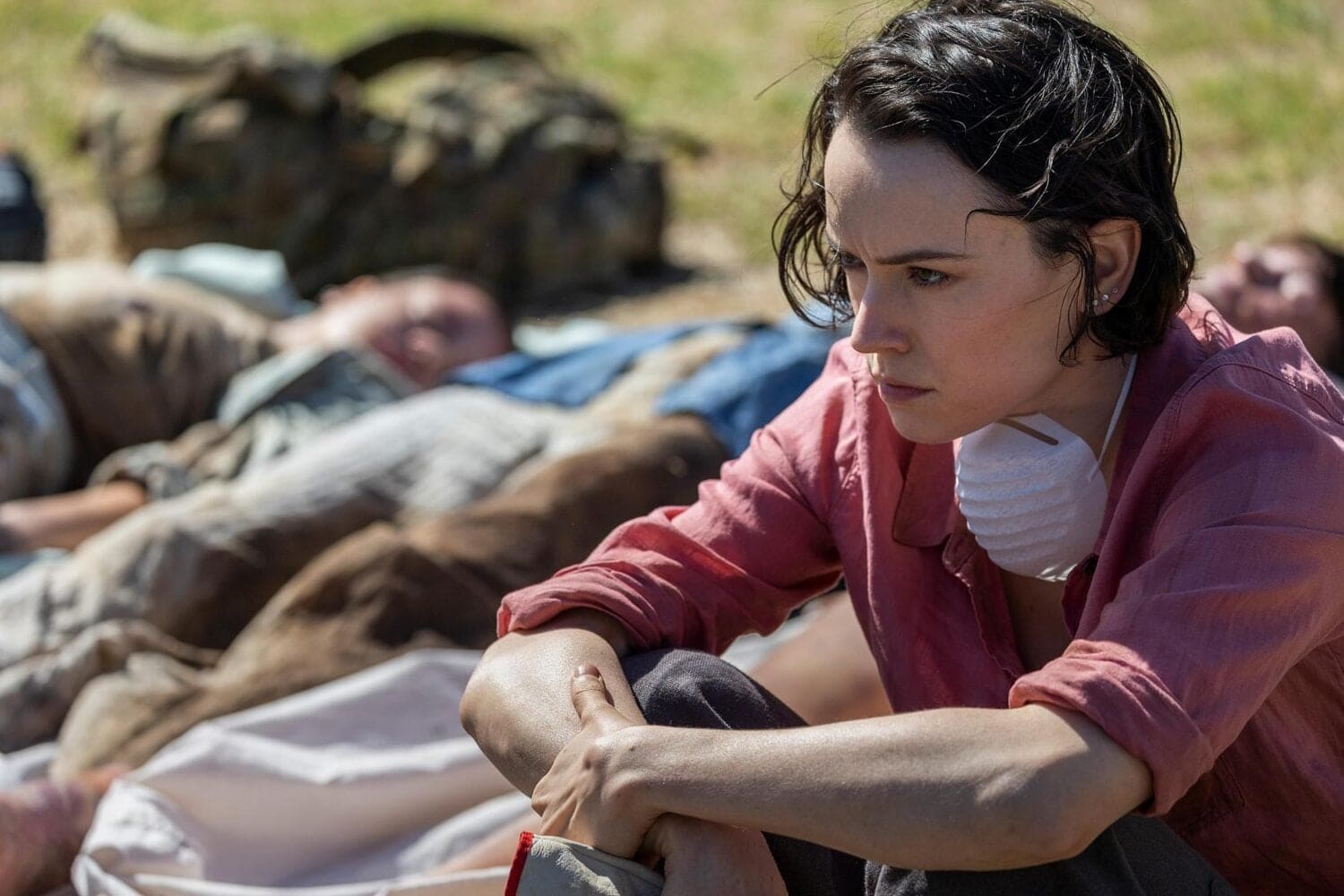
An electro-magnetic weapon is accidentally triggered off the coast of Tasmania, instantly killing almost everyone on the island. The deaths are mercifully quick, but they leave behind a hell of a mess, so volunteers are recruited from around the world to help recover the bodies. Like many of those who sign up, Ava (Daisy Ridley) does so in the hope of tracking someone down: her husband, Mitch (Matt Whelan). Dreaming of finding him alive while knowing that he’s almost certainly dead, she’s disturbed to learn that, thanks to the odd aftereffects of the EMP, he could now be somewhere in between.
Written and directed by Zak Hilditch, We Bury the Dead finds a relatively fresh approach to the zombie film. By staging the story as a kind of localized apocalypse, it recalls the Covid-19 pandemic more powerfully than many movies that have addressed the topic directly—that eerie dissonance where the end of the world in one place is just the morning news in another. Ava’s work with the clean-up crew is horrifyingly mundane, with each day forcing her to confront an unbearable amount of human loss, as well as a series of annoying logistical challenges, like how to respectfully move the bloated corpse of an especially heavy person.
The “respectful” part isn’t a big concern to her co-worker Clay (Brenton Thwaites), a handsome rascal who seems to have joined the body recovery team just for something to do. Ava quickly convinces him to travel with her down into a restricted part of the island where her husband had been staying. There’s something dreamlike and sublime in the scenes of them riding through Tasmania’s apocalyptic scenery, strikingly photographed by Steve Annis, and it’s when the film lets these images speak for themselves that We Bury the Dead is at its strongest.
The undead provide a surprisingly minor obstacle to Ava and Clay’s journey. They’re an unsettling presence, thanks to some stellar makeup work and a tooth-grinding habit accompanied by some viscerally unpleasant sound effects, but for the most part they aren’t dangerous and Hilditch’s film rarely deploys them as a threat or a jump scare. Instead, it uses the walking dead to ruminate on loss and closure, and to ask a potent question about whether it’s crueler to be left with a husk of someone you loved or with nothing at all.
Throughout, a series of flashbacks give us a glimpse into Ava and Mitch’s life together, slowly cluing us in to the issues they were having before the disaster. There’s a clear thematic purpose to this aspect of the film, tying into its central ideas about the tragedy of sudden deaths and how much they leave unsaid, if clumsily so. The flashbacks, for one, dance around the source of Ava and Mitch’s marital strife, simultaneously revealing too little and too much—dragging the secret out longer than any sense of mystery can hold but then stepping on the reveal before the actual finale, robbing the film’s conclusion of its power in the process.
Early on their journey to find Mitch, Ava and Clay meet a stranger named Riley (Mark Coles Smith). He seems eager to help, but, as with so many helpful strangers in zombie movies, his motivations are soon revealed to be much darker. From Clay’s sudden departure at this point to what Ava agrees to, there’s a sketchiness to this stretch of We Bury the Dead that cripples its sense of momentum. And in a piece of pure bad luck for a film that works so hard to do something new within the zombie genre, this subplot concludes with a moment that would be quite shocking had it not felt like it was ripped from 28 Years Later.
The more docile zombies that Ava encounters across the film sometimes show signs of their past selves, like there’s a full person left somewhere behind their deadened eyes, unable to reach the surface. In the same way, there’s a thoughtful zombie tale with its own distinctive personality lurking somewhere within We Bury the Dead, but it’s overridden by the film’s more generic elements, and that identity ultimately gets lost among the horde.
Since 2001, we've brought you uncompromising, candid takes on the world of film, music, television, video games, theater, and more. Independently owned and operated publications like Slant have been hit hard in recent years, but we’re committed to keeping our content free and accessible—meaning no paywalls or fees.
If you like what we do, please consider subscribing to our Patreon or making a donation.