
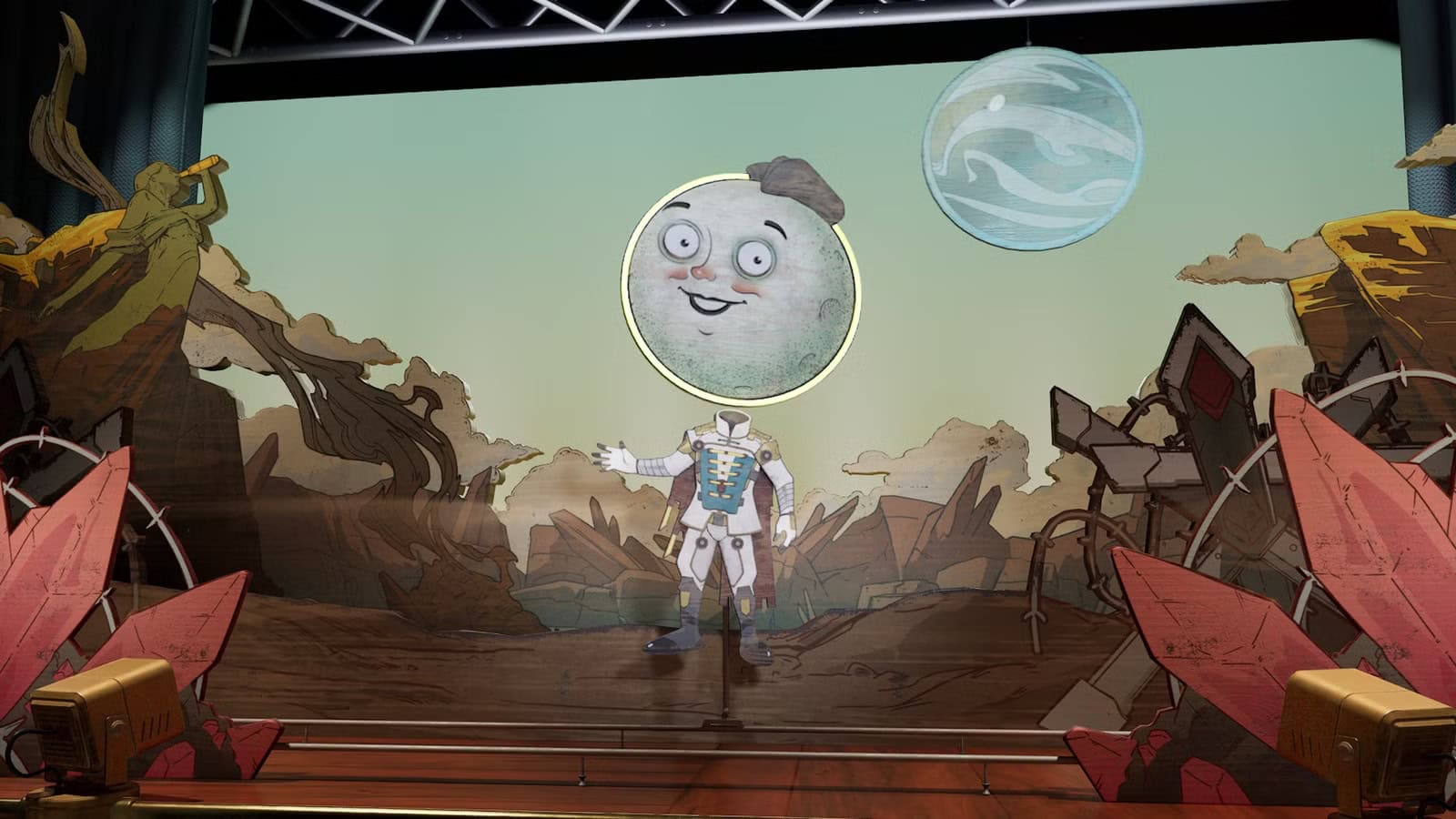
Mere minutes into The Outer Worlds 2, the first game’s ubiquitous Moon Man mascot welcomes the player to the experience, with the disclaimer that any relation to other real or imagined corporate hellscapes is purely coincidental. That joke would probably land significantly harder if Outer Worlds developer Obsidian wasn’t currently owned by a corporation supplying the technology powering a genocide and laying off thousands of employees in pursuit of technology designed solely to avoid hiring new ones.
To Microsoft’s credit, it hasn’t opened a planet-swallowing rift in the void of space yet, which is one of two major perils that the distant space colony of Arcadia in The Outer Worlds 2 is currently dealing with, thanks to an unfortunate side effect of faster-than-light technology. But the other peril will be intimately familiar to most of us: authoritarianism and capitalism having complete hegemonic control over every aspect of human life, locked in such pervasive struggle against objective reality that an extinction-level threat doesn’t register as a problem.
In Arcadia’s case, the galaxy has been colonized by armies from the hypercapitalist Auntie’s Choice corporation, the unholy corporate merger of Spacer’s Choice™ and Auntie Cleo’s™ from the first game. The only thing keeping the company from complete takeover of the colony are the theocratic fascists of the Protectorate, themselves a splinter faction from the indigenous Order of the Ascendant, new-agey nerds living life according to their god’s plan—except their god is math. Fortunately for Arcadia, there’s your player character, a conscript into a small elite squad sent from Earth to investigate the problem, though they’re mostly working in Arcadia out of a need for revenge rather than a desire to stave off apocalyptic doom.
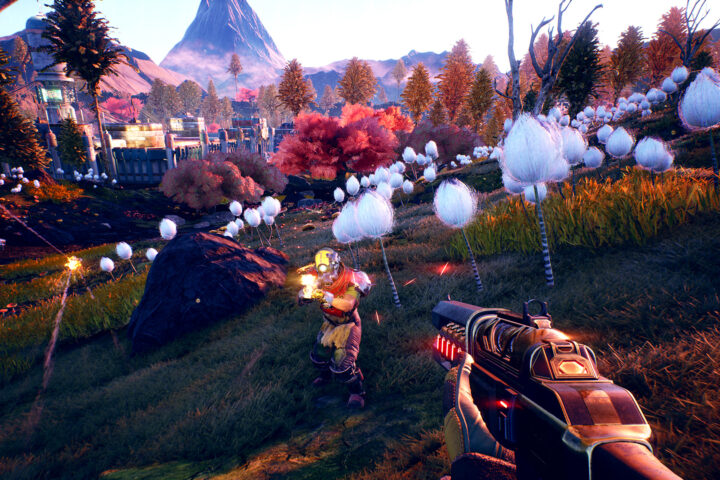
Suffice it to say, the more whimsical, freewheeling steampunk-western vibes of the first Outer Worlds have been flattened out. The sequel takes the series closer to the dialogue-based shooter RPGs that the first game was conceived as an alternative to. Which would be fine if The Outer Worlds 2 wasn’t, like its predecessor, cracking wise throughout.
Many of the game’s jokes just come across as too dark, too violent, or too depressing, though sometimes it’s all three at once. A case in point is an early sidequest in which scientists from Auntie’s Choice wind up trapped on the roof of their lab after their experiments with a prototype pair of rocket boots end with a tester dead, and the elevator to bring them down broken because one of their depressed colleagues killed themselves by jumping into the gears that make it move. This quest—from the initial, cartoonishly violent equipment test, to the scientists fretting about their profitability—is played for laughs, and it’s anyone’s guess why.
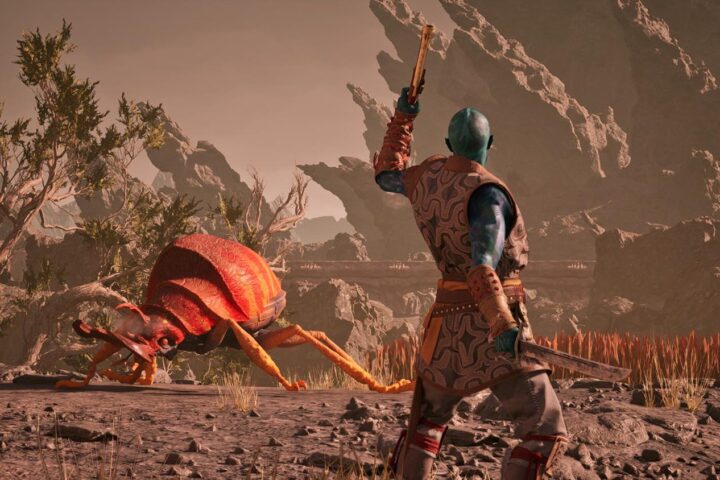
Yes, as in the first game, you can choose how to respond to this and other situations, but leaving the scientists up there is cruel, while bringing them down feels like letting them off the hook far too easily. This is par for the course. The most fundamental problem with The Outer Worlds 2’s storytelling is that the spectrum of ways your protagonist can respond to situations through dialogue trees has been severely narrowed, often leaving you only with the goody-two-shoes option, the kill-crazy option, and—if unlocked at the outset—the blithering-dumbass option.
Despite the grim, nauseating status quo of Arcadia’s situation, the blithering-dumbass option is the only way in which players can actually have any kind of fun playing the game, as your character is completely dissociated by sheer ignorance from the weight of every interaction. The only other person having a good time in your eventual crew is Aza, an over-the-top bloodthirsty maniac from a cult of rift worshippers. Otherwise, so many of the quests funnel the player toward making friends with the game’s greatest monsters, where giving peace a chance earns the best rewards, and shooting first leads to no questions being asked later.
There are scattered elements that veer the story away from having to bootlick for progress, but they’re few and far between. By and large, the lack of meaningful outlets for outrage, rebellion, or organic humor has the knock-on effect of creating equivalency and validation for one or many of the game’s most awful, corporatized factions. Much like real life, survival on the bottom of the social totem pole means doing a lot of work for the worst people imaginable, with few, if any, questions asked. That’s a nauseating place to be, especially considering that the first game didn’t suffer capitalist fools nearly as gladly. It’s not until extremely late in the sequel that it feels like the player can afford to make bold choices, refusing to placate both sides to survive.
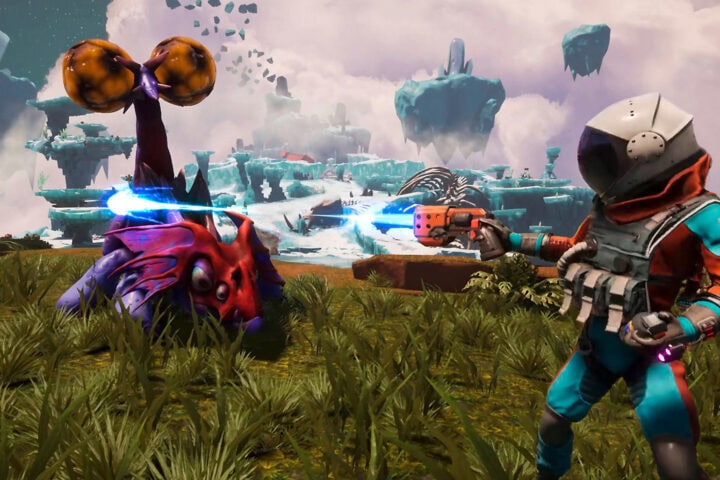
The good news is that the minute-to-minute mechanics—of gallivanting between planets and collecting food, money, and powerful weaponry in order to survive in the intergalactic wilderness—are well integrated. Every quest leaves the breadcrumbs leading to the next new character, weapon, or location in an organic manner that rewards curiosity without much in the means of wasted time. Aside from a slightly clunky inventory system, and the lack of ways to change appearance and reallocate stat points, there’s still enough ease of use for players to pick a gun and blast their way across the galaxy. Obsidian even obliged the first game’s fans with the one major fix that the majority of them asked for: a third-person view.
Having said that, these are things one can get already from any random Mass Effect or Fallout game, even Starfield. The specific vein of smart, pulpy satire that the first game tapped into is still a rare thing in the current landscape of gaming. There’s so little value in making this series feel like Yet Another Bethesda RPG, and zero in making the player carry water for capitalism in 2025. This is mechanical prowess in service of a galaxy that’s not worth saving.
This game was reviewed with code provided by Assembly Inc. Slant Magazine stands in solidarity with the ongoing BDS boycott of Microsoft gaming products. No links will be posted which provide additional revenue to Microsoft directly.
Since 2001, we've brought you uncompromising, candid takes on the world of film, music, television, video games, theater, and more. Independently owned and operated publications like Slant have been hit hard in recent years, but we’re committed to keeping our content free and accessible—meaning no paywalls or fees.
If you like what we do, please consider subscribing to our Patreon or making a donation.
2/5 because you didn’t like the story? but then a paragraph blurb about the gameplay mechanics being great?
review review, 1/5
My boy, Obsidian and their employees have nothing to do with geopolitical situations. Backs against the wall, they got bought out rather than be flattened by the behemoth that is mega-publishers. Don’t attribute the umbrella to those it covers because you wanna slam a game based off virtue.
Not for nothing but not wanting to penalize artists for their corporate patrons is the *only* reason we still cover Microsoft titles here.
Even then, when the art is literally a statement about corporate greed–especially when the statement suddenly goes softer on corporations after a buyout–the company paying for the art is relevant to the conversation.
What a terrible review. Made no sense whatsoever.
agreed
If you think this game is pro-capitalism, you’re probably not equipped to be reviewing anything more complex than a warning label.
Amen
How about review the game without inserting your politics into it.
Good Lord that was a ridiculous review of a game
absolutely a terrible review
Y’all are a bunch of dork ass losers loll
Wow.
The fact that I felt the need to come to the defense of a game I didn’t even enjoy says it all.
Every time I read a review like this, I immediately think of “The Tale of Scottie McBoogerballs” episode of South Park.
AI can’t replace authors like this fast enough. What a smug and self-righteous article .
If you’re going to review at least talk about the game. If you’re going to boycott it then do so, don’t review unfairly because it’s under Microsoft!?
At least I only had to read the first paragraph to know the bias of this author. L take gng.
I appreciate this take.
wow you are really mad at the world right now aren’t you
Great review. Ignore the bootlicking dipshit gamers who would argue that Israel is just defending itself. This game is innately political and uniquely unfunny.
No one cares about third-world terrorist theocracies getting bombed out in the middle east. You dont have to virtue signal on every platform.
game has nothing to do with Israel at all whatsoever, seek help bro
i just came to here to say i hope the reviewer get laid off and replace with an ai or something very soon.
I hate the world, and because this game doesn’t let me vent my real world discontent with everything, it sucks. You must be fun at parties. Horrible review.
This reviwer should post under the pen name Justin Killjoy.
the author’s tweets are protected lmao there has to be a way to stop these reviews from counting towards Metacritic scores
At some point, gaming journalism became dominated by professionals who see themselves primarily as art critics. And as a result, they can only interpret these products as works of art — which inevitably drags the discussion toward politics and social commentary.
It’s as if every movie had to be made with the Cannes or Venice Film Festival in mind.
That’s not how it works. There’s a lack of realism here.
We’re talking about a value chain in which technology products are created and sold for entertainment purposes. These are businesses — developed by other businesses, operating within a market logic.
I’m glad Slant is able to take a moral or ideological stance, so they don’t rely on advertising clients, audience numbers, or the need to cover major studios that produce the kind of content they claim to analyze.
Maturity means being able to recognize the world as it is. And that’s something gaming journalists still seem to struggle with.
This is a video game. People play it because they want to have fun with its gameplay. It’s not just an art piece meant for collective contemplation or critical reflection.
That doesn’t mean the criticism itself is entirely invalid — but it becomes shallow and immature when it turns into an ideological pamphlet instead of a proper review of a technological entertainment product.
my god,this is such a dreadful, sour review, please go to other sites for the many many more positive reviews
Wow, a review I disagree with. I’m going to get mad and insult the author because I’ve tied my ego to a video game and I care about its Metacritic score for some reason.
“Capitalism bad”
-Person who makes a living playing computer games in an air-conditioned room, and then writing about them on the internet.