Team Ninja’s Ninja Gaiden once carved out a bloody, beloved niche in the single-player character action genre. The original Xbox and Xbox 360 games married colorful visuals and lavish animations evoking the operatically gory and hypersexualized aesthetics of direct-to-video anime to fluid, weighty, and ultra-responsive player inputs that were easy to learn and unforgivingly hard to master. Fighting in Ninja Gaiden is less akin to Devil May Cry’s digital dance lessons or God of War’s spectacles of sadism and more about sheer survival.
In Ninja Gaiden’s world, geysers of blood and flying appendages aren’t just aesthetic exclamation points but critical gameplay mechanics. Every one of master ninja Ryu Hayabusa’s enemies can be dispatched swiftly and spectacularly with the correct moves, but those enemies also have the capacity to do him great harm, including if they gang up on him and hit him while he’s down. Enemies mutilated by Ryu’s strikes become hobbled and vulnerable to brutal finishers, but they’re also capable of enveloping Ryu in deadly suicide strikes if ignored. Mastery of combat—striking, combo-striking, dodging, blocking, and counterattacking—equals constant motion and constant variation, with outcomes often determined in a matter of seconds.
Ninja Gaiden 4, a soft reboot of the long-standing series co-developed by Team Ninja and PlatinumGames, takes its cues from 2008’s Ninja Gaiden II. It doesn’t so much reinvent the classic 3D series’s wheel as make it the foundation for a maximalist character-action centrifuge of the type that will be familiar to those who’ve played PlatinumGames’s titles such as 2009’s Bayonetta and 2013’s Metal Gear Rising: Revengeance.
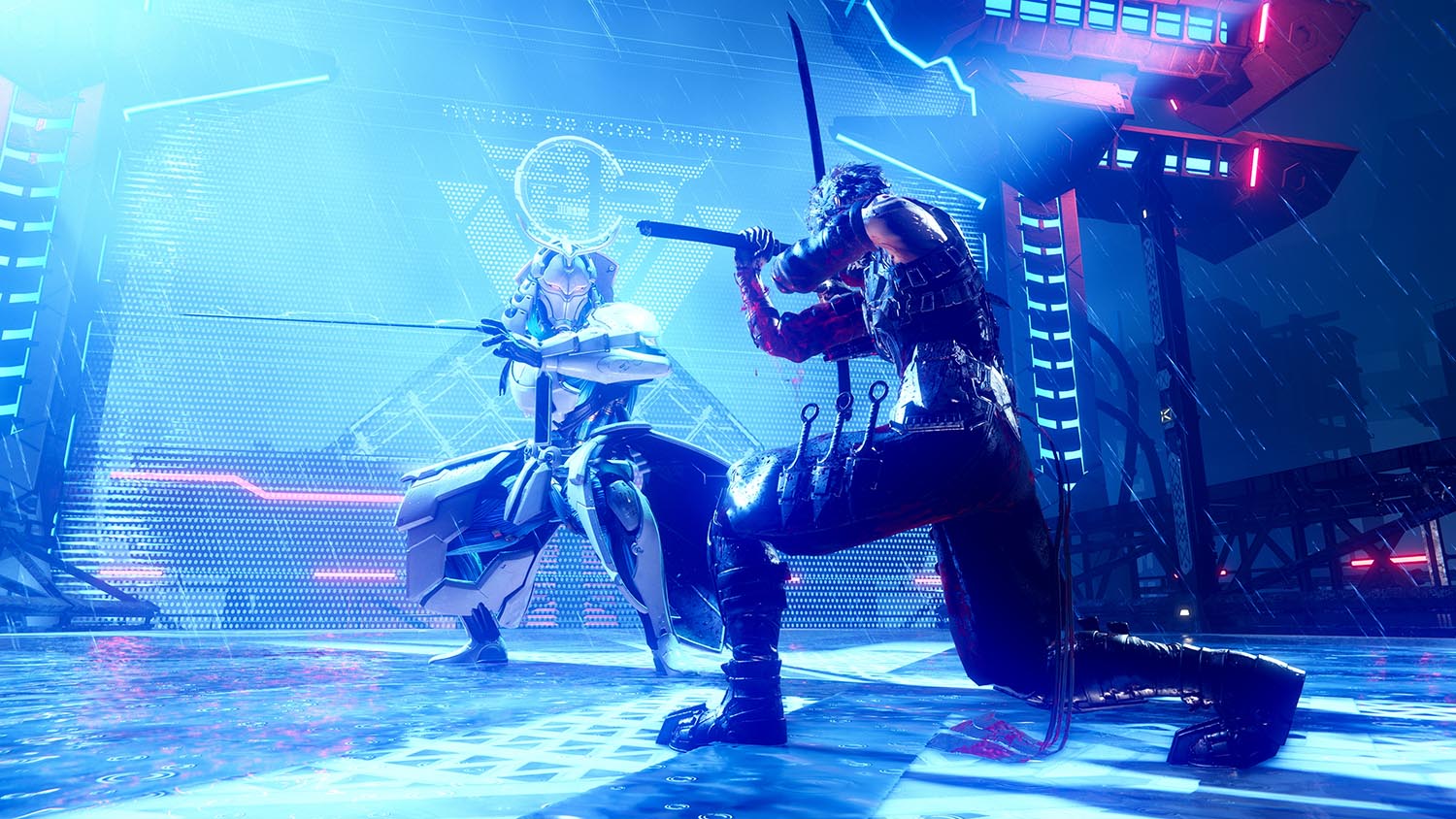
The game lays out its old-meets-new intentions early, guiding you on a ninja-butchering path through a ruined version of Ninja Gaiden II’s near-future Tokyo. The all-new player character is a ninja named Yakumo, a pouty zoomer with frost-tipped hair and a grudge against the elusive Hayabusa, sent to retrieve a buxom shrine maiden for world-saving purposes. Familiar gameplay mechanics (combos, charge attacks, wall-running, and, of course, dismemberment) are introduced alongside new, mostly unoriginal ones (a grappling hook for expanded movement, a shop where new techniques can be purchased in the order of your choosing, “perfect dodge” and parry techniques to incentivize risky defense maneuvers, and more).
Most significant and memorable of the new additions is the “Bloodraven form,” a cape-clad heavy version of Yakumo whose slower, windup-heavier attacks consume a continually refilling meter and prove vital to breaking the enemy’s guard. This form, which comes with its own alternative versions of Yakumo’s standard moveset and EXP-based upgrade paths for each of the game’s progressively unlockable weapons, adds a whole new mental and mechanical juggling act to Ninja Gaiden’s already demanding combat experience.
The emphasis on added complexity—in variable upgrade paths, multi-button inputs, and formidably expansive movesets demanding reflexive memorization—gives the game layers of depth and player expression that will delight aficionados of Bayonetta and other more modern character-action brawlers. At the same time, it also somewhat undermines the pared-down elegance of the Xbox Ninja Gaiden games. In addition to being hard to master, the game’s inputs and core mechanics are now also much trickier to learn.
Ninja Gaiden 4’s varied enemies—leaping ninjas, flying tengus, exploding lantern spirits, and many more—are expectedly fast and aggressive, capable of slaughtering Yakumo in mere seconds on higher difficulties. In a move straight out of classic Ninja Gaiden, the game throws enemies at the player in uncomfortable spots that are hard to reach or even to see, perching or hovering just off camera as they pelt Yakumo with projectile and lunge attacks while hordes of melee fighters (sometimes spawning behind the player) wall him off.
In crowded battle arenas or on cramped platforms above steep drop-offs, this can make the game’s camera and its capricious lock-on mechanic feel like as much of an enemy as the enemy fighters themselves, particularly given the crucial importance of character positioning in 3D space to land and evade attacks. Bosses present an additional sensory challenge, typically flooding the screen with complex visual information—dazzling particle effects, ornate character designs, and strange, unpredictable movement patterns—while tasking you with reading and reacting to attacks with exact timing, making the moments of unruly camera behavior even more infuriating. The persistent player will adapt, but such hostile mechanics, at the very least, challenge conventional understandings of which kind of game challenges are “fun.”
Hayabusa doesn’t stay hidden forever in Ninja Gaiden 4, of course, and before long the game has the old and new ninja generations clashing and reconciling on screen, narratively and mechanically. In merging the sensibilities of two developers and two generations of a genre, this game presumably hopes to expand the audience—rather than water down the essence—of a franchise that’s lingered on the sidelines for too long. And for the most part it succeeds.
Ninja Gaiden 4’s gruesome, lightning-fast trials respectably preserve and build upon the core of its ancestors. It should also introduce a whole new audience of challenge-seeking players to the joys of ninja limb-lopping and the pride of overcoming a blockbuster game that seems to give the player almost no quarter, even as its robust movement and deeply customizable fighting styles convey sleek, ruthless empowerment. It’s not perfect, but that sheer speed and aggression still builds a convincing case for what Team Ninja’s heroes offer that Dante and Kratos do not.
This game was reviewed with code provided by Assembly Inc. Slant Magazine stands in solidarity with the ongoing BDS boycott of Microsoft gaming products. No links will be posted which provide additional revenue to Microsoft directly.
Since 2001, we've brought you uncompromising, candid takes on the world of film, music, television, video games, theater, and more. Independently owned and operated publications like Slant have been hit hard in recent years, but we’re committed to keeping our content free and accessible—meaning no paywalls or fees.
If you like what we do, please consider subscribing to our Patreon or making a donation.