If you want to be three-dimensional about it, there’s plenty wrong with Boop! The Musical, now running at the Broadhurst Theatre. The opening number is a headscratcher that explodes into a tap extravaganza with no setup or context. The leading man is saddled with a paper-thin backstory. Lots of the lyrics go clunk. And the plot makes absolutely no sense.
In this kooky story, the iconic 1930s cartoon character Betty Boop (Jasmine Amy Rogers) created by animation pioneer Max Fleischer shows up in contemporary New York City, and in spite of glimpsing so much garbage, poverty, and corruption all around her, she still sees something magical that she can’t help but resist. Maybe it’s Betty’s unshakeable optimism rubbing off, but Boop!, for all its unmissably ramshackle flaws, is joyously irresistible.
At the show’s start, Betty finds herself getting tired of her literally black-and-white life in ToonTown. She’s a beloved star, but all she does is film shorts where she gets chased around by lecherous men. She’s played so many roles that she’s lost track of who she really is.
Thanks to her Grampy (Stephen DeRosa) and his dimension-hopping device, Betty escapes her cartoon world to modern-day New York City, where she lands at Comic Con. Fish out of water though she may be, she quickly finds her new purpose in our world: getting involved first with a mayoral campaign and then with a jazz trumpeter cum babysitter (Ainsley Melham) while helping an orphaned teenager (Angelica Hale) achieve self-empowerment.
Yes, that’s basically the plot of Greta Gerwig’s Barbie, minus the local election, but Boop! is so gregariously silly and impishly heartfelt that it’s easy to forgive the uncanny, sometimes distracting similarities. And don’t think too hard about why everyone just seems to accept the show’s premise that Betty’s somehow escaped being fictional. That leap in logic, at least, delivers one of book writer Bob Martin’s funniest lines. “Are you the first of many cartoons to come to the real world?” asks an eager reporter. “Can we expect Popeye?”
Martin, re-animating his clever loopiness familiar from The Drowsy Chaperone and The Prom, takes an effectively light touch in tackling the show’s diciest sociocultural theme: How can a cartoon woman fight back against her own hyper-sexualization and assert her autonomy? Martin frames Betty’s plight—all that “being chased”—in a way that should make the show’s feminist message poignant for adults and comprehensible for kids. (Betty has a dry one-liner just for the grown-ups about the Hays Code putting an end to her early, more risqué shorts.)
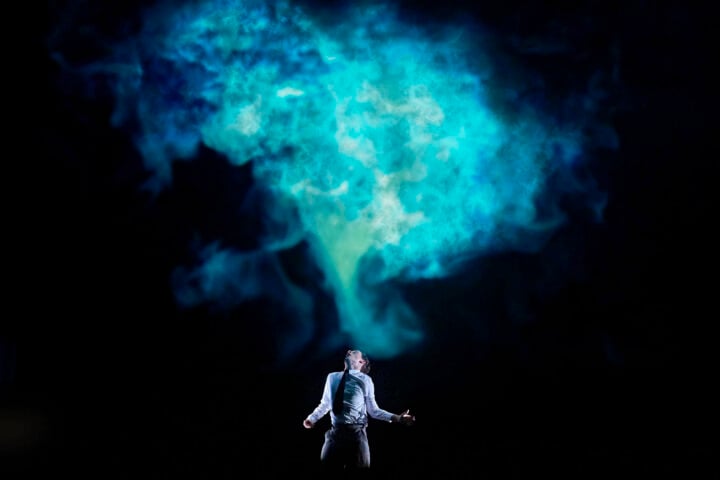
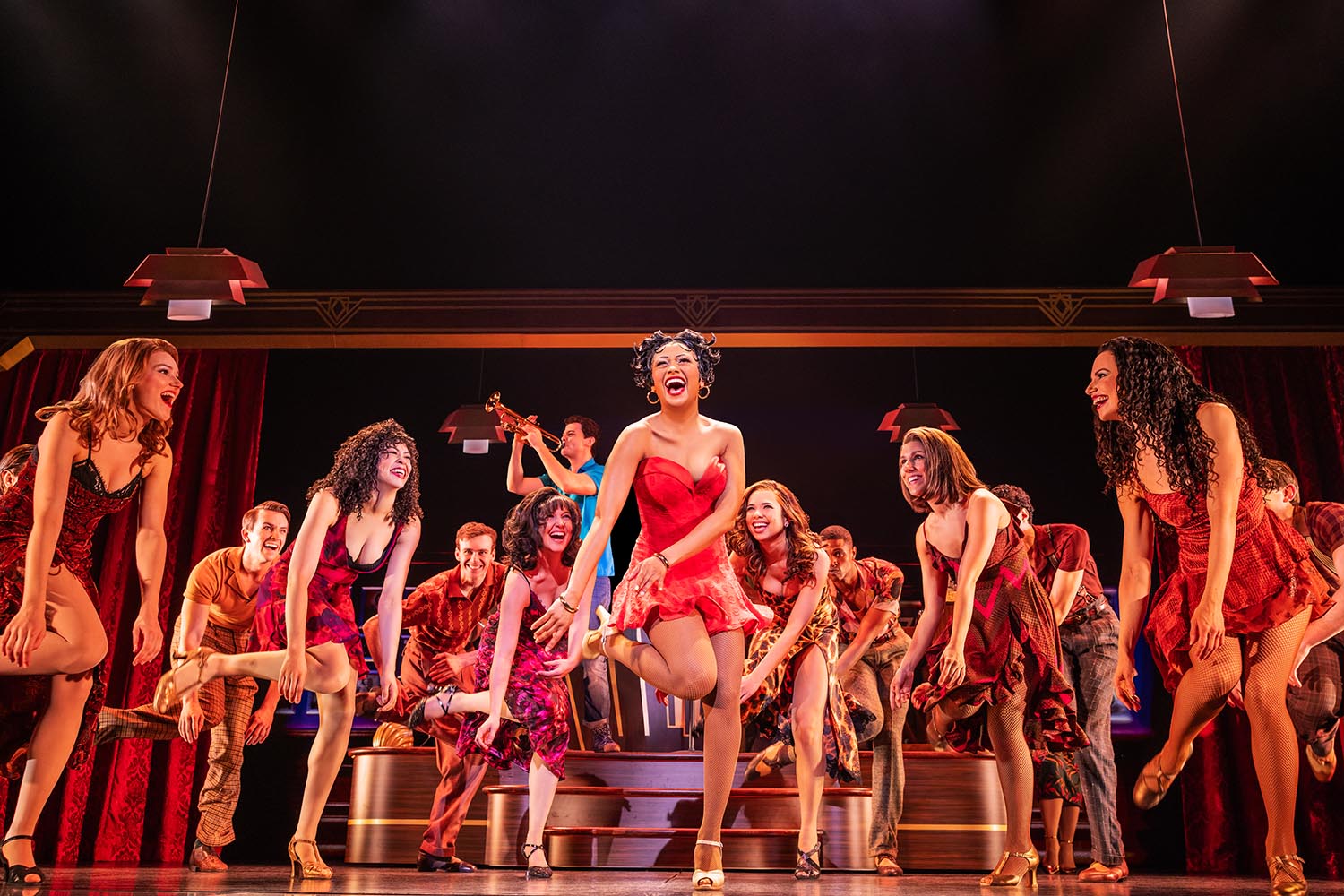
But even if Boop! delivers a low-key #DeepMessage, it’s mainly just a rollicking good time that earns the confetti cannon that goes off in the show’s final moments. Director-choreographer Jerry Mitchell’s exorbitantly exuberant production numbers fuse old-school tap excess with a bit of hip-hop fluidity. Finn Ross’s projections design playfully incorporate glimpses of the original Boop animation throughout David Rockwell’s set. And for its sense of childlike wonder and whimsy, Gregg Barnes’s show-stopping costume designs for the second-act opener, in which half-black-and-white, half-color outfits allow the ensemble to swap between ToonTown and the real world from beat to beat, ought to melt the hearts of even the steeliest theater critics.
Grammy-winning producer and composer David Foster pens amiable pop-jazz bops that are nimbly orchestrated by Doug Besterman, even if some of the arrangements go over the top: Betty’s opening ballad, for one, thunders disproportionately, suggesting one of Norma Desmond’s arias from Sunset Boulevard. But those songs are sold at a profit by the gumptious Rogers, who makes sense of Betty simultaneously being a pen-and-ink creation and a flesh-and-blood woman, melding the bygone wide-eyed soubrette with the contemporary, street-smart rabble-rouser. And Rogers movingly converts Betty’s voice from the cutesy cartoon sound to a full-throated belt as she figures out who she is and what she wants.
Melham matches Rogers’s energy with a puppy-dog suaveness, even if his character is so underdeveloped that he sings lyrics (by Susan Birkenhead) acknowledging how little he has to say: “Jazz is my language, as I told you before,” he croons after several verses explaining the same idea (“My capacity for speech is nil/I can’t say it but my trumpet will”). There’s also charmingly smarmy work from Erich Bergen as a seedy sanitation mogul running for mayor (his campaign slogan is, in a pun clearly intended for the kids in the house, “Let’s doo doo this!”).
Best of all is Hale, a 17-year-old powerhouse who turns the whole show around and points it in the right direction as soon as she opens her mouth. For all its maximalist goofiness, Boop! is at its best when an acerbic adolescent with an unlikely Betty Boop obsession is singing her face off.
Boop! The Musical is now running at the Broadhurst Theatre.
Since 2001, we've brought you uncompromising, candid takes on the world of film, music, television, video games, theater, and more. Independently owned and operated publications like Slant have been hit hard in recent years, but we’re committed to keeping our content free and accessible—meaning no paywalls or fees.
If you like what we do, please consider subscribing to our Patreon or making a donation.