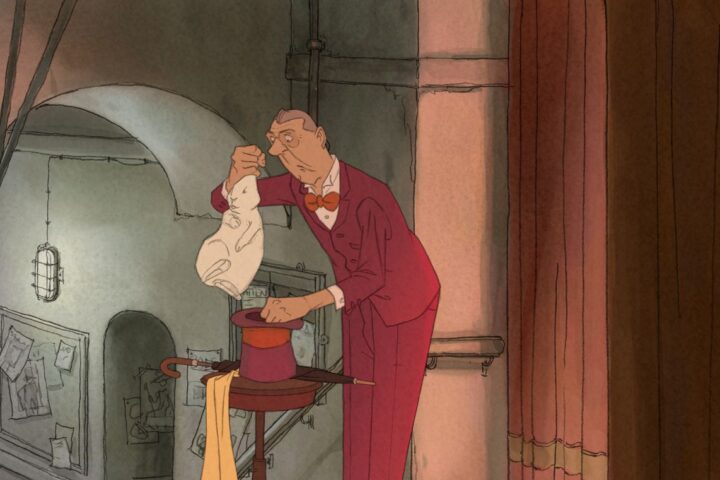
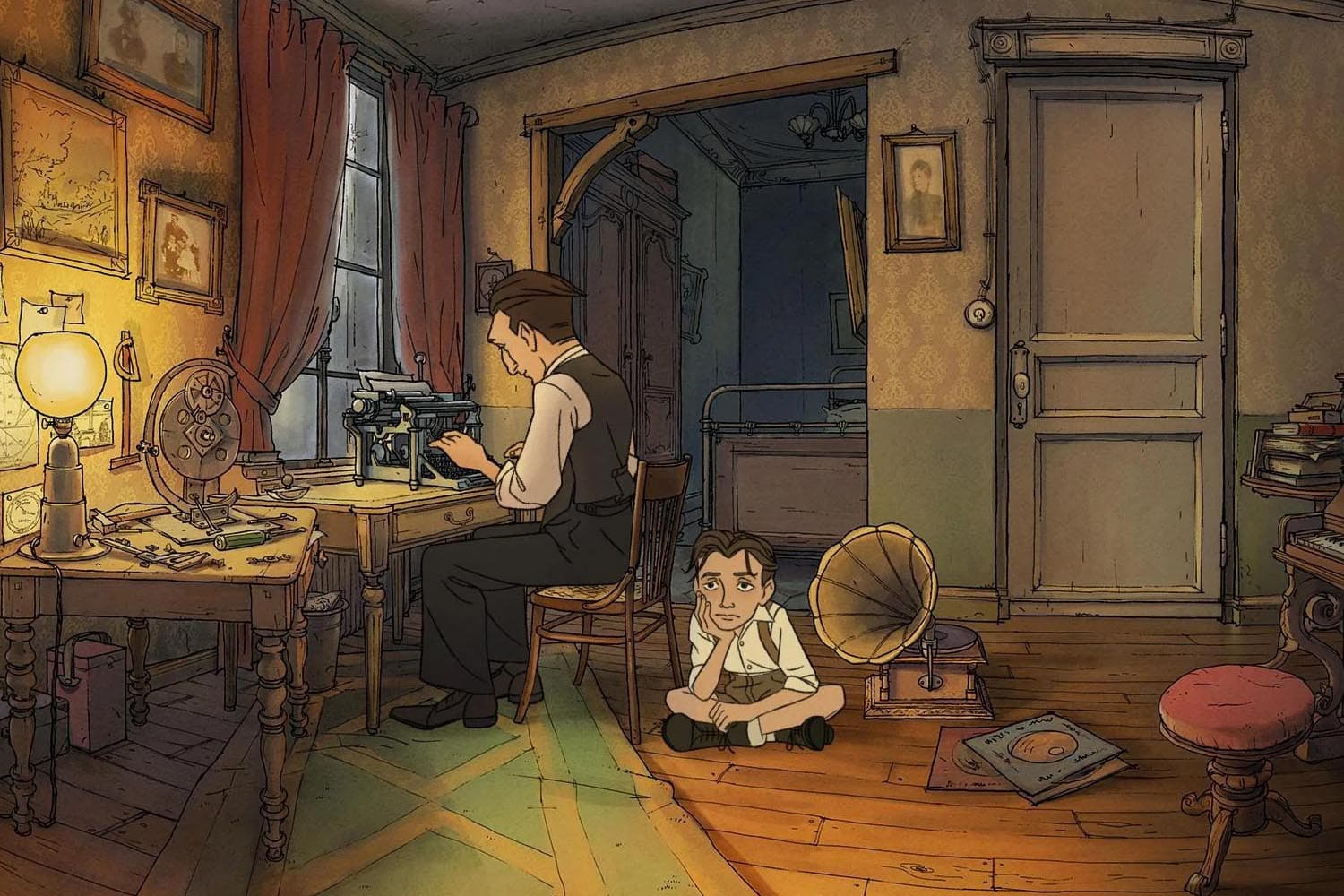
How much you get out of writer-director Sylvain Chomet’s A Magnificent Life will largely depend on your familiarity, even fondness, for its subject: French novelist, playwright, and filmmaker Marcel Pagnol. This animated feature is a lyrical, dreamlike love letter to the director of such classics as the films in The Marseille Trilogy, and like most love letters, the details are warm and intimate, suggesting fondly remembered memories.
A Magnificent Life’s framing device revolves around an aging Pagnol, in 1974, being tasked to write a weekly literary serial about his childhood. Unfortunately, he finds that his memories are lost to time—until, that is, the specter of his childhood self begins to shepherd him through all the lost years. The touchstone elements that Chomet chooses to home in on are lovely, joyous, and frequently funny in a rather general sense, from Pagnol’s loss of his mother, to his arrival in Paris and falling in with the city’s community of creatives, to his clashes with critics, his first tastes of success, and the actors he would bring up with him along the way.
Between the framing device of Pagnol flitting freely through his memories and so many of his films being bucolic tapestries of life, there’s something apt about the disconnected nature of the life moments that Chomet spotlights. But the way A Magnificent Life is prone to veering off into tangents grows frustrating. Chomet provides only a scant sense of Pagnol’s creative inklings, such as the ideas and themes that fuel the films that he fights so vehemently to make.
Most insightful is an ongoing fight between Pagnol and his producers about scripting dialogue with the supposedly incomprehensible Marseille accent. But even that tiny culture war is lost in translation—quite literally given that A Magnificent Life’s English dub makes no attempt to differentiate that accent from the rest of the British voices we hear.
The film plays like a Wikipedia entry that’s been brought to animated life, and yet, even Pagnol’s Wikipedia page is full of details about the man’s life that Chomet, for all his undeniable mastery in whipping up textured and lived-in worlds, seems to languidly, almost stubbornly glide past. In the end, the consequence of Chomet not trying to woo those who aren’t intimately familiar with, say, The Baker’s Wife into falling in love with Pagnol is that this very pretty film may leave you feeling like an awkward bystander in a very public display of affection.
Since 2001, we've brought you uncompromising, candid takes on the world of film, music, television, video games, theater, and more. Independently owned and operated publications like Slant have been hit hard in recent years, but we’re committed to keeping our content free and accessible—meaning no paywalls or fees.
If you like what we do, please consider subscribing to our Patreon or making a donation.