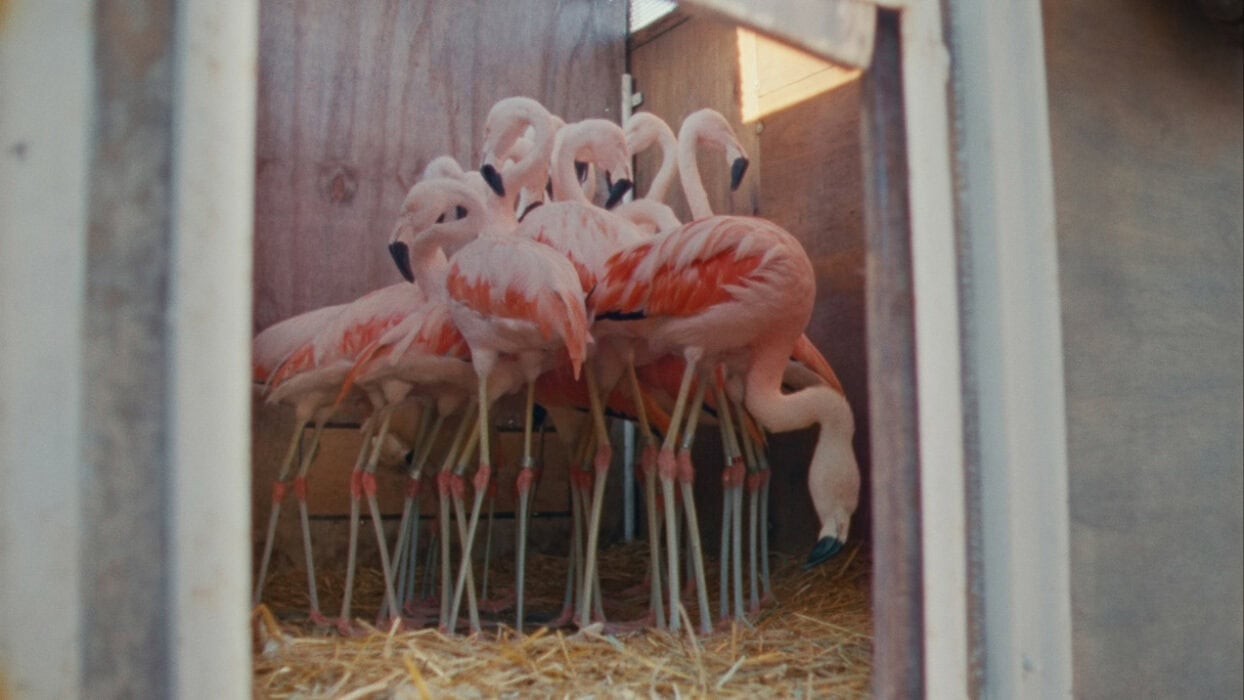
Filmed in zoos and eco parks in Argentina, Jessica Sarah Rinland’s Collective Monologue explores the relationships between animals and their caretakers. Some of the animals in question have been saved from illegal trafficking, while others have lived in captivity for so long that they must relearn how to survive on their own. In documenting this rehabilitation process, Rinland reveals—and urges on—a historical shift in how we relate to other living beings.
The documentary takes its title from Swiss psychologist Jean Piaget’s concept of a developmental phase during which children believe that “nature is created for them and that they can control it.” As a species, Rinland suggests, we still operate with this ego- and anthropocentric mindset, but it’s a phase we may be starting to outgrow.
Rinland doesn’t shy away from intractable complexities of her subject matter. Animals raised in captivity may struggle to survive without human care, but that doesn’t mean they’re undeserving of a comfortable, dignified life. As comfortable and dignified, that is, as can be provided for in Argentina’s turbulent economy, because as Rinland shows, the way we treat animals is hardly unaffected by the overarching predicament of global capitalism.
The film’s polemical centerpiece covers what was formerly the Buenos Aires Zoo, before being converted into an eco park in 2016, when most of the animals were relocated. Rinland shows how, in restoring the archives, researchers uncover a paternalist, colonialist mindset that views animals as articles of exotic spectacle, to be collected and curated.
This same attitude accounts for the mistreatment of zoo employees, as well as discrepancies in pay between men and women. Even the zoo’s celebrated neo-orientalist architecture reflects a cultural chauvinism imported from Europe, along with capital investment in Argentine industry and infrastructure at that time. Nonetheless, this blinkeredness could still coincide with a genuine desire to study the animals, as demonstrated by the complex figure of Clemente Onelli, the zoo’s director from 1904 to 1924. An Italian immigrant whose curiosity led him to learn the indigenous Tehuelche language, he was perceptive enough to observe that that smell of the monkeys in captivity evoked prisons and barracks.
Collective Monologue places heavy emphasis on certain visual motifs. For obvious reasons, cages and enclosures feature prominently, but in inventive ways. The film’s opening shows protestors building a framework of wire, cardboard and papier mâché, which they will subsequently burn. Shooting from inside the construct, Rinland puts the audience in the captive perspective of the animals we see over the course of the film. The effect is reinforced by the glimpse of a newspaper headline about three monkeys kidnapped from Buenos Aires Eco Park.
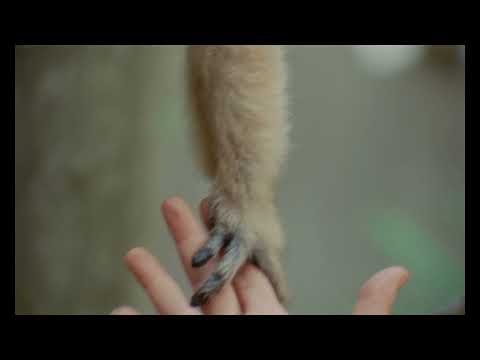
Similarly, the film abounds in close-ups of hands, not only the hands of humans and primates but in a more expansive sense. Zookeepers responsible for washing elephants’ lower appendages refer to them affectionately as manos (or hands), and in this context, shots of the elephants’ dexterous trunks grasping treats cannot but evoke hands as well.
While Collective Monologue’s reliance on handheld camerawork and extreme close-ups might be said to subtly reinforce the sensation of being held-captive inside the frame of the image itself, it can make for a disorienting, at times dizzying, experience that pushes outside purely aesthetic bounds. You might find yourself not just intellectually discomfited, but a little queasy. That being said, Rinland’s genuinely historical perspective allows us to reflect on how our attitudes have not only changed, but can continue to do so, and that if we learn to see animals differently, we will undoubtedly come to a deeper understanding of our own place in the world.
Since 2001, we've brought you uncompromising, candid takes on the world of film, music, television, video games, theater, and more. Independently owned and operated publications like Slant have been hit hard in recent years, but we’re committed to keeping our content free and accessible—meaning no paywalls or fees.
If you like what we do, please consider subscribing to our Patreon or making a donation.