
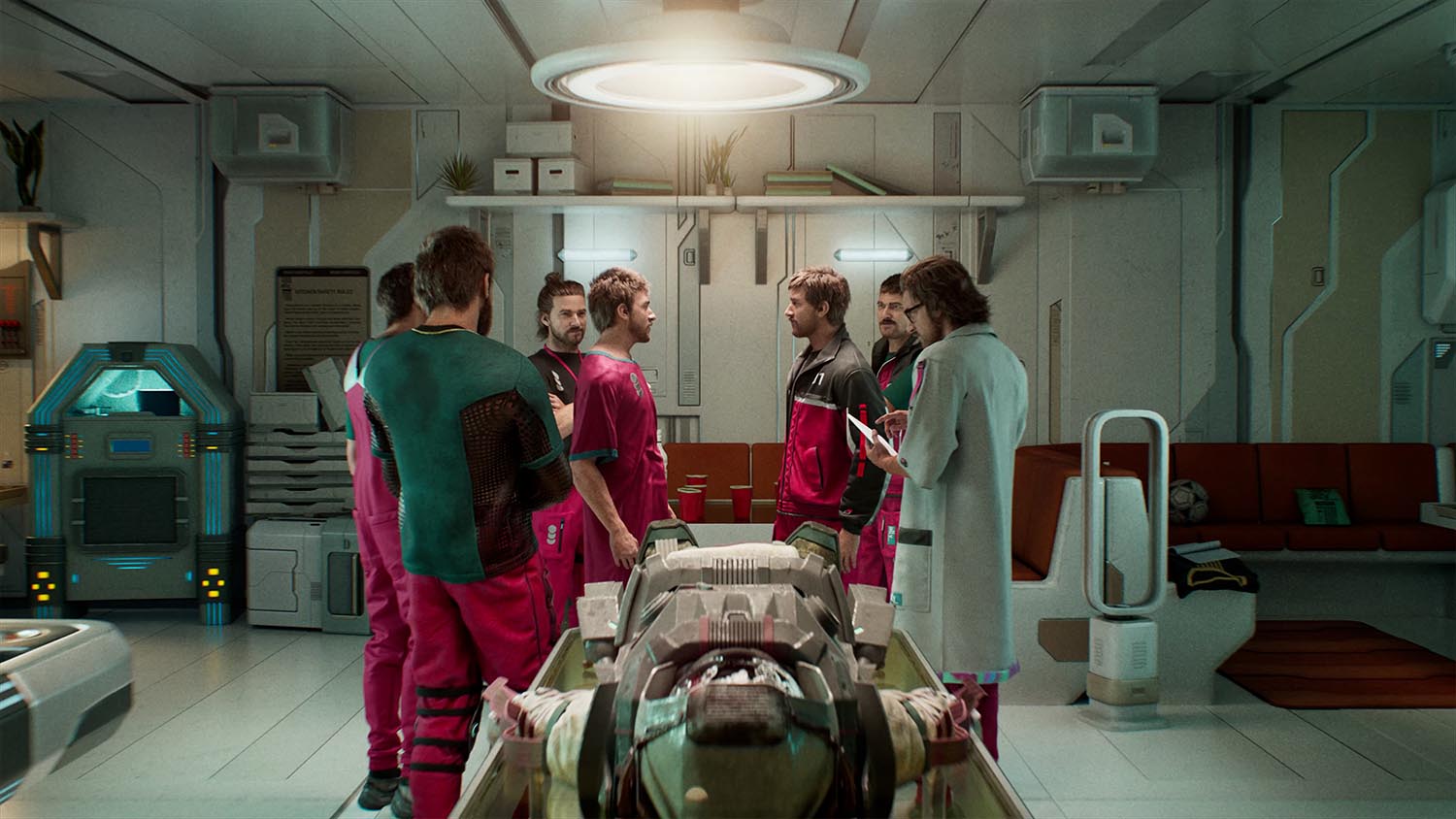
Most games include at least one white guy with facial hair, but The Alters dares to dream bigger. The latest survival game from Frostpunk and This War of Mine developer 11 bit Studios imagines a whole community of thirtysomething fellas, all of them Jan Dolski. Jan—the first one, at least—is the lone survivor of an ill-fated space expedition, and his only hope of running all the corporate tech left behind is to clone himself. Think Moon by way of Everything Everywhere All at Once, as each of Jan’s so-called “alters” is built from a different simulated life path to redefine his skill set. The original Jan is a simple builder, but variants range from a miner or a technician to a scientist or a medical doctor.
You’re only ever playing as the original Jan, assigning your alters to other tasks like keeping up with base maintenance, preparing meals in the kitchen, or fabricating new tools in the workshop. Most of these jobs are in your slickly designed home base, an enormous wheel with all the rooms you’ve built suspended within and seen from a sidelong cutaway. Other stations, though, are scattered across the planet’s craggy landscape, like the mining facilities you build over resource deposits to support your twin goals of escape and extraction of Rapidium, the metaphysical mineral that the whole mission was meant to bring back in the first place.
The Alters lets you change between two camera perspectives: that of the zoomed-out base management and the more conventional third-person navigation. In the latter, you traverse mazelike environments, managing your suit’s battery level and dodging anomalous bubbles of radioactivity while setting down structures that will beam any mined resources back to base. On top of those mechanics is an uncommonly involved narrative, complete with branching story decisions and fully voice-acted dialogue exchanges between Jan and his alters.
The story is interesting enough, cooking up several tough decisions based around the ethical quandary of creating these new, sentient human beings to supplement your workforce. But the game relies on such a broad shorthand to distinguish each alter that it’s hard to take seriously; the scientist, for example, is the haughty nerd archetype in glasses and a lab coat.
Voice actor Alex Jordan pitches his voice up and down and even puts on a few accents to further emphasize the differences, but the near-cartoonish gulf between each Jan only accentuates the game’s limitations. Where a live-action performance might rely on body language, the stiff digital mannequins here struggle to sell what’s meant to be the entire hook of The Alters.

This might not be such a problem if the game wasn’t so stubbornly built around its storytelling, with all the survival and management mechanics simplified in order to bring the narrative to the forefront. There’s no sense of hardship here, with the exploration becoming convenient as you fast-travel between outposts and learn to craft supplies in the field.
You might be on the other end of the map and get a message that the alters are squabbling in the kitchen, and it’s a breeze to return to base, because the game doesn’t want to leave any obstacles between you and the storyline. So easy is it to map and conquer the alien terrain that the game has to throw in magnetic storms to periodically repopulate all the hazards you’ve eradicated on the way to each spot where you hold the A button to make the numbers go up.
Sure, your base is never quite fully staffed even late in the game, but the alters don’t mind being rotated between assignments. The botanist works the greenhouse better than the technician does, and a few restrictions do exist (only the scientist can use the research lab), but the jobs are otherwise interchangeable and require little thought for who goes where. No one gets miffed at being sent outside to mine more often than the others. Your alters technically have moods that affect the amount of time they’ll work, but in practice, their disposition changes based on specific plot milestones rather than anything to do with how you run the base.
The Alters may be ambitious in its effort to supplement base-building and survival with a strong narrative, but in doing so, it sands away all the sharp edges of its mechanics, losing the skin-of-your-teeth hardship that defines a great survival game. As the momentum constantly sags around overlong dialogue scenes and perfunctory resource management, the game mostly ends up clarifying why others like it in this genre so rarely put a primacy on story.
This game was reviewed with code provided by Evolve PR.
Since 2001, we've brought you uncompromising, candid takes on the world of film, music, television, video games, theater, and more. Independently owned and operated publications like Slant have been hit hard in recent years, but we’re committed to keeping our content free and accessible—meaning no paywalls or fees.
If you like what we do, please consider subscribing to our Patreon or making a donation.
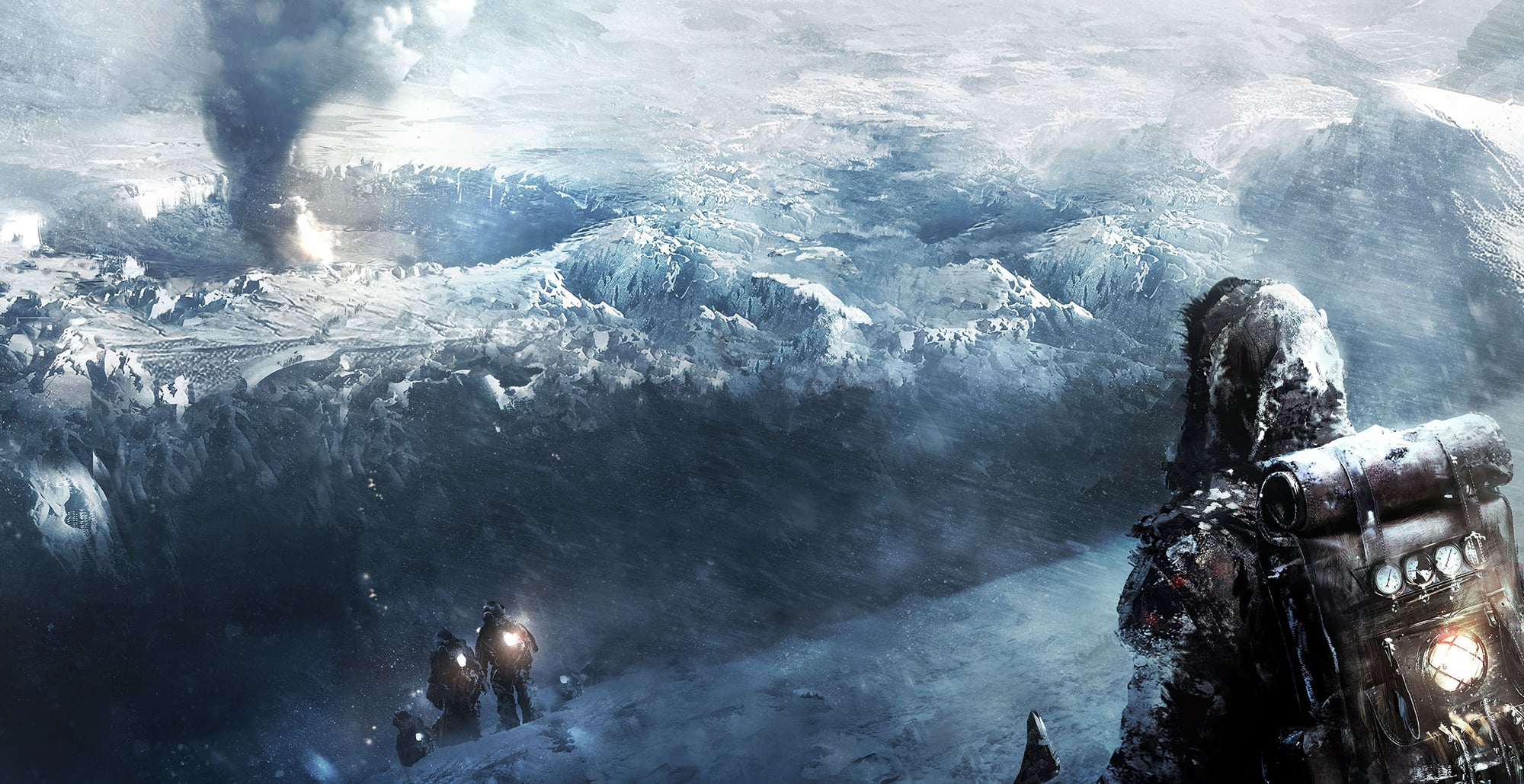
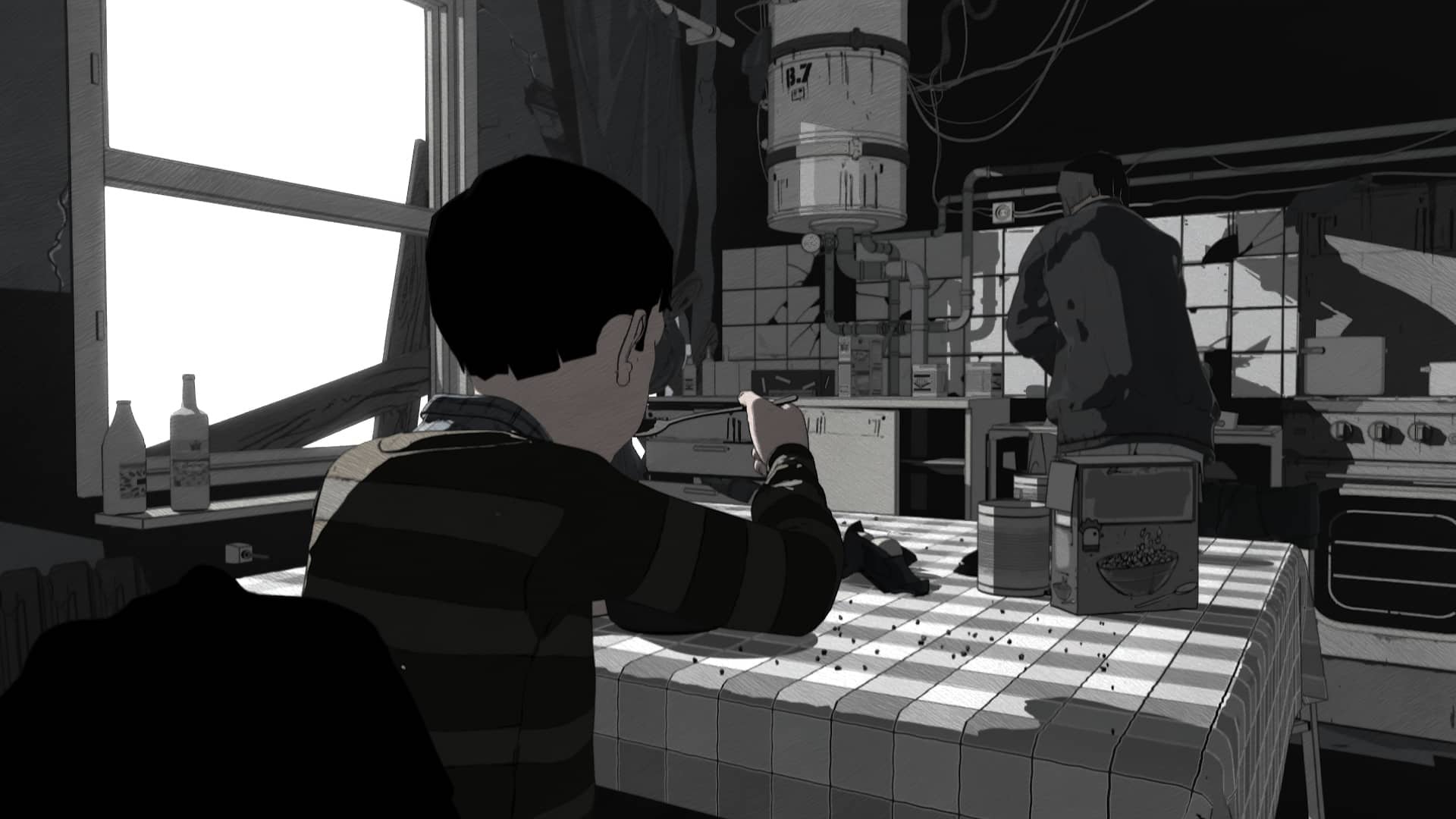

Interesting review. It feels like your closing thesis that survival games deliberately steer clear of having interesting narrative is kinda misguided though? 11 Bit’s other games, especially Frostpunk, are FULL of emergent narrative and fantastic micro- and macro-storytelling. They’re just not presented as linear narratives. It sounds like you raise a fair point about the Alters but I think you’ve drawn the wrong conclusion from the right points – the issue seems to be Alters not being willing to make the gameplay elements meaningfully support the narrative rather than the narrative ambition itself being the core problem.
It’s not meant to fit in the box of survival games…this article thwarts creativity and genre bending games.
The review has some good points, but I disagree with the full Survival aspect. Yes, survival ist a core function of the game, but it is just a engine to keep the machine running. The whole different perspectives, the issue with learning from yourself and from other perspectives, all those kinds of things make this game shine so much. To neglect these important things and give such a bad review is truly a shame and not worthy imho.