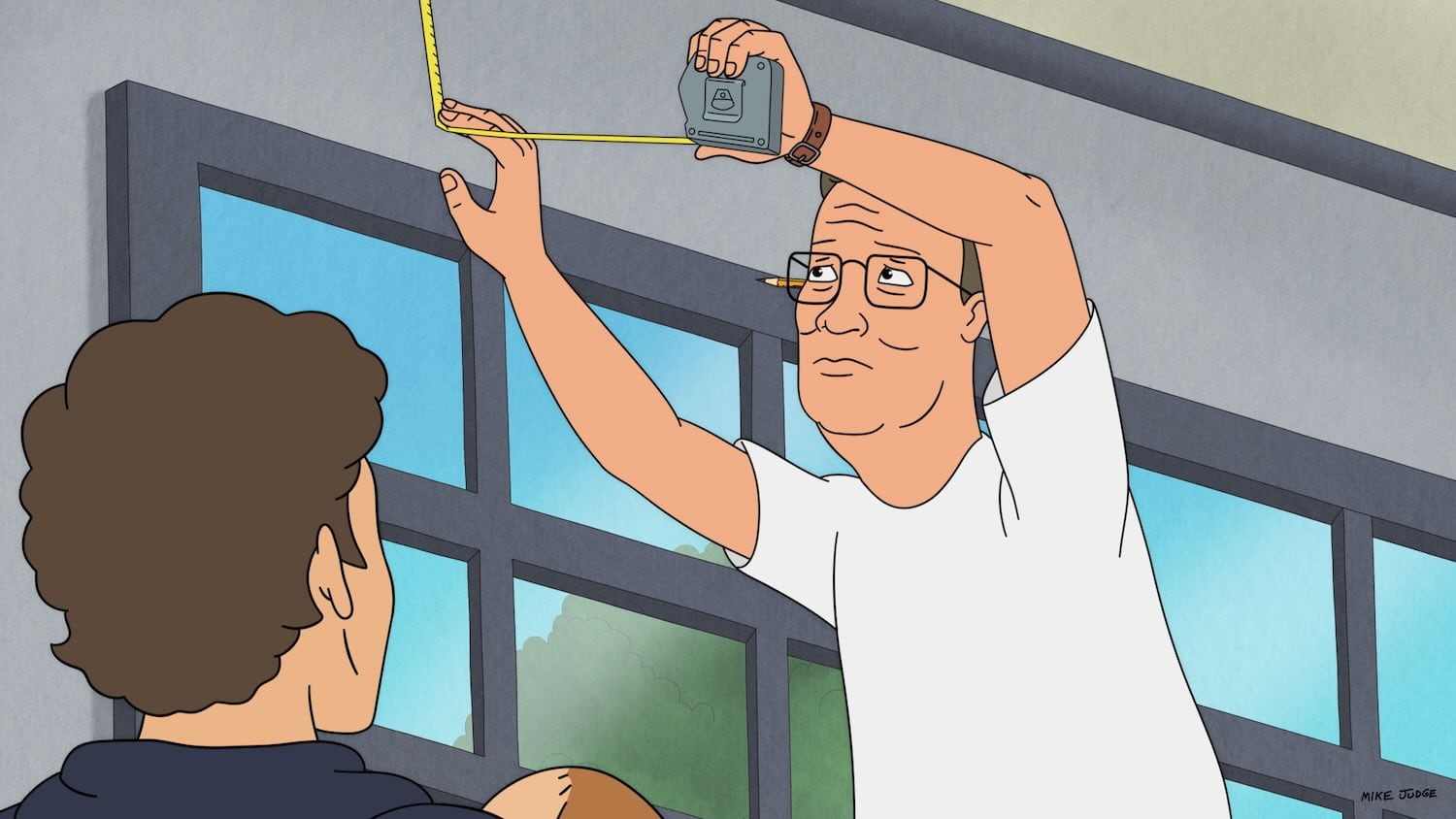
The much-belated 14th season of Mike Judge and Greg Daniels’s King of the Hill is that rare TV revival that doesn’t coast on nostalgia or mere reverence. The series picks up more or less where it left off 15 years ago, pushing forward by digging into the quietly ridiculous, deeply familiar rhythms of everyday life in Texas in 2025. It’s still comically dry, character-driven, and capable of shifting, without warning, into moments of low-key profundity.
The series sidesteps the streaming-era trap of many reboots that focus, with forced sentimentality and clunky topicality, on characters who are out of step with modern sensibilities. Instead, this revival feels casual but considered. Life in the fictional Texas town of Arlen remains as unhurried as ever, as does King of the Hill’s gently loping, observational beats, which are attuned to its characters as they are—quirks, contradictions, and all.
What’s most impressive about the new season is how skillfully it incorporates and handles contemporary issues. In the ninth episode, “No Hank Left Behind,” Hank (Judge) joins a men’s rights boot camp with his younger half-brother, Good Hank (Finn Wolfhard), while in the seventh, “Any Given Hill-Day,” Peggy (Kathy Najimy) gets caught up in a Facebook-influenced neighborhood meltdown over her flea-infested free library.
This might seem like easy zeitgeist-baiting, but the humor here comes from who these characters are—and, crucially, who they’ve always been—and how they navigate each scenario accordingly. Unlike, say, Last Man Standing, King of the Hill’s approach to topicality isn’t loud or moralizing. Hank isn’t always right, and the series finds humor and heart in how he learns, however begrudgingly. That willingness to let him sit with his discomfort is part of what makes this revival feel so true to the show’s legacy.
Whenever Hank flat-out tells Peggy and their grown son, Bobby (Pamela Adlon), that they’re better than him at something, it isn’t some soggy display of self-flagellation, as his is the unforced conviction of a man who’s been humbled by life. The season’s second episode, “The Beer Story,” sees Hank facing off with Bobby in a homebrewing contest and ends on a surprisingly sincere note when Hank pokes fun at his own old-head headassery: “See, he knows more about certain things than I gave him credit for, but I was too proud to listen.”
The season’s fifth episode, “New Ref in Town,” revolves around Hank’s newfound devotion to soccer—a sport his friends treat like a foreign pathogen. The backlash escalates to the point where Dale (Toby Huss) kidnaps him, convinced that Hank’s love of the offside rule marks him as a Saudi plant. Even in such ludicrously over-the-top moments, King of the Hill never loses its emotional center. Hank’s affection for the game isn’t ironic or colored by an agenda; he just likes its clear rules. That kind of unfussy sincerity—especially when met with ridicule—says more about him than a thousand overwritten monologues ever could.
The emotional register throughout the new season is consistent with what made the original series sing, but it feels a little wiser this time around. The episodes are driven by a quiet ethos: Take care of people, look for common ground, and don’t be a needless jerk. As Hank puts it at the end of the first episode, “Return of the King”: “It’s nice to be nice.”
King of the Hill is startlingly generous, especially in a climate that rewards snark over sincerity. And as an extension of this, Bobby, of all people, gets the most unassumingly moving upgrade: Once the show’s nasally punching bag, he’s now an earnest, hard-working young adult with a raspy, sugar-dipped twang. He’s still weird, but he’s no longer just comic relief.
Fourteen seasons in, King of the Hill hasn’t reinvented itself so much as it’s settled deeper into its own skin. It’s still a show about propane, propane accessories, and the minor humiliations of suburban life. But it’s also about how people learn without the need of grand gestures, and maybe even grow a little, one awkward interaction at a time. That these characters can change without losing their essence might be the show’s subtlest magic trick.
Since 2001, we've brought you uncompromising, candid takes on the world of film, music, television, video games, theater, and more. Independently owned and operated publications like Slant have been hit hard in recent years, but we’re committed to keeping our content free and accessible—meaning no paywalls or fees.
If you like what we do, please consider subscribing to our Patreon or making a donation.