
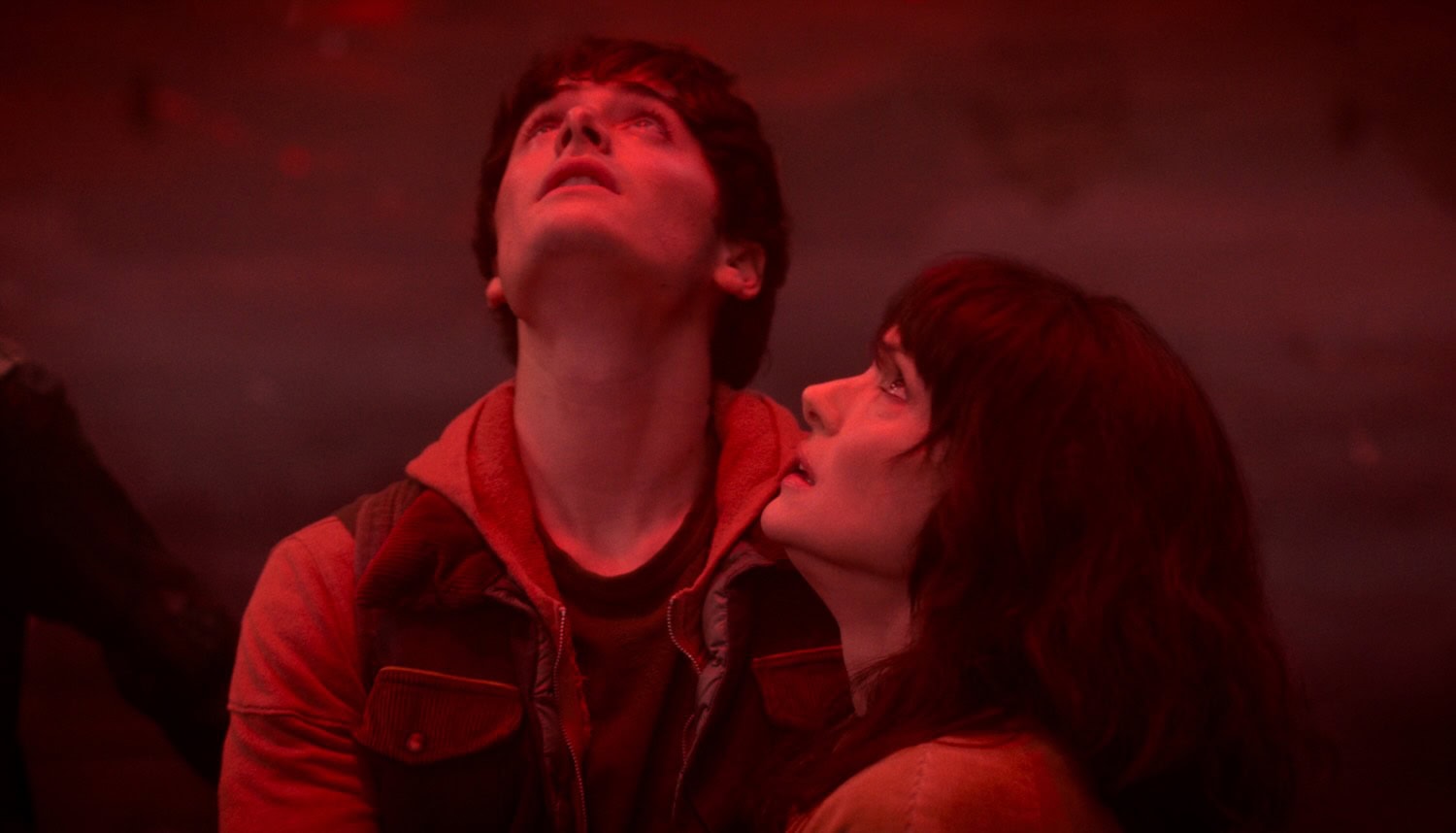
If season four of Stranger Things felt stretched out and overindulgent, it at least rewarded patience by introducing some of the show’s most effective moments of horror and character growth to date. The fifth and final season concludes with a genuinely thrilling and deservedly cathartic finale, but it stockpiles its best set pieces until then, and not a minute sooner, resulting in close to seven hours of what amounts to wheel-spinning.
“Chapter One: The Crawl” quickly establishes the new status quo for the beleaguered residents of Hawkins, Indiana. Last season’s climactic “earthquake” has caused the military to completely quarantine the town, with Hopper (David Harbour) and Eleven (Millie Bobby Brown) both on the run, making heavily coordinated sojourns to the Upside Down looking for proof of Vecna’s (Jamie Campbell Bower) demise. The occupation of Hawkins, the reaction of its normie suburban populace, and Hopper and El reckoning with just how much they have to go to the mattresses with the military is all fertile ground left unexplored by the next episode, “Chapter Two: The Vanishing of Holly Wheeler,” in which Holly (Nell Fisher) is abducted by a Demogorgon—albeit in one of the season’s best instances of pure horror.
A solid feature film’s worth of plot is then stretched thinly across five more hour-plus-long episodes. The new developments are minor: Vecna and the military—led by a doctor played by a squandered Linda Hamilton—both apparently have the same idea of luring children to the Upside Down (the latter to make new superpowered bioweapons like El), with the kids mostly twiddling their thumbs as they wait for rescue. Much of the first part of the season leaves us waiting for some semblance of a hearty plot to kick in. The flesh-shredding climax of “Chapter Four: Sorcerer” is at least brutal and kinetic enough to wake the audience up—but only briefly.
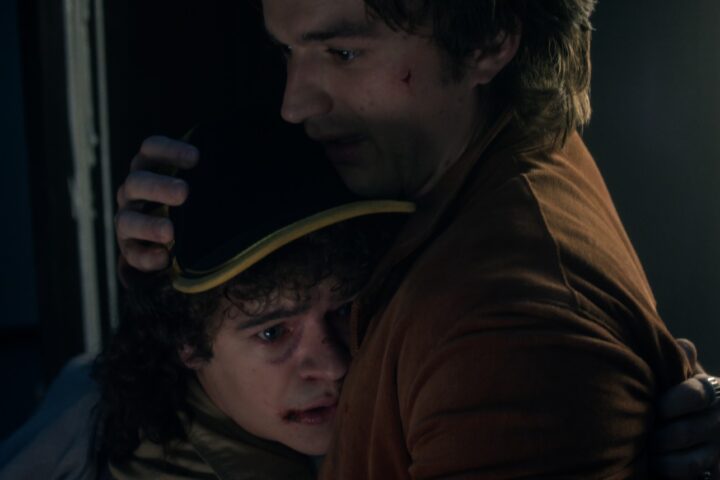
Throughout the season, characters bounce plans back and forth in often circular ways. Many of these conversations find the characters still attempting to explain the Upside Down through different frames of pop-cultural reference, like A Wrinkle in Time, despite the fact that the place is never more frightening than it is when Dustin (Gaten Matarazzo) finds a notebook explaining its horrifying nature in specific, scientific detail. Even then, though, we barely get a glimpse of these unholy cosmic horrors. Instead, the series focuses on Nancy (Natalia Dyer) and Jonathan’s will-they-or-won’t-they courtship, grinding the momentum to a halt.
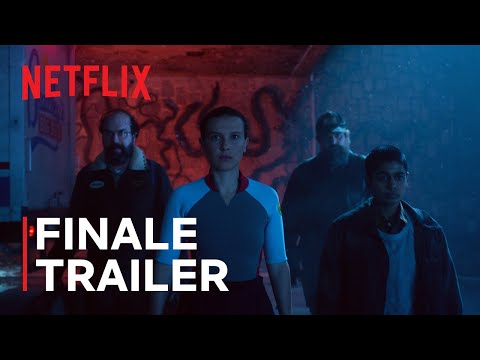
What ultimately carries Stranger Things to its finish line is its ensemble cast, with the younger members especially bringing a newfound confidence to their roles. Maya Hawke, as Robin, injects a smirky chaos-goblin energy to every scene she’s in, and Matarazzo’s surliness early in the season leads to some of the most gratifying emotional moments in the final episodes. Noah Schnapp is finally given the opportunity to portray Will as more than just Joyce’s helpless baby boy, and having the character’s maturity manifest with Demogorgon-crushing superpowers is one of the few major mid-season beats that feels meaningful. On the other hand, Will’s much-belated coming-out scene is weepy and overwrought, at least compared to Robin coming out to Joe Keery’s Steve as they slouched against a bathroom stall in season three.
To the extent that the destination matters more than the journey, the final episode, “Chapter Eight: The Rightside Up,” manages to bring the series in for a satisfying landing: a bombastic final fight against Vecna, culminating with a protracted Return of the King-style tiered epilogue that ties up everything in a bow. A series of ’80s needle drops scoring the show’s final emotional beats probably justified the season’s exorbitant price tag more than the effects work.
From the start, Stranger Things has been a throwback that forged much of its identity by presenting the hallmarks of ’80s fantasy, horror, and kidlit to a streaming generation. And the most intriguing note of the finale is in the very last scene, as we see a group of youngsters playing Dungeons & Dragons together for the first time. But the vast majority of the final season is more preoccupied with treacly adolescent drama, having the main characters tangling with the military, and playing the show’s most famous moments, like Max’s (Sadie Sink) “Running Up That Hill” escape, ad nauseam for emotional impact. Far too much of these final episodes boil down to a series of “Remember when?” moments rather than making new ones that are worth remembering.
Since 2001, we've brought you uncompromising, candid takes on the world of film, music, television, video games, theater, and more. Independently owned and operated publications like Slant have been hit hard in recent years, but we’re committed to keeping our content free and accessible—meaning no paywalls or fees.
If you like what we do, please consider subscribing to our Patreon or making a donation.
secondo me si dovrebbe fare una sesta stagione perché secondo me il finale e brutto c’è sacrificare undi per la seconda volta ma bastava semplicemente farla sconfiggere vecna.Mike e undi potevano stare ancora insieme anche se era ricercata dal governo