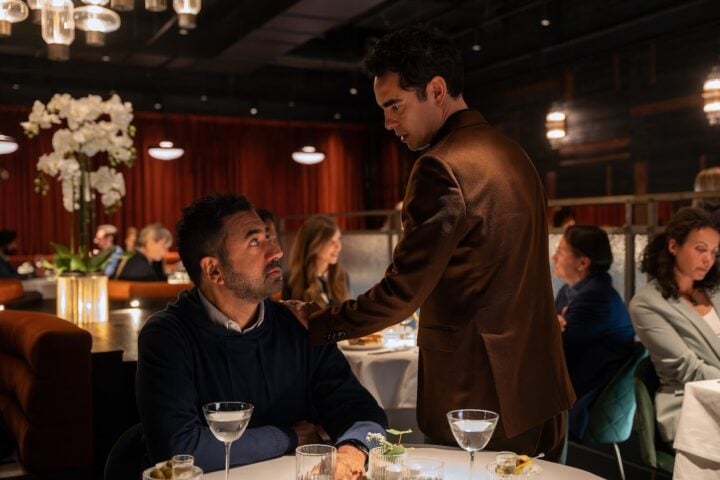
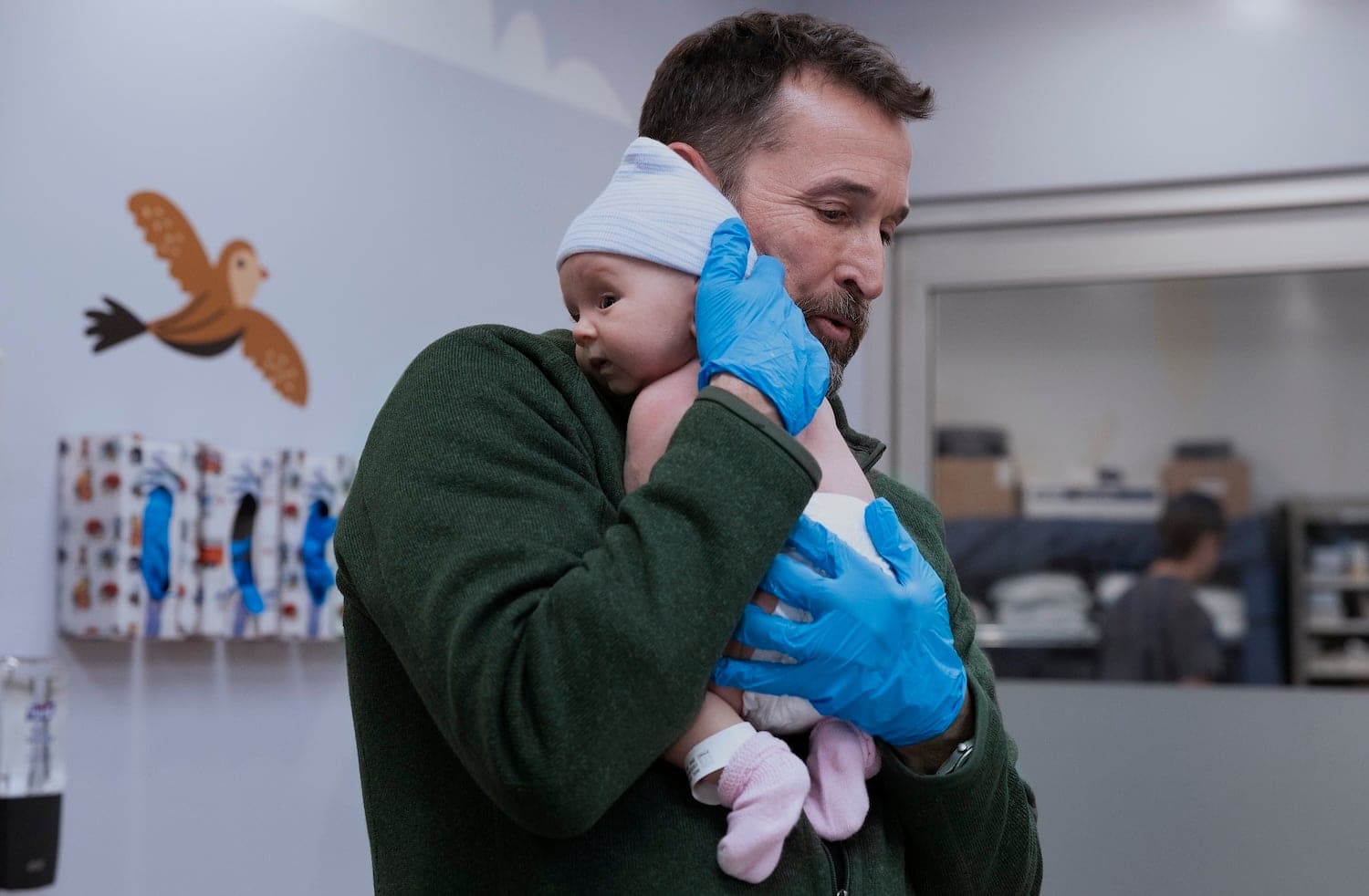
Set on July 4, 10 months after the events of the show’s first season, season two of The Pitt finds Dr. Michael “Robby” Robinavitch (Noah Wyle) on the cusp of “a little sabbatical.” This harried workaholic may be tempting fate with those words. Even though one of the show’s new characters, Dr. Baran Al-Hashimi (Sepideh Moafi), is clearly qualified to take over for Robby in his absence, the attending physician seemingly makes a call to her therapist at one point that shows how best-laid plans can be upended by forces beyond one’s control.
The economic and systemic issues that hospitals face, such as health disparities in emergency medicine, is still a central concern of The Pitt, which continues to find new ways of speaking to old truths. Baran’s buttoned-up, by-the-book style, for one, stands in stark contrast to Robby’s gung-ho MacGyvering, with her fondness for automating clinical note-taking being a point of contention that the series deftly weaves into multiple storylines in season two.
The season’s focus is balanced expertly among the characters with the dynamic camerawork, an extension of the characters’ movements and glances, seamlessly stitching together the plotlines. The new med students are Ogilvy (Lucas Iverson), whose cockiness quickly erodes after nearly causing a patient’s death, and Joy (Irene Choi), whose photographic memory is put to snappy use during a crisis. Asked about her talent, Joy contextualizes it within her family history, in a moment that speaks to how effortlessly the series slides between humor and gravity.
Langdon (Patrick Ball), whose recently outed addiction has sent him through rehab, is back in the ER, newly humbled and looking to make amends. Whatever forgiveness he wants from Robby isn’t going to come easy, and sometimes The Pitt is no more riveting than when it’s watching Robby’s feelings for Langdon soften in moments where the unpredictable nature of their job forces them to tend to the same patient. Through it all, Wyle is quietly moving for the way he makes you see how Robby is taking stock of his capacity for empathy.
The series is still prone to didacticism: Like last season, one patient seems to exist largely to offer a Pittsburgh history lesson, and doctors continue to rattle off statistics for our benefit. And there are a few emotional moments that slip into corny exaggeration, like when Langdon quotes a book about the mysteries of fatherhood. But in its sophomore season, the show’s old-school mojo remains unparalleled. It proudly wears the conventional armor of the medical television show, but it understands that our satisfaction can only be guaranteed by having us spend time with characters that are every bit as complex as the conflicts that come their way.
The Pitt is exceptional for the way it homes in on the emotional and professional challenges faced by its characters without ever sacrificing its sense of realism. The series emphasizes the importance of every action, big or small, within the chaotic tapestry of the ER. Fishing broccoli out of a man’s throat may not be the most complex or time-consuming medical procedure, but it’s just as compelling as any of the more involved procedures we see because The Pitt so effectively asserts the humanity of the patients as much as that of the providers.
Since 2001, we've brought you uncompromising, candid takes on the world of film, music, television, video games, theater, and more. Independently owned and operated publications like Slant have been hit hard in recent years, but we’re committed to keeping our content free and accessible—meaning no paywalls or fees.
If you like what we do, please consider subscribing to our Patreon or making a donation.