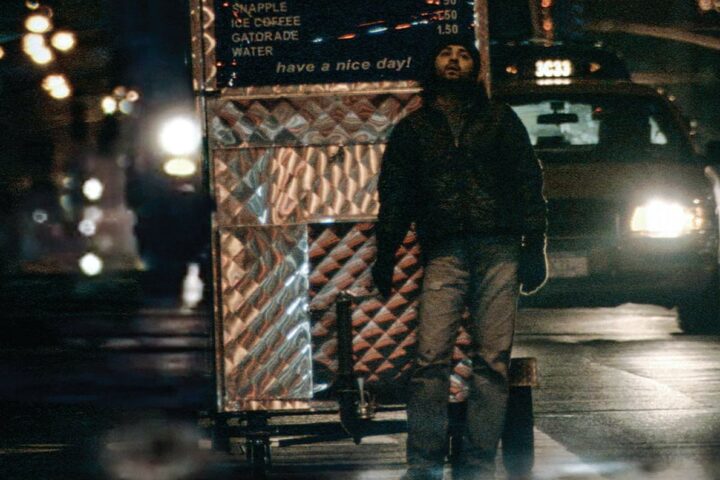
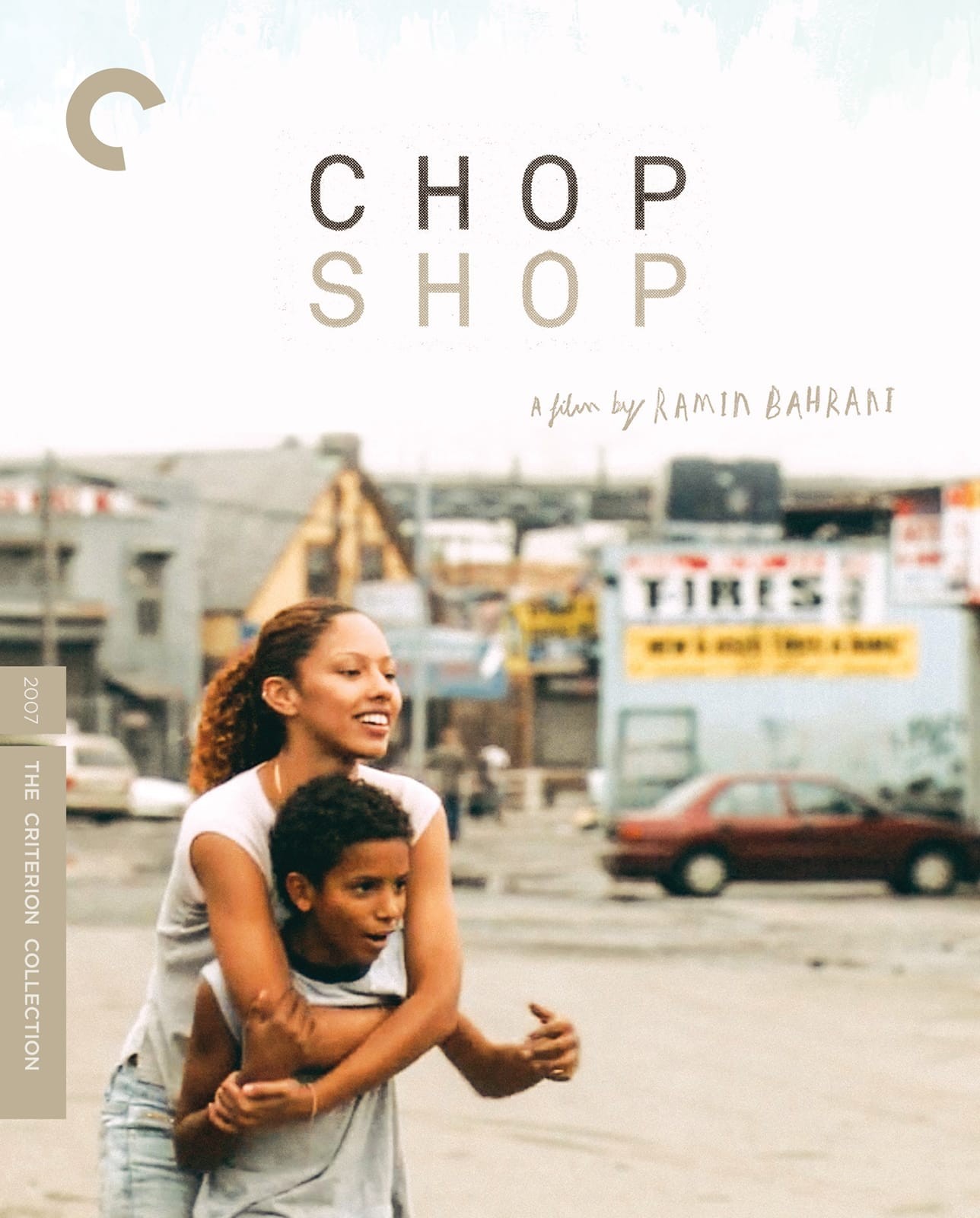
 With Chop Shop, Ramin Bahrani exhibits a restraint lacking in his 2005 breakout, Man Push Cart, tending more to his story’s neorealist particulars than to exploiting its symbolic potential. The film also concerns a minority character struggling to stay afloat on the fringe of New York City society just long enough to find a way out. Alejandro (Alejandro Polanco) is a 12-year-old without parents or a formal education, but he has the street smarts that allow him to survive—whether it be by selling candy in the subway or bootleg DVDs on sidewalks. Through a friend, he gets a job at a chop shop (where stolen autos are stripped for parts) in Willet’s Point, Queens, a stretch of auto-body businesses so shady, grungy, and hopeless that the Shea Stadium billboard across the street that reads “Make Dreams Happen” seems like a cruel joke.
In this run-down milieu, Alejandro is reunited with his 16-year-old sister, Isamar (Isamar Gonzales), whom the boy both looks up to and wishes to care for, and the two soon endeavor (at Alejandro’s urging) to raise money to buy a beaten-up food truck that’ll afford them a measure of stability and freedom. Disappointment, however, lurks around every giant, muddy Willet’s Point puddle, from Alejandro’s discovery that Isamar is moonlighting as a prostitute, to the after-the-fact realization that his business sense isn’t quite as keen as he believed. The air of dejection that repeatedly threatens to suffocate his aspirations—and which he valiantly strives to shrug off—can be palpable and is augmented by the preceding, all-too-rare glimpses of innocent childhood joy, as well as the sure-handed contrast between Alejandro’s safe, sheltering mini-apartment above the chop shop where he works and the crowded, grimy, violent city streets that he traverses day and night in search of opportunity.
Chop Shop recognizes not only how Alejandro’s letdowns foster bitterness and anger, but also how those feelings help to create something of a self-perpetuating cycle of stasis. At the same time, it captures truth in raw, off-the-cuff moments, such as when a drunken chop-shopper (Ahmad Razvi) employs Alejandro to help out at a garage party but decides to shove the kid into a card table for no reason other than his own mean, bullying amusement. Alejandro and Isamar’s alternately nasty and tender rapport exudes a startling authenticity, yet Bahrani’s screenplay occasionally feels too scripted for its own good, especially when dealing with the subject of Isamar’s sex work. And despite its intimate cinematography and a charismatic, if slightly too precocious, performance by Polanco, the film nonetheless too often fails to get under one’s skin emotionally—save, that is, for a final cut that captures, with manipulative but effecting poignancy, Alejandro and Isamar’s twin desires for reciprocated affection and escape.
Image/Sound
Chop Shop abounds in quick camera moves and characters chaotically rushing about, so it’s all the more impressive that Criterion’s transfer of an HD digital master boats an incredibly smooth and stable image. The picture also greatly benefits from high dynamic range and stellar color balancing, which adjusts nicely between the extremely bright and colorful scenes in the blistering summer heat and the much cooler interior and evening sequences. But the 5.1 audio is the real selling point here, with the near-constant cacophony of voices, music, cars, and even the distant sounds of the Mets’ games all coming through loud and clear in the mix.
Extras
On an audio commentary recorded in 2006, director Ramin Bahrani, director of photography Michael Simmonds, and actor Alejandro Polanco discuss the film’s unusual casting process and the challenges of shooting in Willett’s Point, which is known primarily for its auto-repair businesses. A new conversation with Bahrani, Polanco, actor Ahmad Razvi, and assistant director Nicholas Elliott covers the lengthy rehearsal phase, while Bahrani goes on to describe his working relationship with screenwriter Bahareh Azimi, with whom he also wrote Goodbye Solo, and his desire to make his second film as quickly as possible in the wake of Man Push Cart’s success. Bahrani’s discussion with writer and scholar Suketu Mehta touches on some of these same topics but eventually stands apart when the two men get into the struggles faced by immigrants in the U.S. and how the 2008 financial crisis forced many formerly middle-class Americans into rough working conditions. The disc also comes with footage from early rehearsals and an essay by novelist Viet Thanh Nguyen that explores Bahrani’s approach to depicting the lives of immigrants living on the fringes of society.
Overall
Criterion has beautifully preserved Ramin Bahrani’s Chop Shop, a vigorous portrait of New York City life that’s rarely depicted on screen.
Since 2001, we've brought you uncompromising, candid takes on the world of film, music, television, video games, theater, and more. Independently owned and operated publications like Slant have been hit hard in recent years, but we’re committed to keeping our content free and accessible—meaning no paywalls or fees.
If you like what we do, please consider subscribing to our Patreon or making a donation.