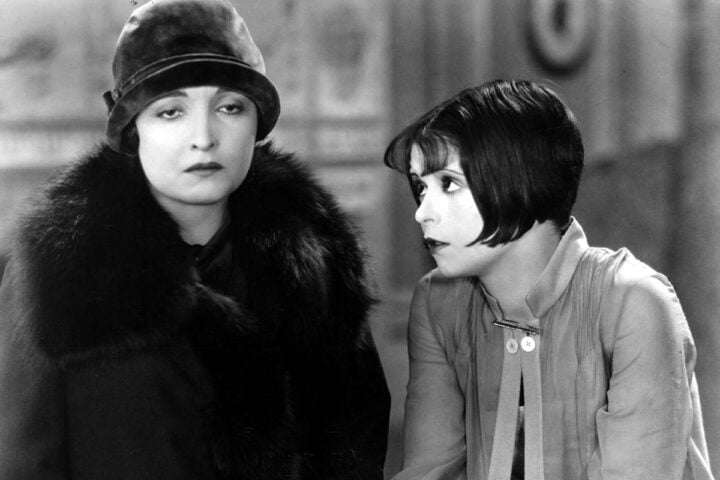
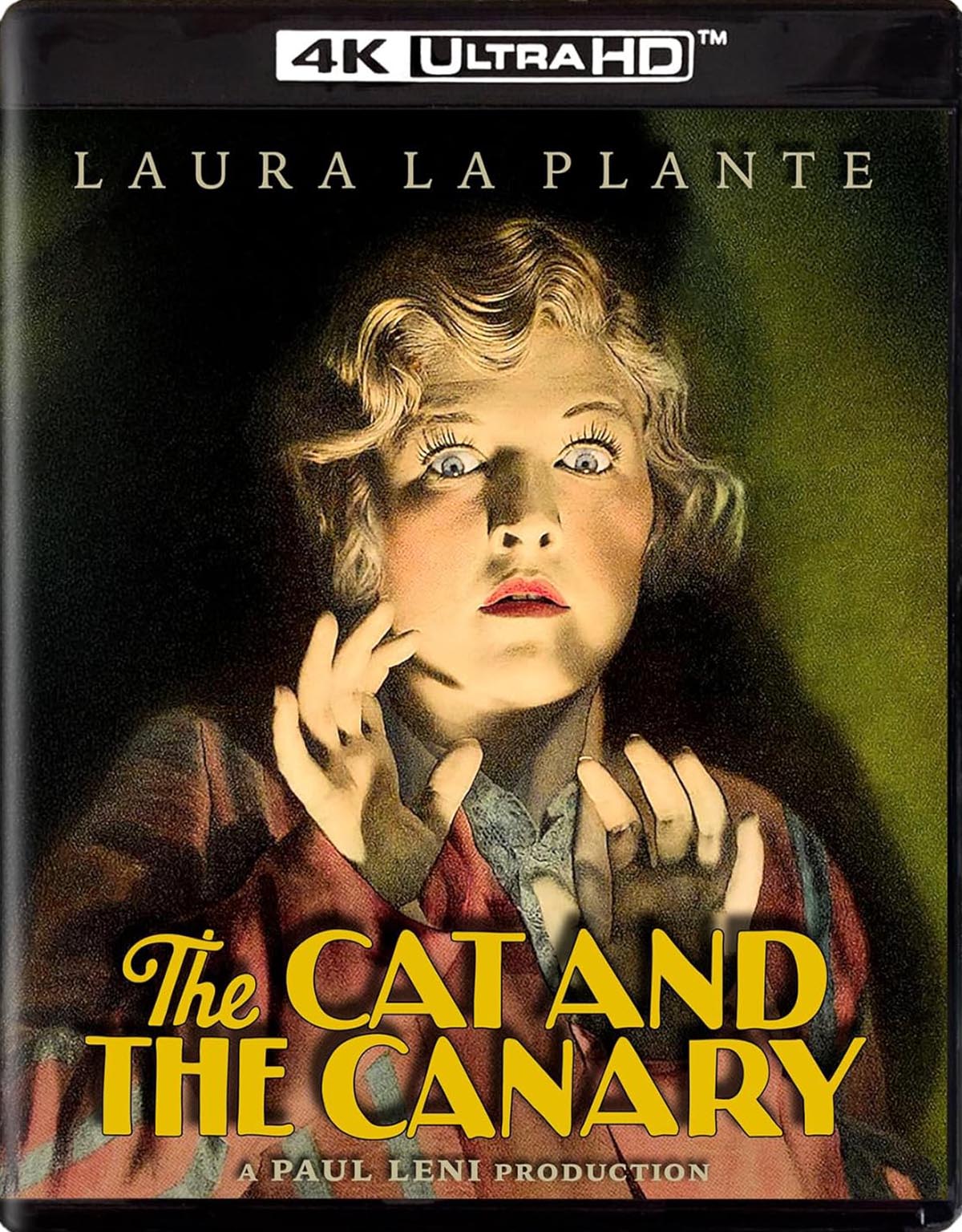
 Paul Leni’s The Cat and the Canary, adapted from John Willard’s stage play, is an expressionist delight made at the height of the silent era. Released mere weeks before The Jazz Singer, it stands as an early cornerstone of the “old dark house” subgenre of horror that would flourish throughout the ’30s. Leni brings a distinctly German visual sensibility to the film, with the camera movement and playful optical tricks infusing the brisk narrative with a constant sense of vitality and surprise.
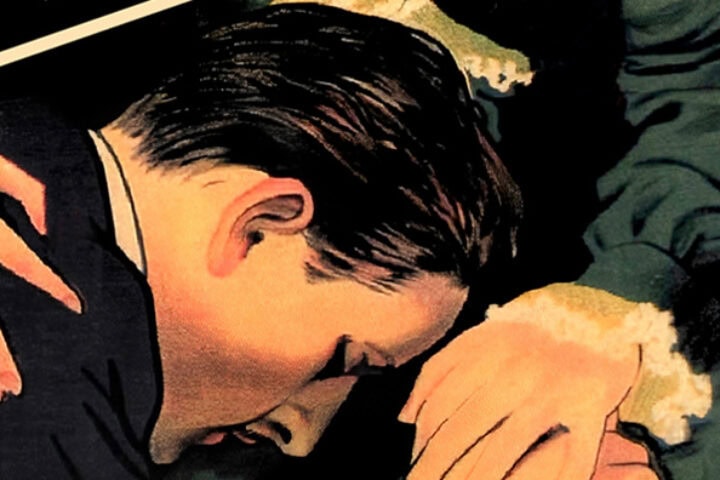
The plot is foundational, so often imitated that it now feels archetypal. An eccentric millionaire dies and leaves his venal relatives to squabble over the inheritance. Cyrus West (played by an unnamed actor who’s only glimpsed in a striking, wordless montage) orders his will opened 20 years after his death, at which point his heirs gather at his decaying mansion.
What may surprise viewers is just how funny The Cat and the Canary is. Screenwriters Alfred A. Cohn and Walter Anthony waste no time ushering everyone into the house so the ghostly games can begin. When cousin Paul (Creighton Hale), looking like Harold Lloyd’s anxious double, arrives to compete for his cousin Annabelle’s (Laura La Plante) affections, the film shows its hand: This is horror with a grin. The “supernatural” incidents are transparently the machinations of an imposter, and Leni leans into the absurdity of it all.
What’s remarkable is how seamlessly the film toggles between comedy, suspense, and horror, as in the scene where a hairy hand reaches from a secret passage to snatch lawyer Crosby (Tully Marshall). Leni isn’t trying to terrify so much as delight, wrapping chills in the pleasures of cinematic ingenuity. The film is lighter than his later Universal work (The Man Who Laughs, The Last Warning), and more coherent than his expressionist anthology Waxworks from a few years prior. In a sense, The Cat and the Canary becomes a film about expressionism, about how those radical stylistic strategies can be repurposed for mass-audience entertainment.
Once Annabelle is revealed to be the sole heir, a guard bursts onto the scene to announce that a homicidal maniac who “tears his victims like canaries” may be lurking on the grounds. This leads to a saggy midsection, yet even when the plotting falters, the filmmaking is consistently compelling. The mansion’s long hallways become playgrounds for a prowling camera. The editing is inventive, while superimpositions lend certain moments an oneiric quality. And while the reveal that a greedy relative has engineered the chaos feels obligatory, the visual execution remains fleet and polished. Leni translates expressionism into an American register with such verve that The Cat and the Canary still appears visually distinctive today.
Image/Sound
This release of The Cat and the Canary provides a 4K restoration sourced from original nitrate prints, and the occasional signs of damage and flickering show that Kino didn’t set out to problematically tinker with the materials at its disposal. Grain is fully intact, allowing texture and shadow detail to shine, especially in the mansion’s darker corridors. Contrast is strong, grayscale gradation is solid, and crushed blacks are nowhere to be seen. The music by Neil Brand is presented cleanly, with no distortion or hiss getting in the way of the experience.
Extras
In the first of two commentary tracks, film historian David Del Valle and silent film expert Randy Haberkamp highlight Paul Leni’s boldly mobile visual style, elaborate expressionist design, and inventive credit sequences, celebrating The Cat and the Canary as a foundational entry in Universal’s early horror cycle. Across the second track, film historian Anthony Slide also focuses on cinematographer Gilbert Warrenton’s work on the project but makes ample room for discussion about the performances, namely Laura La Plante’s turn as Annabelle, while probing how the film strikes that tonal balance between comedy and gothic horror. The disc also includes Paul Leni’s 1925 short “Rebus-Film No. 1” and several trailers for other Kino releases.
Overall
Kino Lorber rolls out a well-deserved red carpet for Paul Leni’s expressionist 1927 silent classic.
Since 2001, we've brought you uncompromising, candid takes on the world of film, music, television, video games, theater, and more. Independently owned and operated publications like Slant have been hit hard in recent years, but we’re committed to keeping our content free and accessible—meaning no paywalls or fees.
If you like what we do, please consider subscribing to our Patreon or making a donation.