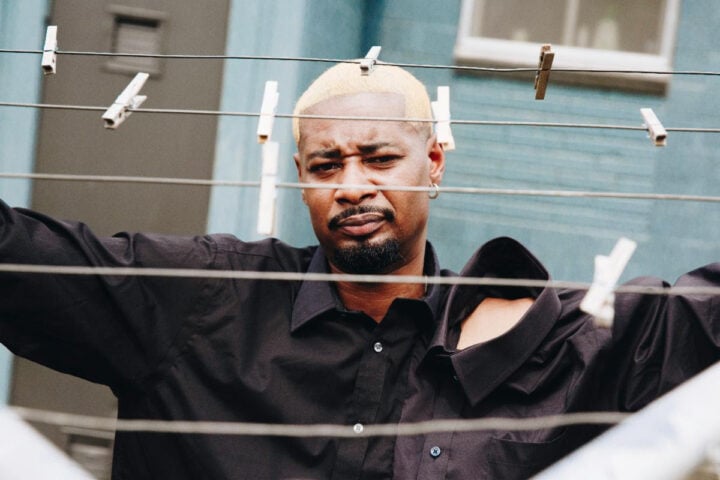

Set against some of the strangest, most adventurous beats in his discography to date, Danny Brown’s Stardust finds the Detroit rapper discovering a new lust for life. “Everything I went through had me drowning on the surface/Discovered who I am, now I know my life purpose,” he declares on the triumphant intro “The Book of Daniel.”
Brown sounds especially alive on the title track and “Copycats,” two braggadocious bangers that see him, both lyrically and sonically, asserting his role as one of hip-hop’s bravest and boldest weirdos. Recognizing his status as an elder statesman, he acknowledges the circular ecosystem of inspiration that drives each generation of rappers to influence each other on the latter track. “They all want me like a bump off a key/Everybody knows me, but I’m losin’ myself,” Brown says, before admitting, “All I ever wanted was to be like you/So I’m doin’ that too.”
To that point, Brown dives headfirst into rage rap in all of its messy, combustible chaos on “1L0v3myL1f3!” and “1999.” The former moves at breakneck speed, with the rapper matching pace effortlessly, his voice cutting through an epically apocalyptic beat that sounds deliberately overblown. Like the spiritual successor to Brown’s album with JPEGMafia, Scaring the Hoes, the song melds DIY beatmaking with the raw, live energy of a hardcore show.
There are moments on Stardust where Brown’s delivery seems slightly at odds with the production. On “Lift You Up,” he sounds too high-strung for the relatively tame, groovy house beat, while “Whatever the Case” is so chaotic and overpacked with ideas that he ends up competing with the instrumental rather than commanding it. Still, these clashes are a part of the album’s strange charm, showcasing the limits to which Brown is willing to stretch himself.
Hyperpop, a subgenre rooted in playful artifice, makes for an interesting backdrop for Brown’s clear-eyed lyrical approach. On “Right from Wrong,” he delivers some old-school life advice—“Continue on a journey and focus on what’s ahead, ‘cause they run with the lies when the truth ain’t got legs”—over a bed of spooky, pitched-up harmonies, off-kilter synths, and erratic drums. (Paired with more conventional production style, those lyrics might induce an eye roll.)
But Stardust isn’t all chaotic brashness. The album’s penultimate track, the nine-minute “The End,” finds Brown exorcising his demons by recounting his come-up and the drugs and alcohol that became a coping mechanism for the anxiety and self-loathing that started to eat away at him after finding success. “Bled into the music only express was depress/All the times I would lose it was some stress I couldn’t accept,” he admits. Halfway through, the song bursts into hyperdrive as Brown seems to rediscover his purpose: “I lost my thirst, I’m back now and I’m hungry,” he declares, before closing with a promise to “never see the end of me.”
In many ways, Stardust feels like a companion to 2013’s Old, an album that similarly found Brown wrestling with fame and isolation, doubt and self-confidence, over some of the most groundbreaking EDM-inspired beats of the era. In revisiting these issues with a newfound maturity, Stardust is the sound of an artist coming full circle.
Since 2001, we've brought you uncompromising, candid takes on the world of film, music, television, video games, theater, and more. Independently owned and operated publications like Slant have been hit hard in recent years, but we’re committed to keeping our content free and accessible—meaning no paywalls or fees.
If you like what we do, please consider subscribing to our Patreon or making a donation.