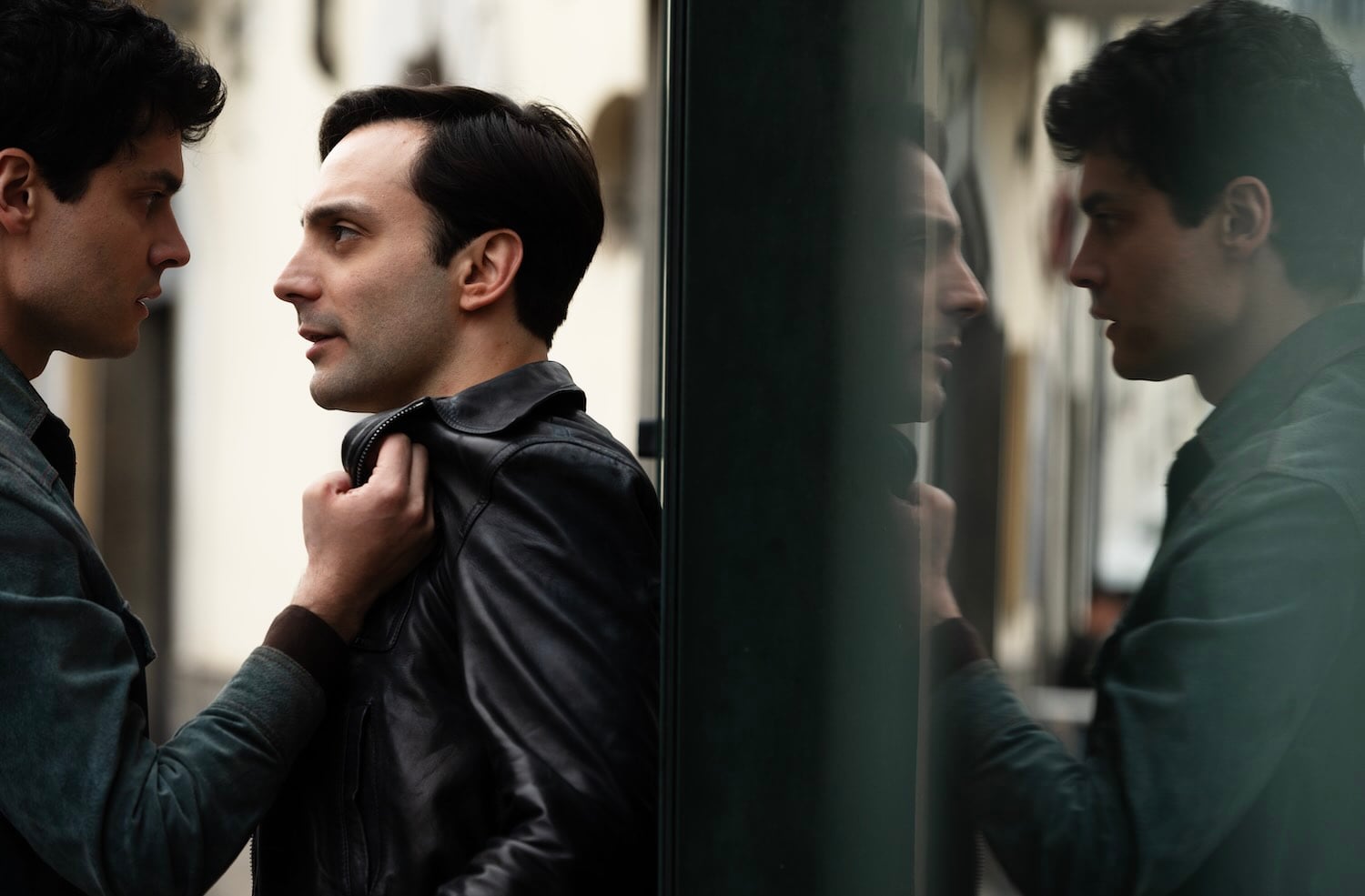
The exact body count and period of activity of the Monster of Florence, the infamous Italian serial killer believed to be responsible for a series of grisly murders between the late 1960s and the mid ’80s, are still matters of debate, as is the question of whether he operated alone. Netflix’s The Monster of Florence doesn’t attempt to answer those questions, instead exploring the purported origins of the crime spree. Yet even as co-creators Leonardo Fasoli and Stefano Sollima zero in on the 1968 incident that’s apparently so crucial to the entire case, the fragmented structure of the four-part miniseries leaves it with no coherent center.
In much the same fashion as later murders attributed to the so-called Monster of Florence, Barbara Locci (Francesca Olia) and her lover were gunned down in their car on a secluded road in 1968. Locci’s husband, the reedy Stefano Mele (Marco Bullitta), confessed to and served time for the killings, and as such can’t be the Monster since the subsequent murders—which similarly took place on lovers’ lanes with the same type of firearm—overlap with his incarceration. But as the serial killer’s activity spikes in the 1980s, investigators become convinced that Mele has some sort of connection that will lead them to their man.
As Mele points the police toward one suspect and then another, The Monster of Florence portrays the Locci murder from multiple perspectives. There are scenes of arrests, interrogations, and even several reenactments of the Monster’s later killings, but the investigators are thinly drawn and perfunctory to the proceedings, a means of generating the flashbacks that are the meat of the series. The Monster of Florence is primarily a domestic drama about the tangled web of Locci and Mele’s relationships.
Although the instinct to find a human story at the heart of so much carnage is smart, the presentation is a mess, with episodes jumping haphazardly through time, leaning heavily on bland exposition while saving crucial context to be revealed later. This structure is clearly meant to mimic the investigators’ process, but rather than giving audiences a sense of discovering critical new details and seeing events from new perspectives, the effect is that we have to wait for the characters’ baffling behavior to make sense once we finally have all the information.
Locci’s character is the hardest to parse. She’s dead, so she’s only seen through the eyes of the various men who provide each episode’s new POV. The series isn’t without sympathy for her, constrained as she is by gender roles and social standing, but the fractured timeline only muddies her psychology and pushes her motivations into the background.
Certainly misogyny is meant to be one of overarching themes here, with more than one female character here is terrorized into giving her fearsome husband an alibi, but The Monster of Florence is too enamored with its structural trickery to paint a coherent picture of the social mores that led to such violence and then sabotaged any attempts to investigate it. Thus, the series struggles to justify its narrow focus on the 1968 murders. It ends with a shrug, acknowledging that perhaps these events weren’t related to the Monster’s killings at all before suggesting an alternative suspect the way a villain might be teased for the next Marvel movie.
Since 2001, we've brought you uncompromising, candid takes on the world of film, music, television, video games, theater, and more. Independently owned and operated publications like Slant have been hit hard in recent years, but we’re committed to keeping our content free and accessible—meaning no paywalls or fees.
If you like what we do, please consider subscribing to our Patreon or making a donation.