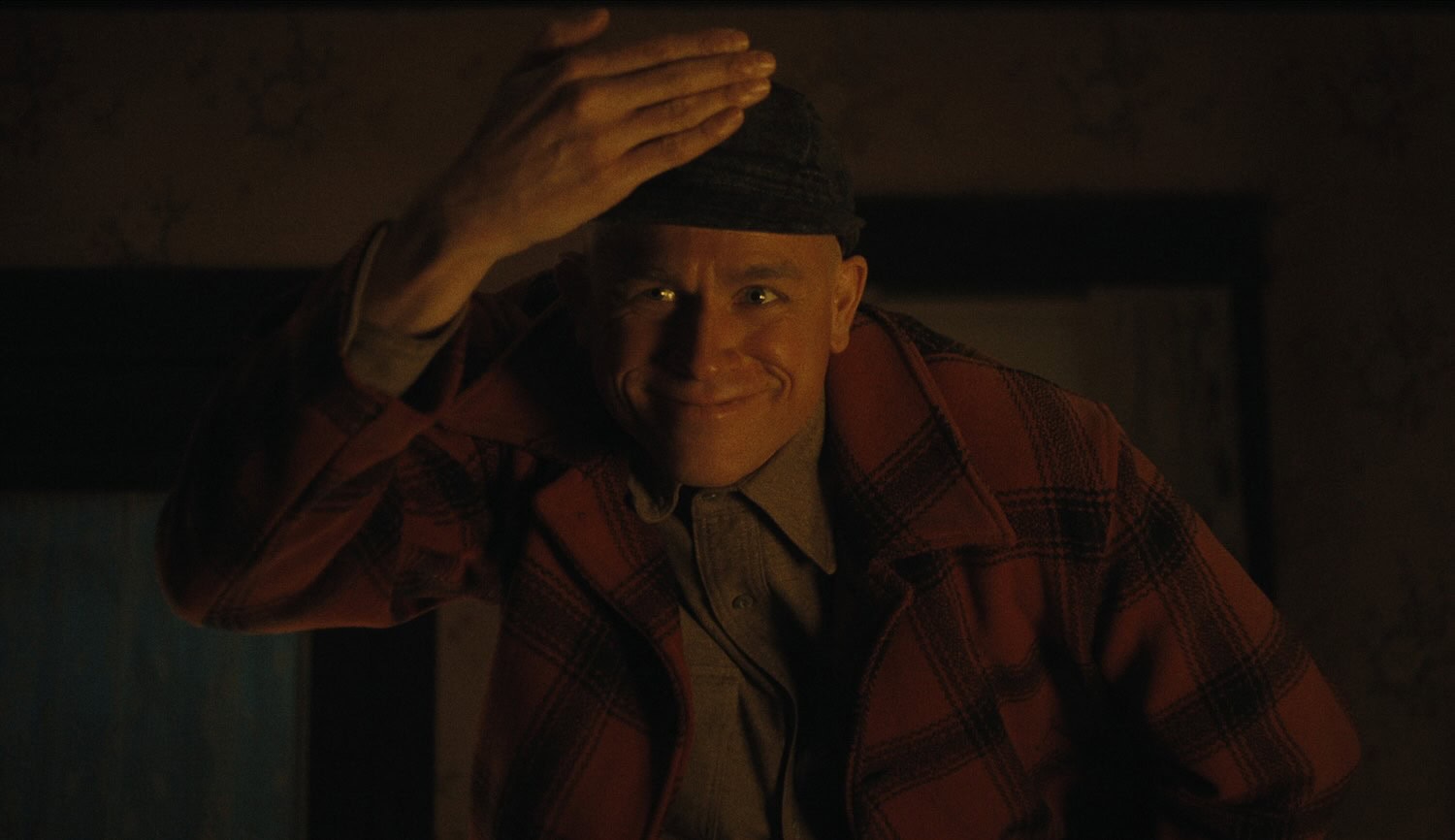
Netflix’s Monster: The Ed Gein Story is unsurprisingly provocative and, at times, tasteless. After all, the prior two installments of Ryan Murphy and Ian Brennan’s Monster anthology series, The Jeffrey Dahmer Story and The Lyle and Erik Menendez Story, also courted controversy through questionable depictions of true crimes. What is surprising about The Ed Gein Story is how utterly ineffective its attempts to shock, scandalize, and subvert are.
As Ed Gein, Charlie Hunnam adopts a cock-eyed stare and falsetto in a performance that’s rarely frightening or remotely believable. The series traces Gein’s evolution from local simpleton to “The Butcher of Plainfield,” blaming his monstrous actions on some combination of schizophrenia, early exposure to the disturbing images that emerged from World War II, and the brutal treatment he received at the hand of his zealously religious mother, Augusta (Laurie Metcalf, who plays the one-note character with convincing ferocity).
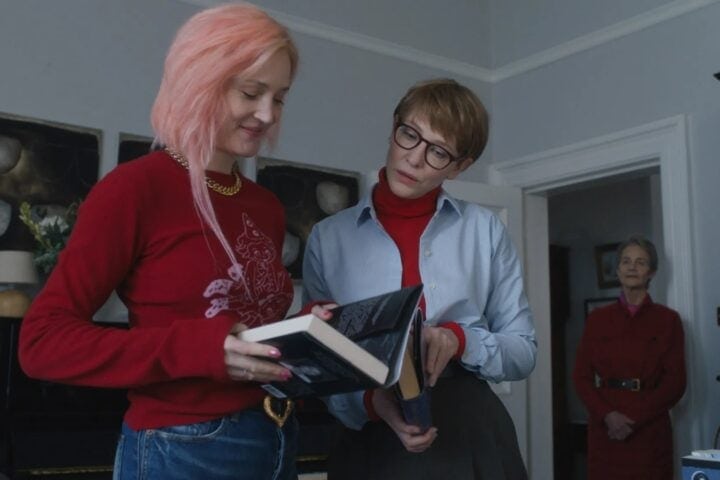
Rather than limiting itself to Gein’s biography, the series makes an effort to trace his legacy through popular culture. It’s a clever approach to telling the story of a man who served as the key inspiration for Alfred Hitchcock’s Psycho, Tobe Hooper’s The Texas Chainsaw Massacre, and various other horror movies. So we go behind the scenes of Psycho as a caricature-ish Hitchcock (Tom Hollander) delights in pushing the boundaries of what can be shown on screen and then watch as his successors push those boundaries even further.
Many episodes consciously recreate scenes from these iconic movies: We see Ed looming menacingly outside a babysitter’s home, stabbing another victim while she showers, and enacting a version of the hammer scene from The Texas Chainsaw Massacre. But the series lacks the formal control to imitate any of these sequences effectively, failing to build and puncture tension with anything close to the skill of cinema’s masters of horror.
An eight-episode series seems ideally suited to having each one focus on how Gein and his crimes influenced a different era, but The Ed Gein Story wanders back and forth between periods in an unfocused manner. And while the series seems ideally set up to ask pointed questions about Gein’s life and legacy, it doesn’t have any particularly interesting answers to offer. The line it draws from Gein onward is simplistic and its musings on the audience’s desire to see the dark parts of themselves on screen are shallow.
The Ed Gein Story opts to say it all as loudly and abrasively as possible perhaps in the hope that, if it can’t really make its audience think, it’ll at least make them squirm. From the very first scene, sound effects are amplified so that shopkeepers’ bells ring out apocalyptically while rapid cuts give every conversation an anxious edge. It’s an audio-visual assault that quickly loses any power it might have had through sheer, numbing repetition.
As with previous entries in the Monster anthology, The Ed Gein Story brazenly toes the line between fact and rumor. You could argue that this is an artistic choice, another way for the series to depict the pop cultural phenomenon Gein became as much as the man himself, but it mostly feels like an excuse to stage endless gruesome scenes of murder and corpse molestation, all of which are rendered through impressively visceral special effects.
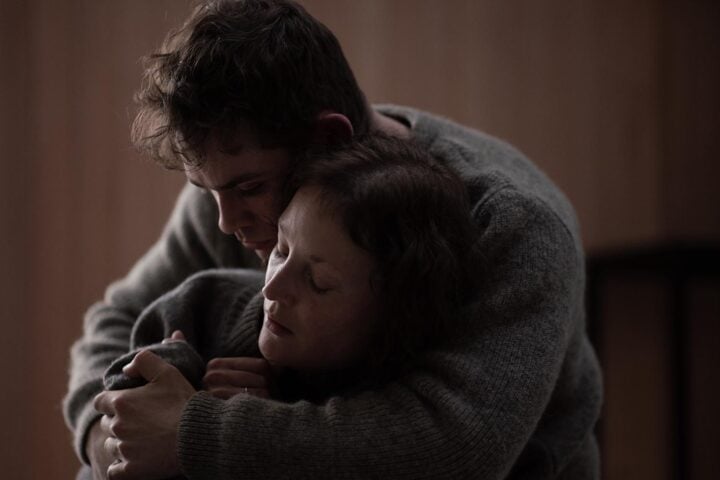
Nothing highlights The Ed Gein Story’s willingness to go for cheap shock value over any sort of substance more than the way it handles Gein’s fascination with Nazi war criminal Ilse Koch (Vicky Krieps). Several episodes dedicate entire chunks of their runtime to scenes of Koch terrorizing Jewish prisoners in her luxurious home, and none of it offers any insight into Gein’s psychology or recontextualizes his tale in any meaningful way.
While on the set of Psycho, Anthony Perkins (Joey Pollari) is horrified to discover the extent of the film’s contents, at which point he furiously insists that it’s wrong to make people look at things like that. And the response he receives seems intended as thesis statement for the entire Monster series: “You’re the one who can’t look away.” Except in this case, we very much can.
Since 2001, we've brought you uncompromising, candid takes on the world of film, music, television, video games, theater, and more. Independently owned and operated publications like Slant have been hit hard in recent years, but we’re committed to keeping our content free and accessible—meaning no paywalls or fees.
If you like what we do, please consider subscribing to our Patreon or making a donation.