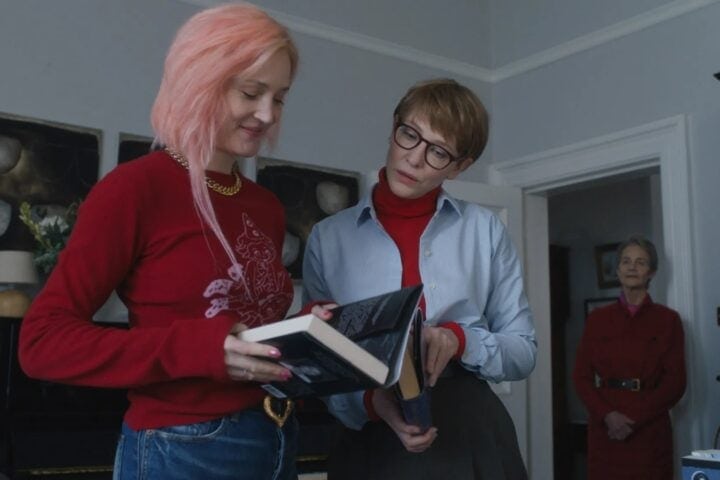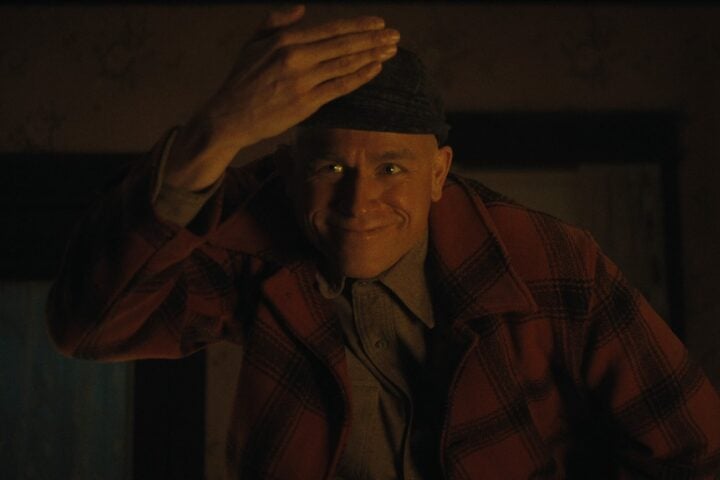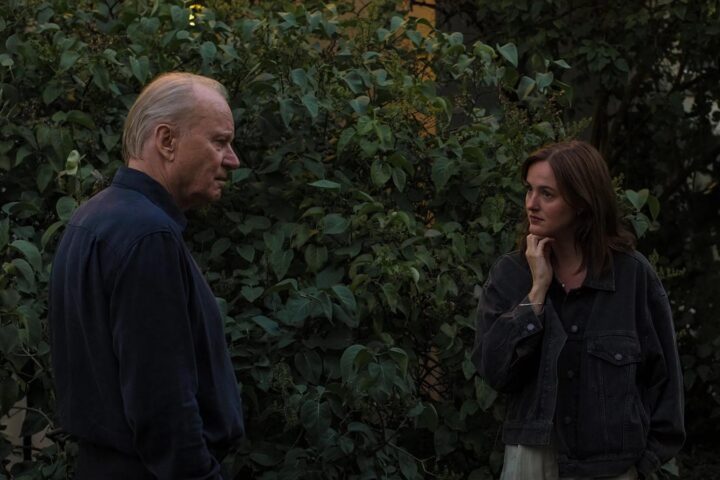
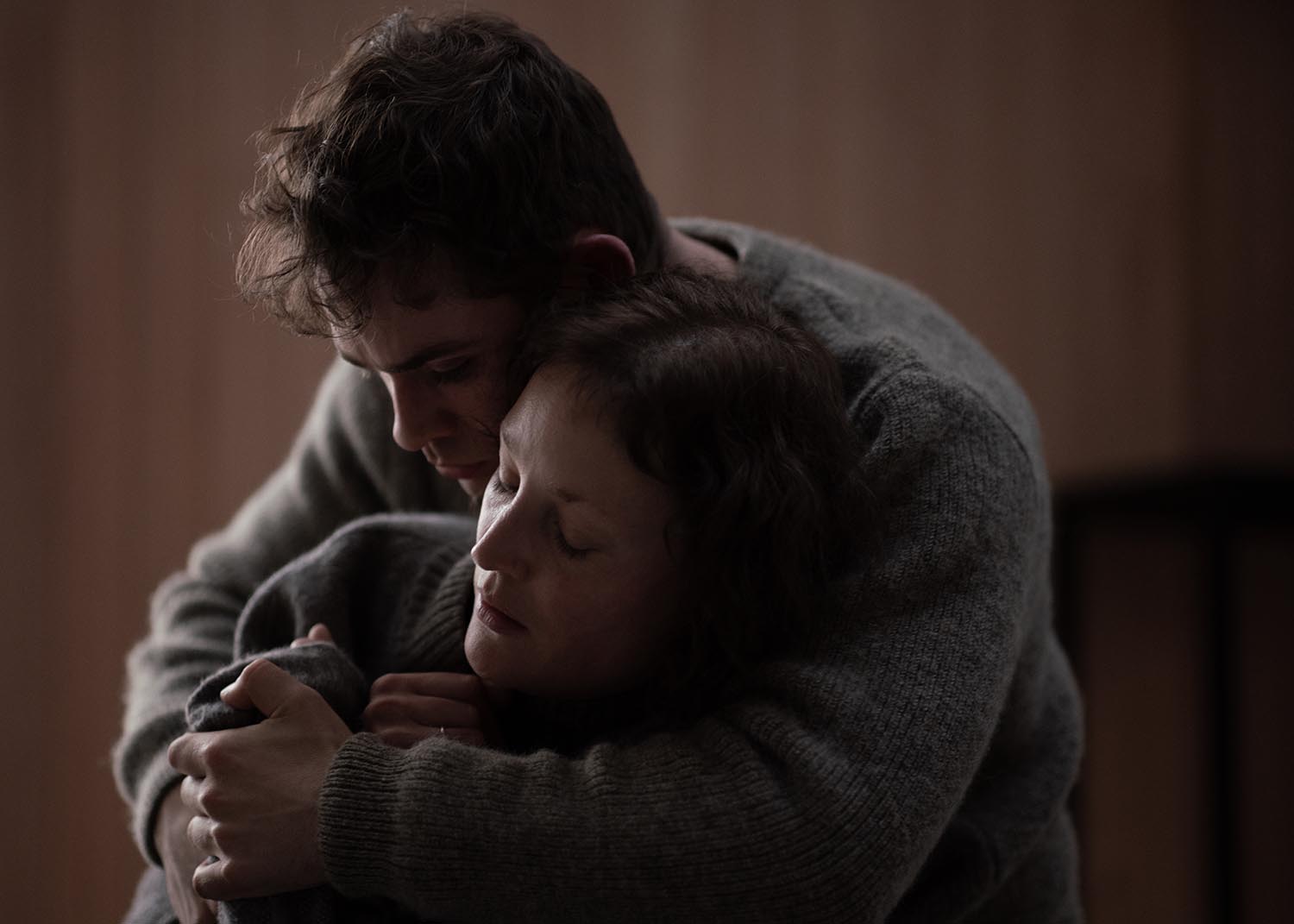
Samuel Van Grinsven’s Went Up the Hill is characterized by a starkly precise aesthetic and withholding approach to the ghost story. Upon arriving at a funeral service for Elizabeth, a woman he claims was his mother, Jack (Dacre Montgomery) listens as the eulogist describes “Elizabeth’s own creation” and notes that she’s survived by her wife, Jill (Vicky Krieps). In a quiet exchange with Elizabeth’s sister (Sarah Peirse), Jack says that he was invited by Jill, only for Jill to deny knowing him at all. Moments later, she insists, “I want him to stay.” It’s a reversal of feeling that’s emblematic of a film where disorientation is rife.
Elizabeth’s absence shapes the story as much as any living character. Like the unseen first Mrs. de Winter in Rebecca, she’s a destabilizing force, collapsing the boundaries between the familial and the romantic. Jack’s boyfriend remains back home, which lends an ambiguous quality to later scenes of our main characters in bed. Are they themselves in this moment, or are both being inhabited by Elizabeth? In addition to possession and marital grief, the film even hints at incest, without hesitation and without ever seeming as if wants to elicit our shock.
The film’s tonal register isn’t exactly supple. Indeed, the same aesthetic chilliness that lends Went Up the Hill its power can devolve into monotony. But this is a strikingly peculiar pastiche. The film recalls the themes of Rebecca and the temporal displacements of Alain Resnais’s work (the ambient score by Hanan Townshend’s even brings to mind the music of Sigur Rós), but its depiction of ordinary intimacy under seemingly extraordinary circumstances is marked by a uniquely sensorial slow-burn style. By the end, that Van Grinsven leaves the central mysteries unresolved feels less like evasion than a deliberate, final act of withholding—one that’s very much of a piece with the filmmaker’s memorably unyielding aesthetic of restraint.
Since 2001, we've brought you uncompromising, candid takes on the world of film, music, television, video games, theater, and more. Independently owned and operated publications like Slant have been hit hard in recent years, but we’re committed to keeping our content free and accessible—meaning no paywalls or fees.
If you like what we do, please consider subscribing to our Patreon or making a donation.