
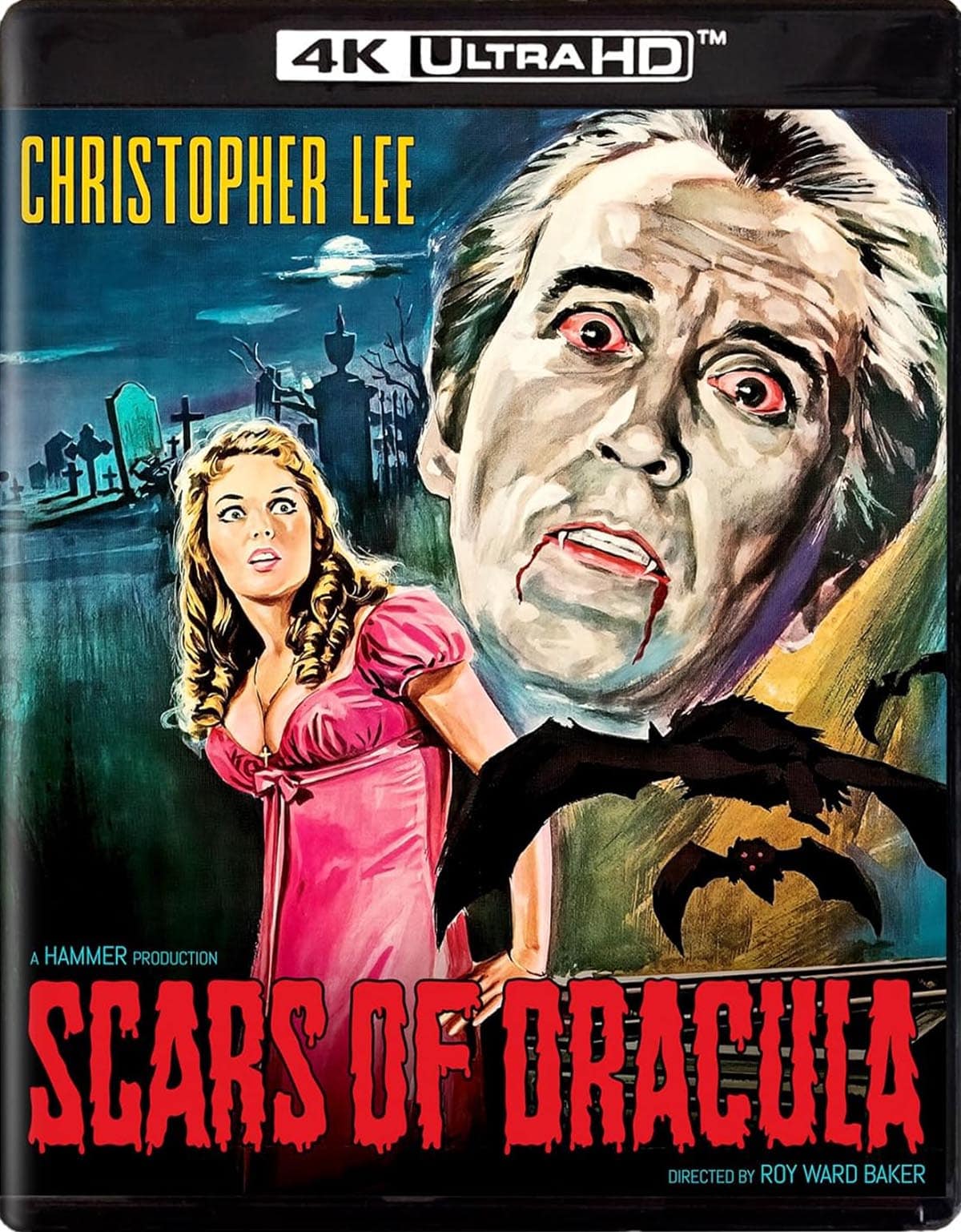
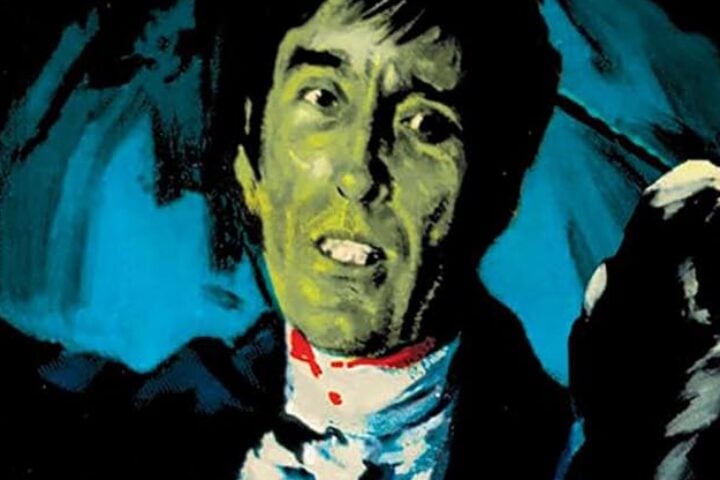
 Roy Ward Baker’s Scars of Dracula marked a turning point in Hammer’s Dracula series. Breaking with the continuity of the previous three-of-five entries, the film acts as a sort of soft reboot, seeming to take up right where the first film left off: with the undead Count Dracula (Christopher Lee) reduced to a heap of ashes. And Scars of Dracula is distinctive in crucial other ways as well.
Made in 1970, the film came along at a point where horror cinema was changing to address the seismic impact of Geroge A. Romero’s explicit and downbeat Night of the Living Dead. Especially notable given how conservative the series was up to that point, Scars of Dracula succeeds admirably in ramping up the sex and violence, while still hedging its bets somewhat when it comes to sociopolitical matters.
The film opens with a mob of torch-wielding peasants of Kleinenberg storming the castle and trying to burn it down. But because this is only the beginning, not only are they unsuccessful, but there are direct reprisals for their actions: They promptly come across a truly horrific scene in a church where the entire female population has been brutally slaughtered, replete with grotesque makeup effects and more splashed blood than in all the previous films put together.
From there, Baker’s film takes a page from Alfred Hitchcock’s Psycho by introducing a major character only to nastily dispose of them little more than half an hour into the runtime. In this case, that’s rakish cad Paul Carlson (Christopher Matthews) as he hops from the bed of the Burgomaster’s daughter (Delia Lindsay) into some serious hot water when the buffoonish politico (Bob Todd) catches him in flagrante. Fleeing town, Paul winds up at Dracula’s castle, where he meets his doom (though, unlike Psycho, the film takes its time to show us the terms of his demise). The rest of the film then follows his brother (Dennis Waterman) and the girl (Jenny Hanley) who loves them both as they investigate what’s become of him.
In Scars of Dracula, the authority figures are more ambivalently drawn than in earlier titles. The townsfolk, led by the innkeeper (Michael Ripper), are unhelpful and even downright cruel in their dismissal of the young couple. The local priest (Michael Gwynn) initially seems more amenable, but he’s hardly an infallible champion of God like the Monsignor in Dracula Has Risen from the Grave, and, for his efforts, he’s rewarded with a fatal mauling by a massive Dracula-controlled vampire bat. Then again, it’s the rebellious youth, Paul and the barmaid Julie (Wendy Hamilton), who are caught up in the film’s repressive machinery.
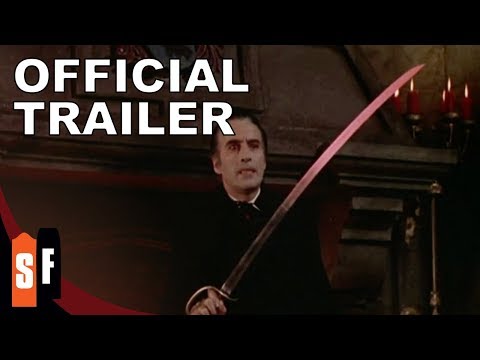
You might think that the film’s title only refers to the bite marks the toothsome count leaves on his prey’s neck. But it also links to a truly sadomasochistic moment where Dracula’s henchman, Klove (Patrick Troughton), is punished at his own request by being branded by a red-hot cutlass, his scar-encrusted back testimony to the fact that this isn’t the first time. Ultimately, Dracula isn’t defeated by the prowess of any one character, not even the ostensible hero, but rather through a seemingly random act of God, a deus ex machina ending if ever there were one.
Image/Sound
The 2160p UHD presentation of Scars of Dracula is exceptionally vivid from beginning to end. Moray Grant’s sumptuous cinematography, dominated by rich reds and blues, has certainly never looked better. Details of the film’s ornate set designs and costumes stand out admirably, while black levels are deep and uncrushed. The Master Audio mono mix clearly conveys the dialogue, doing right by composer James Bernard’s rousing orchestral score.
Extras
In a new commentary track, novelist and film critic Tim Lucas leans heavily into Scars of Dracula’s place both among Hammer’s Dracula titles and the horror films released in the wake of Night of the Living Dead’s success. Lucas also reads extensively from the film’s novelization, based on an early draft of the script, contrasting it with what finally made it to the screen. The archival audio commentary by Christopher Lee, director Roy Ward Baker, and Hammer historian Marcus Hearn is a spirited grab bag of personal and production anecdotes; especially of note is the focus on Hammer’s economic woes at the time. Rounding out the extras are “Blood Rites: Inside Scars of Dracula”—featuring actress Jenny Hanley and film historians Jonathan Rigby, Kevin Lyons, Alan Barnes, and John J. Johnston—and trailers for the film, including one tied to Jimmy Sangster’s The Horror of Frankenstein from the same year.
Overall
Roy Ward Baker’s underrated Scars of Dracula marked a turning point in Hammer’s Dracula series, and Kino has given it a revelatory 4K makeover.
Since 2001, we've brought you uncompromising, candid takes on the world of film, music, television, video games, theater, and more. Independently owned and operated publications like Slant have been hit hard in recent years, but we’re committed to keeping our content free and accessible—meaning no paywalls or fees.
If you like what we do, please consider subscribing to our Patreon or making a donation.


A right on the money assessment of the film’s many virtues. I’m especially looking forward to Mr. Lucas’ commentary.