A controversial PinkNews article in 2017 declared, “People think Prince George looks fabulous in this new photo,” before highlighting dozens of tweets from people celebrating the queerness of William and Kate’s eldest son. George was four at the time.
Too young for such speculation? Too disgusting for anyone to project sexual identities on a child, no matter how famous and no matter how, per playwright Jordan Tannahill, “adorably fey” the pose? Those are the questions driving Prince Faggot, a co-production of Playwrights Horizons and Soho Rep. Indeed, the grown-up Prince George—or, rather, an invented “fabulation” of the royal—is the protagonist of Tannahill’s new play.
In a prologue, the play’s six performers, playing themselves, wrestle with the appropriateness of the story—namely, the “act of queer prognostication” they’re about to deliver. The argument in favor is two-fold: Queerness, no matter how suppressed or silenced, is present from an early age (“I was not a queer man-in-waiting, I was a queer child,” one performer testifies), and heterosexual futures are imagined for kids all the time without complaint.
“My grandfather used to ask me when I was three and four if I had a girlfriend yet,” one actor explains. To which another asks, “Does your protectiveness extend to showing this photograph to a theatre of 128 strangers?” It’s a question that remains unresolved as the performers move forward and tell this story that spans from the early 2030s to 2045. And though Prince Faggot remains morally unsettled at its jumping-off point, it’s an audaciously structured, sui generis work, most shocking in how seriously and tenderly Tannahill swaddles a deeply moving, multi-leveled story about family and community in sensationalistic blankets.
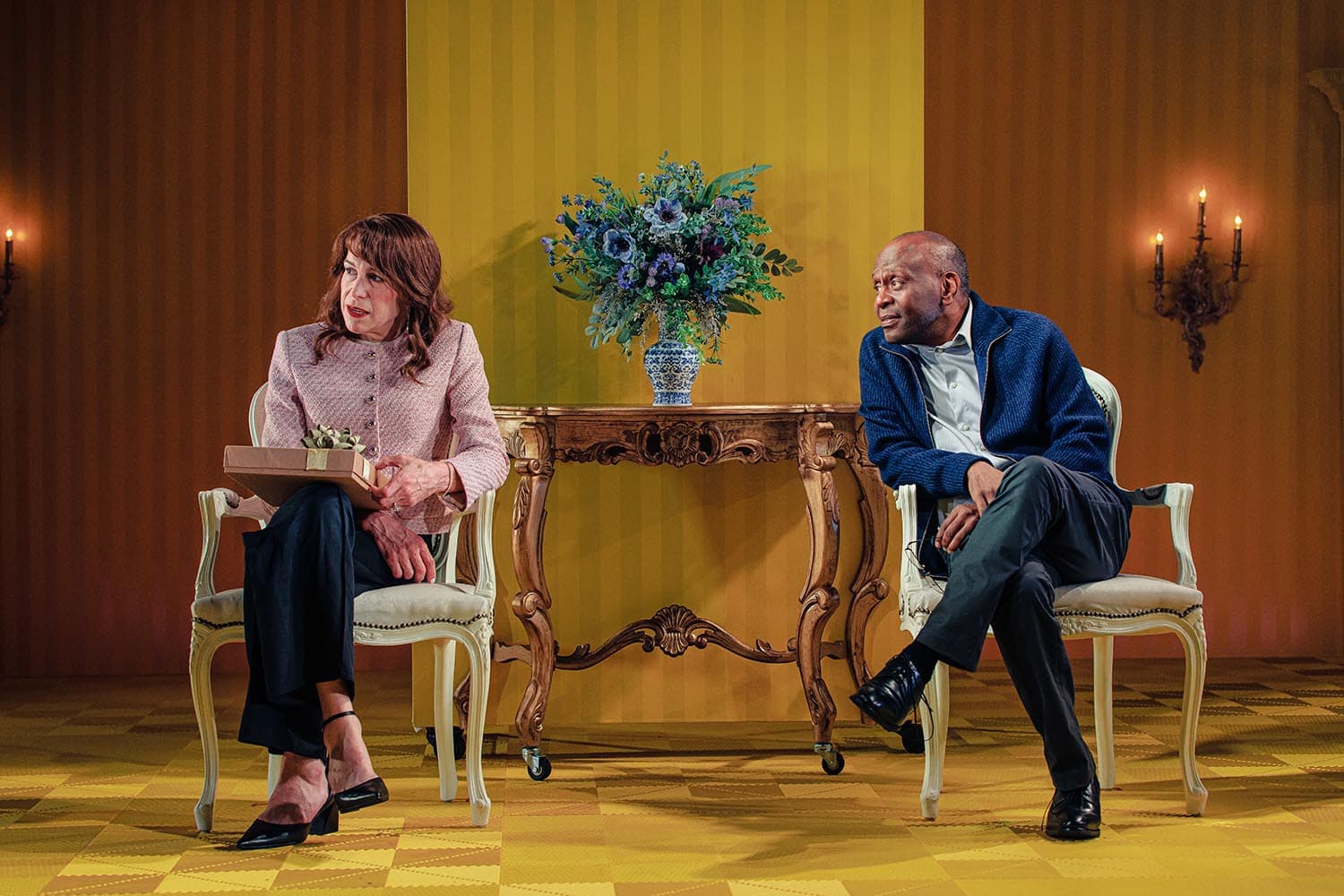
George (John McCrea) brings boyfriend Dev Chatterjee (Mihir Kumar) to meet the parents, William (K. Todd Freeman) and Kate (Rachel Crowl). They’re outwardly accepting and cordial, but Dev is unprepared for the level of public scrutiny that besieges him once the press catches wind that the heir to the throne is dating a South Asian man. It’s George, though, who’s the barrier to this relationship’s progress, unable to perceive the unprecedented privilege of his status as the first openly gay Prince of England. When Dev tries to demonstrate how imperialism has shaped the divisions between them, George ignorantly counters, “I just think it’s totally crazy that we can’t be together because of the Mau Mau Uprising or something!”
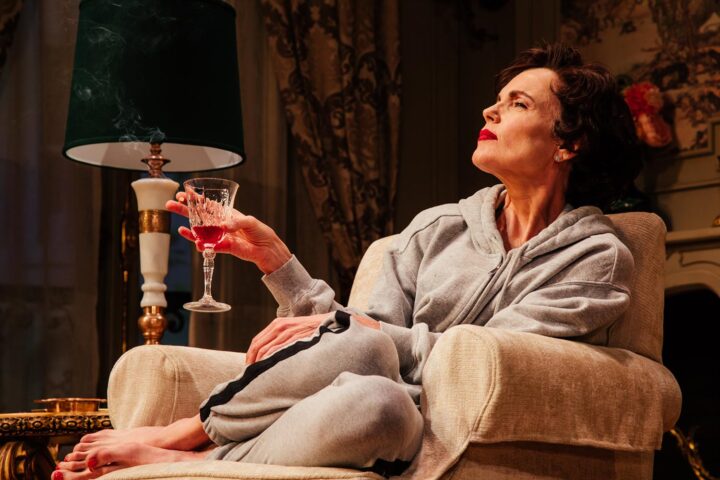
What elevates the play’s imagining of future British history beyond an intellectual exercise, though, is the sympathetic portrayal of William and Kate. Freeman, especially, is astonishing in tracing a father’s devastation in trying to claw his child back from the edge of addiction. And, adding explicit purposefulness to the play’s casting, Freeman is given the chance to step out of William’s shoes, addressing the audience on the value of seeing a Black actor as a king.
Shayok Misha Chowdhury, himself a powerful playwright on South Asian queer identities in the recent Public Obscenities, directs all six performers to share in a collective autonomy: Though there’s an ensemble-based mode of storytelling at play, Prince Faggot’s performers remain deliciously individuated. David Greenspan, as both the gay butler Farmer and the bulldozer communications director Jacqueline, provides crisply colorful comedy. Crowl and N’yomi Allure Stewart, primarily playing Princess Charlotte, go head to head in caustic combat as mother and daughter, in performances that celebrate the two actresses’ trans identities.
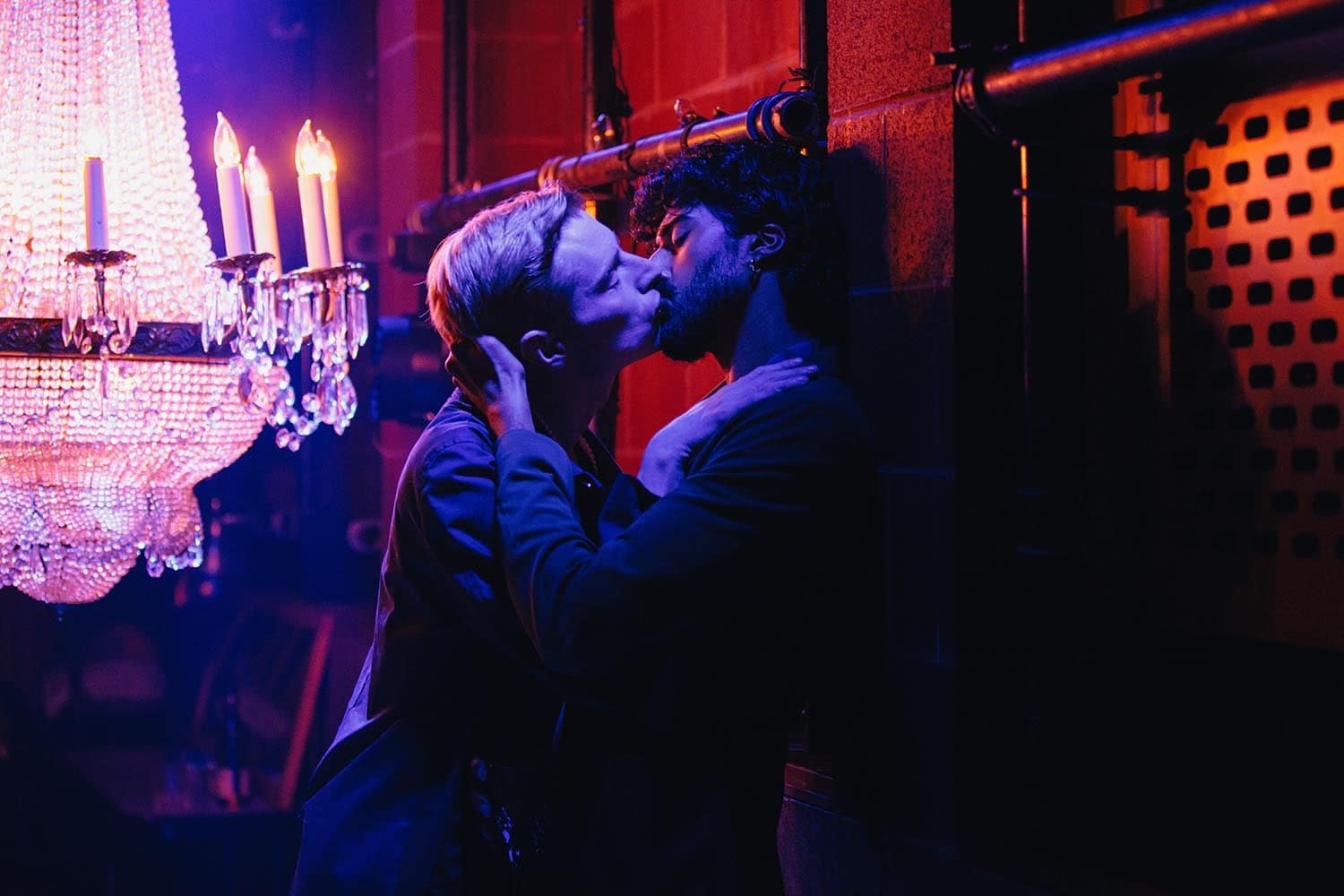
As in the opening conversation, in which Tannahill challenges the potential salaciousness of his own ideas, Prince Faggot proceeds to double back on its most provocatively staged scenes, with meta-theatrical interruptions that recontextualize what’s come before. George and Dev collide sexually in the most graphic scene on stage in New York in recent memory. Gratuitous? Maybe in the moment, but what immediately follows is a wrenching, out-of-character monologue in which Crowl explains the anger she felt as a trans actress watching this scene in rehearsal and realizing how painfully she was robbed of healthy, youthful sexual experiences.
After a psychedelic sequence when George ventures into the worlds of fetish and chemsex, Greenspan delivers a speech to the audience that situates the rise of BDSM in the context of the AIDS epidemic, practices popularized in the service of “decentering the penis.” George’s libidinous freedoms aren’t just put on display in Prince Faggot for fun, as they intersect with the struggles of a broader queer community stretching back decades.
Prince Faggot, from its title on down, seems designed to attract the same sort of Daily Mail headlines that plague its characters: “Softcore Off-Broadway Play Sexualizes Royal Minor” and so forth. The play’s provocations may attract audiences—the run is mostly sold-out, presumably on the basis of its title alone (marketing doesn’t disclose the subject matter)—and they’ll be rewarded by Tannahill’s subverted expectations when they attend.
But Prince George, who turns 12 this summer, will probably Google himself in the next few years and find out about this play, whether from those inevitable headlines or from a review like this one. Surely discovering Prince Faggot—not only in its imagination of George’s queerness but, more astringently, in its forecasting of his addictive behaviors, his privileged petulance, and his self-destructive self-absorption—won’t be useful to that real-life kid, sexual identity aside. In extending its limited sympathy to the suffering of a fictional Prince George, Prince Faggot eventually does abdicate any responsibility of sympathy or care toward the real one.
On-stage debates about the ethics of making this play are still inherently performative; just because Tannahill is copiously self-aware doesn’t mean that he’s always doing the right thing. But Prince Faggot’s otherwise giddily warm celebration of a queer royalty that transcends bloodlines proves that a play that might not be all-the-way good can still be great.
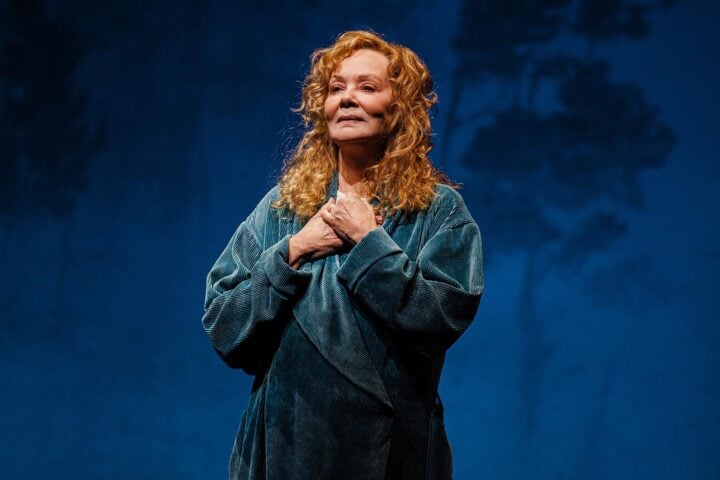
Prince Faggot is now running at the Peter Jay Sharp Theater.
Since 2001, we've brought you uncompromising, candid takes on the world of film, music, television, video games, theater, and more. Independently owned and operated publications like Slant have been hit hard in recent years, but we’re committed to keeping our content free and accessible—meaning no paywalls or fees.
If you like what we do, please consider subscribing to our Patreon or making a donation.