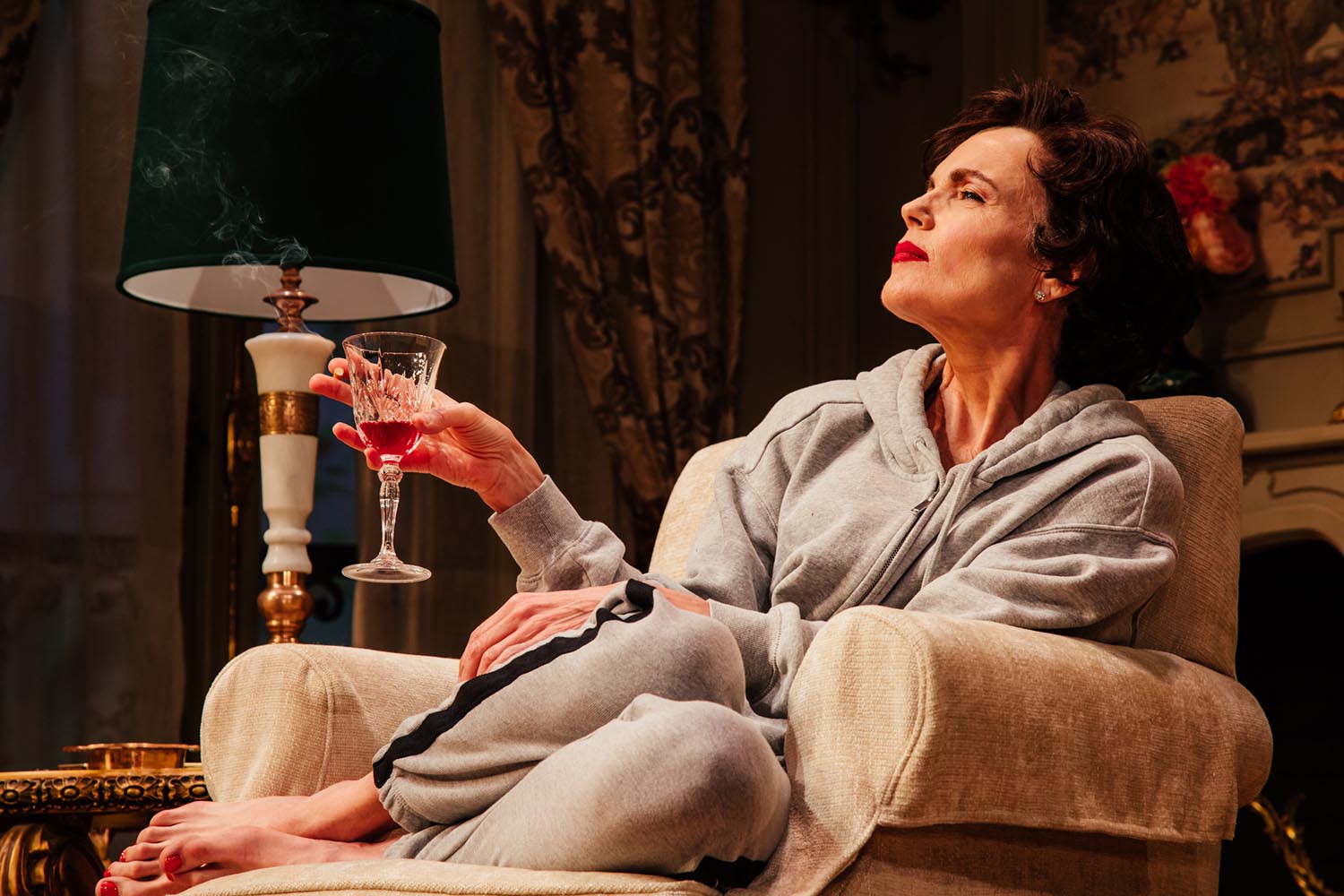
This summer at the New York City Center, Elizabeth McGovern will evoke the glamour of Golden Age Hollywood in Ava: The Secret Conversations as screen legend Ava Gardner. McGovern herself wrote the play, which is based on the 2013 biography The Secret Conversations by Gardner and Peter Evans. The book is stitched together from conversations that Evans had with the screen star between 1988 and 1990, the year of her death.
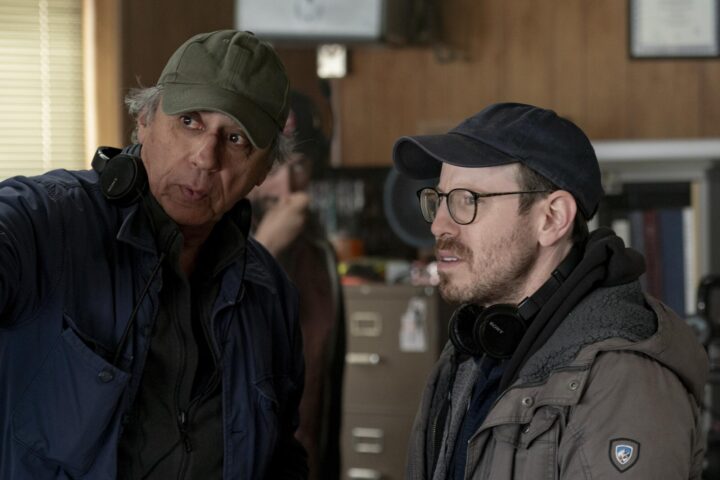
The play explores the unusual and often prickly collaboration between Gardner and Evans, whom she hired to ghostwrite her memoir. Though Gardner pulled the plug on the project before its completion, Evans eventually published their conversations in 2013, alongside his reflections on their sessions. Directed by Tony nominee Moritz von Stuelpnagel, the production also stars Aaron Costa Gannis as Evans. In addition to playing the journalist, Gannis channels Gardner’s three famous husbands: Mickey Rooney, Artie Shaw, and Frank Sinatra.
McGovern, who made her screen debut in Ordinary People in 1980 and earned an Oscar nomination the following year for Ragtime, was last seen on the New York stage in 2017. She first portrayed Gardner in a 2022 production of the play, followed by a new staging in Los Angeles in 2023. “It’s a real gift,” she says, “to have the opportunity that everybody yearns to have, which is a chance to think back on something you’ve done and get it better.”
In a recent conversation from her home in London, McGovern spoke with me about what drew her to Gardner, the process of adaptation, and her desire to reveal the vulnerable woman behind the screen legend’s glamorous public facade.
You’ve said that you got the idea for this play after you read the book The Secret Conversations by Peter Evans. Were you an Ava Gardner fan before that?
No. To be perfectly honest, I’d never seen any of her movies. I was first intrigued by the book because I loved the idea of this English writer sitting in the living room of a more or less retired Hollywood actress and reliving her past. But then I started watching her movies and much to my joy, I really fell in love with her persona in film and with everything she represents. I think Mogambo is absolutely wonderful, and I also love [Robert Siodmak’s] The Killers.
What was it that most captivated you about the Hollywood star?
She was a truly authentic personality. She emanated this intelligence that was so unpretentious. I think she had a lot of insecurity about her lack of education, but she was very far ahead of her time in terms of progressive attitudes. She was a woman who did what she wanted without ever thinking of herself as a feminist—a very smart person without ever thinking of herself as an intellectual and a very progressive person without ever thinking of herself as political. She was just true to herself and her instincts about life and people, love and friendships.
Outside of your other career as the lead singer and songwriter of the band Sadie and the Hotheads, is this the first time that you’ve tried your hand at writing?
Yes, it really was. And the only reason that I even thought for a second of doing it is because the producer, who’s also the producer of the present production, had been so kind to invest in a workshop of the play. We had taken the idea of the book to a couple of writers and paid them to write versions of a story that I felt had potential. Neither of them did it. They just didn’t write anything. I felt so bad about the situation that I literally opened up this notebook and thought I’m just going to do it myself. I think the fact that I had written songs for so many years gave me a little bit of confidence because—at least the way it works for me—songwriting is a bit like trying to find the musical expression for an inner monologue. And in the device of this play, because it’s a conversation between two people, it was kind of a simple way to start.
How much of your text did you take directly from the book?
When it started out, I would write things directly from the book, and then as I got more and more confident, the thing started to take on a life of its own. So now I don’t know what percentage of the book is in the play. But that confidence grew as time went on.
Did you have any qualms about playing this role?
No, I felt an absolute connection to her story. I felt justified in bringing my own understanding of certain things that Ava might have experienced because of things that I’ve experienced. Writing the part of Peter has been more challenging, but I would kind of do it the same way. I can’t imagine how anybody would write a play without acting out all the characters.
Evans also channels Gardner’s three husbands in the course of the play. How did that idea come about?
I think I literally was inside Peter’s head and thinking [about how he’s this] kind of mild-mannered journalist who’s in love with a celebrity who’s being given the chance to embody these people that he looks up to. And the force of Ava Gardner’s projection onto him makes it happen. All that dialogue is completely made-up because, of course, I wasn’t in the room.
Could you trust Evans as an author?
My instinct was to trust the book. Peter’s personality is very much in evidence. I could see it was definitely through the prism of Peter’s ego and his desire to be—oh, gosh, how would I put it—a preeminent sort of writer-type person. His personal delusions of grandeur is palpable in every word. So I created a kind of Peter that I could glean between the lines. I was really gratified to find out that Ava Gardner’s niece, who controls her estate, had the exact same feeling about Peter Evans that I had, [though] she was less enamored of him. I find him to be sweet and charming and she wasn’t so sure. But her feeling about Peter and his book was definitely in line with my reaction to it. I don’t think he put anything in there that was grossly inaccurate.
You grew up in Hollywood but now live in London, just as Gardner herself did in her later years. How do you feel about the world Ava lived in? The play seems to convey a love for old Hollywood, but at the same time, you don’t have any illusions about how damaging it could have been to people like Gardner.
Can you please quote what you just said and pretend I said it, because that’s exactly how I feel! I hope that what you said comes through in the play: that there’s a lot of love for the images, the romance, the storytelling of old Hollywood. My favorite thing is to watch old movies. I just feel like the storytelling was so wonderful and economical. But I think, as you say, these people that were the face of Hollywood, they did really pay a price. It robbed them of something very deep, which is hard to even describe. My feeling is that the most destructive thing is that it robs your ability to have a genuine intimate relationship with somebody else. It invades that private part of you that you give to a special person. And when your whole being has become valuable collateral, you cease to be able to trust anybody. I mean, she was completely sexualized. Nobody ever talked about anything to do with her brain or her talent. It was always about her sexuality.
What would you like audiences to take away from the play?
I’d like them to feel the beauty of the old movies but have a visceral experience of the toll that fame takes on the person that is embodying the images. I want them to have a double experience—to laugh and to feel a kind of sadness at the same time.
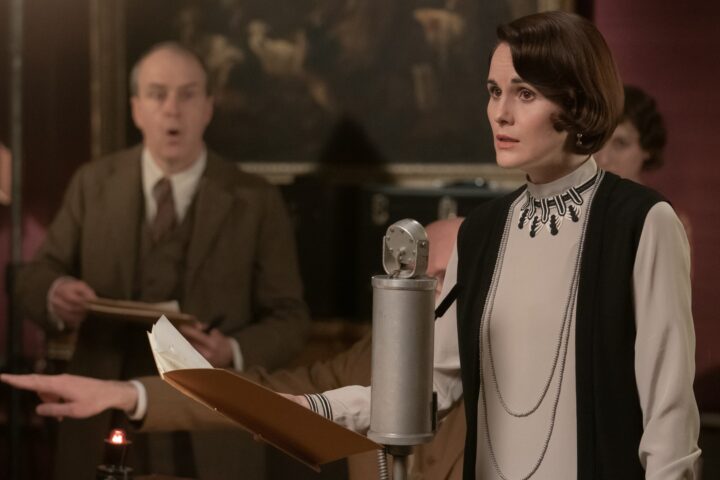
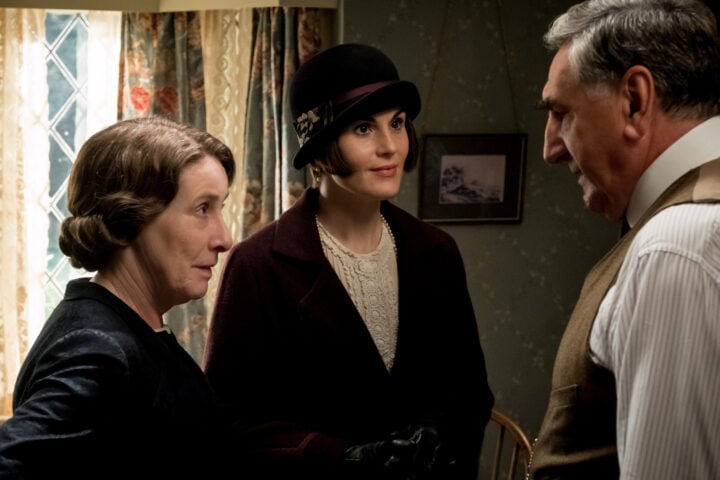
Finally, looking at your own career, with Downton Abbey: The Grand Finale right around the corner, can you say anything about your experience with the TV series and the movie sequels that you were part of for more than a decade?
Well, to have the luxury of being a woman my age and still be working, my overriding feeling is nothing but gratitude to be in a project like that. I mean, look at the opportunity that it’s given a lot of women—you know, parts for women where they’re kicking and screaming. And I mean that in a very refined way! But yeah, I guess the word is incredibly grateful.
Since 2001, we've brought you uncompromising, candid takes on the world of film, music, television, video games, theater, and more. Independently owned and operated publications like Slant have been hit hard in recent years, but we’re committed to keeping our content free and accessible—meaning no paywalls or fees.
If you like what we do, please consider subscribing to our Patreon or making a donation.