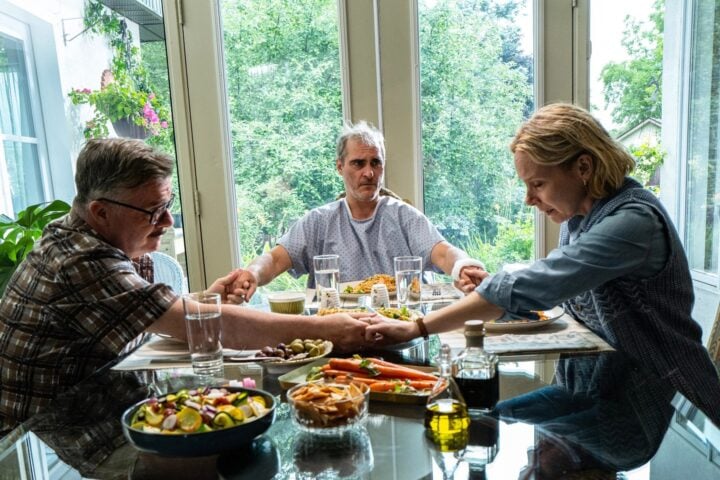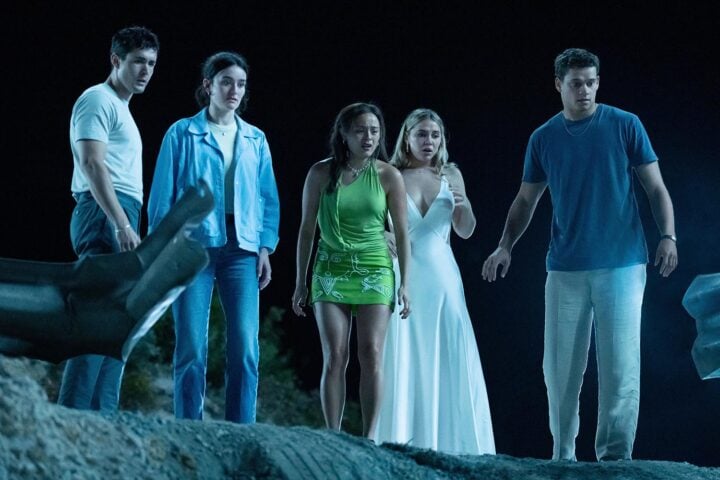
Beginning with Hereditary, expanding in Midsommar, and cresting with the polarizing Beau Is Afraid, Ari Aster has made socio-emotional estrangement from family, lovers, and community his pet theme in increasingly outré tales of individuals failing to connect or connecting in ways that are destructive to themselves and others. It’s a focus that’s more forthrightly on the real-world resonance of the events depicted in his latest, Eddington. Set in a fictional New Mexico town at the height of the Covid-19 pandemic, the film looks back at the crisis that broke the United States to ask where we are now and where we might be headed.
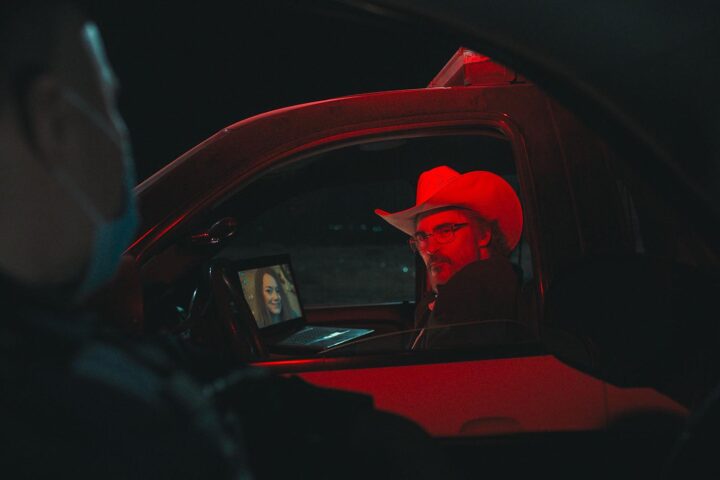
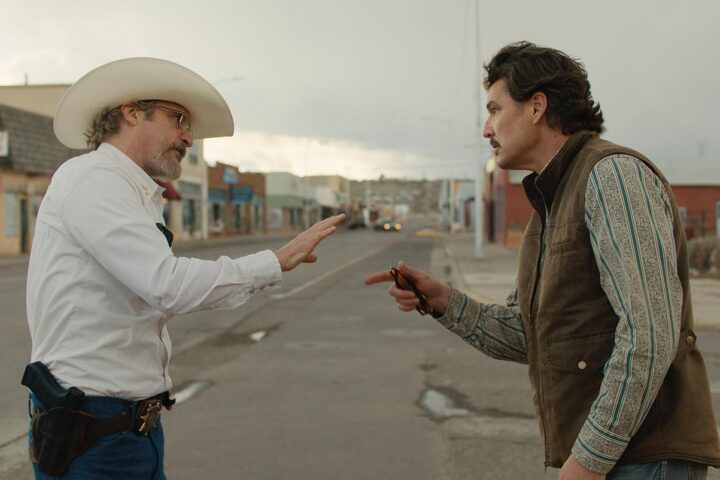
Eddington stars Joaquin Phoenix as Joe Cross, a sheriff who announces a mayoral bid after being humiliated for not wearing a mask in public. But inflaming an old rivalry with incumbent Mayor Ted Garcia (Pero Pascal) turns out to be the least of Joe’s worries, as the tide of history crashes on his small town—exposing how social media has created an era of national politics rife with petty turf wars and internecine squabbles rooted in vendettas and personal weakness.
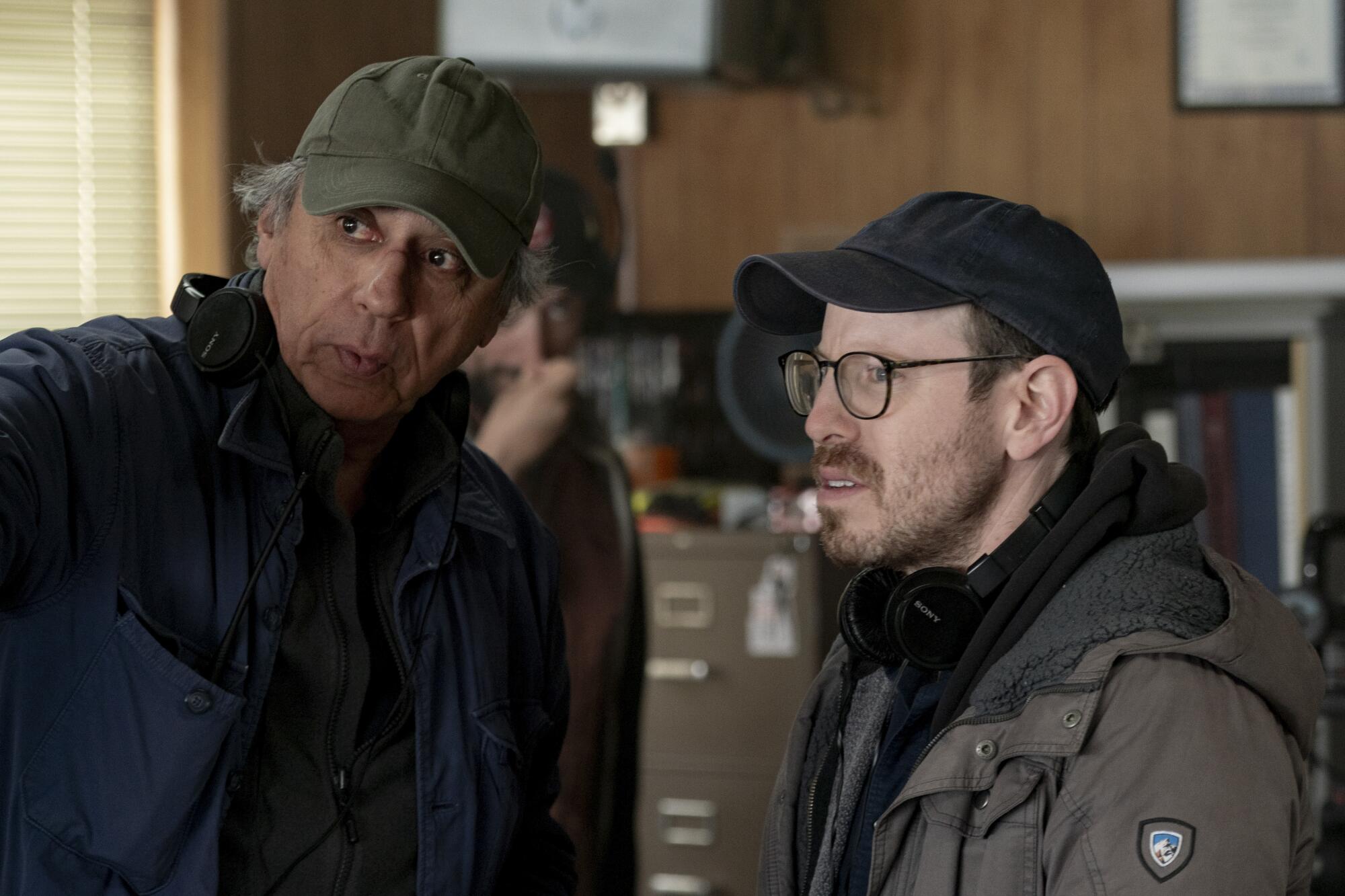
I recently sat down with Aster to discuss his relationship with his home state, what he sees as the absurdity of alienation, and the questions he hopes Eddington leaves us with.
A Covid movie is a tall order. What made you decide that this was the road you wanted to go down after Beau Is Afraid?
Well, I started writing it before I made Beau Is Afraid. I started writing it at the end of May, beginning of June 2020 from the set. The fever at that time had reached its highest pitch. I just remember feeling that something was in the air that I hadn’t felt before and things were obviously very fraught. We didn’t know how long the lockdown would last. In fact, it felt like it could last for years. But also, it felt like things had reached a boiling point and things were either about to explode or boil over and I just wanted to kind of get a lot of impressions down on paper because it felt like an important moment.
You’ve often talked about wanting to shoot in your home state. Was Eddington always conceived as a New Mexico story?
I grew up there and I was brought back from New York due to a Covid scare, so I was living near family. I’ve always wanted to make a New Mexico movie and a movie that captured the Southwest, which is a region I know very, very well, and this felt like the opportunity to do that.
I wrote the first draft of this very quickly, then I jumped into Beau Is Afraid. [During] editing, I went back to the script. I started reworking it and started taking trips out to New Mexico to drive to different small towns and meet public officials, mayors, police chiefs, go to different counties and talk to different sheriffs, go to pueblos and talk to them just to get as broad a picture of the political climate in New Mexico as possible. One result of that process was that I found a lot of people who were great models for different characters.
The film opens with a dispute over jurisdiction that grows into a much bigger problem for Joaquin’s character, and feeds into a bigger discussion about Eddington being built on stolen native land. Why was this conversation so central to your vision for this film?
Well, if you live in New Mexico, one thing that becomes very clear is the intensity of class resentments, but especially racial resentments between Hispanics and whites, between indigenous people and everybody else. Especially when I was a kid, that was very clear to me. It just felt important to address that part of the landscape. Especially at the time of writing the script when I started doing that research and meeting people, I was struck by how fraught the political climate was. New Mexico is a blue state, but most of these smaller towns are red. The governor was and is sort of a figure of controversy. I did not meet a single person that was not gripped by very strong convictions about what was happening.
It’s interesting because Covid is more of a remote danger in Eddington, while social media feels like the primary cause of the difficulties facing the town.
I wanted to make a film where I could pull back and describe what it feels like to live in a world where nobody agrees and less actually happens. The film is a western, I guess, but I wanted it to be inflected by a sort of modern realism. That’s to say, it’s a movie where everybody’s living on the internet; they’re all living in different realities and they’re unreachable to each other. That was kind of where I wanted to begin. It’s a dark comedy set in a small town. What happens when these people, who are totally atomized, start bumping up against each other? What’s the new logic that comes out of that, that comes to grip them and push them deeper into their paranoia and their convictions? And so, the film itself becomes kind of gripped by that paranoia.
Your films are controversial by design, and some viewers will say that you don’t come down hard enough on either side of the arguments presented. How do you respond to that criticism?
I know there are certain people who are frustrated that the film is kind of more or less equally weighted on several different sides, but the point wasn’t to make a partisan film. That’s too narrow. I’m talking about the environment. If I did make that film, it would have only reached the choir that I was preaching to, and that’s not interesting to me. The biggest problem I see right now, and it feels almost insurmountable, is that we cannot reach each other, and we have no interest in it. We’ve been very successfully divided.
Alienation is a central theme in your work. How does Eddington fit in or expand upon that thread in your previous efforts?
I guess it’s about the experience of that alienation and the absurdity of it. The absurdity is kind of compounded in this film. But I would say, just to go back to your previous question, that it was kind of important to me that the film, at least for the first stretch of it, that my politics not be so clear. Maybe that was slightly for fear of alienating a portion of the audience that could otherwise maybe join in the experience of looking back and seeing the insanity of our collective situation back then. But at the same time, we haven’t metabolized what happened in 2020. What happened wasn’t the beginning of anything. It was an inflection point. We’re still living it. We’re out of lockdown, but whatever process began there, we’re still in it.
Metabolizing is a great way of putting it. What does Eddington have to say to audiences in 2025 who still hasn’t come to grips with how the events of 2020 are shaping where we are now?
Well, it feels like we’re living out an experiment that’s already failed and has proven to be pretty catastrophic. It feels like we’re on a path that’s leading straight toward a brick wall. Is there a way off of this? Because it’s not working. It’s working for some people, but I think a big part of this technological revolution that’s happening is that it’s a pretty dehumanizing world.
I hope there’s some sort of perverse solidarity that could be achieved in looking back and seeing the insanity of our collective situation back then and be encouraged to ask whether there’s another way. How can we re-engage with each other? How can we reach each other? What would an olive branch look like? Is there a way to turn this thing off? I don’t know.
Since 2001, we've brought you uncompromising, candid takes on the world of film, music, television, video games, theater, and more. Independently owned and operated publications like Slant have been hit hard in recent years, but we’re committed to keeping our content free and accessible—meaning no paywalls or fees.
If you like what we do, please consider subscribing to our Patreon or making a donation.