“I am tired of myself tonight,” laments the fatally vain title character in The Picture of Dorian Gray. “I should like to be somebody else.” Well, there are abundant somebody elses to choose from on Broadway this month, not only in the stage adaptation of Oscar Wilde’s 1891 novel, in which Sarah Snook plays 26 characters, but also in Operation Mincemeat, the farcical World War II musical in which five actors take on dozens of personas.
For an actor to change lickety-split between characters introduces an inherent playfulness, even a shared complicity, between audience and performer. We can’t pretend not to know that we’re watching something make-believe when we see a costume change take place before our eyes. And there’s an anarchic wink in common between these two productions—both celebrated London transfers—even as each show aims for something deeper than comic pandemonium.
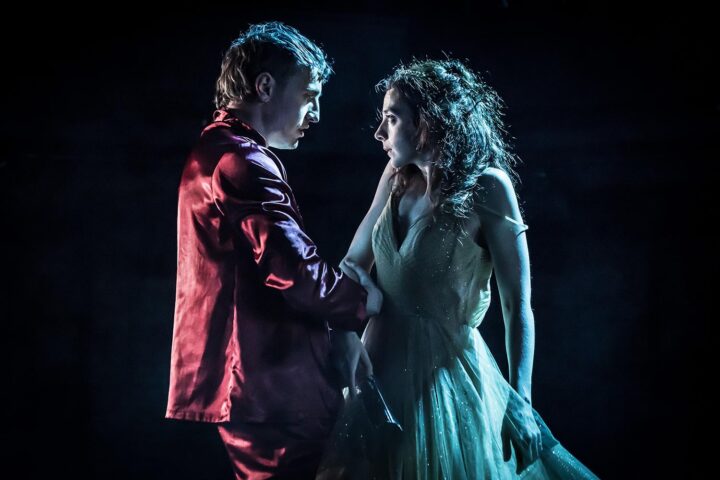
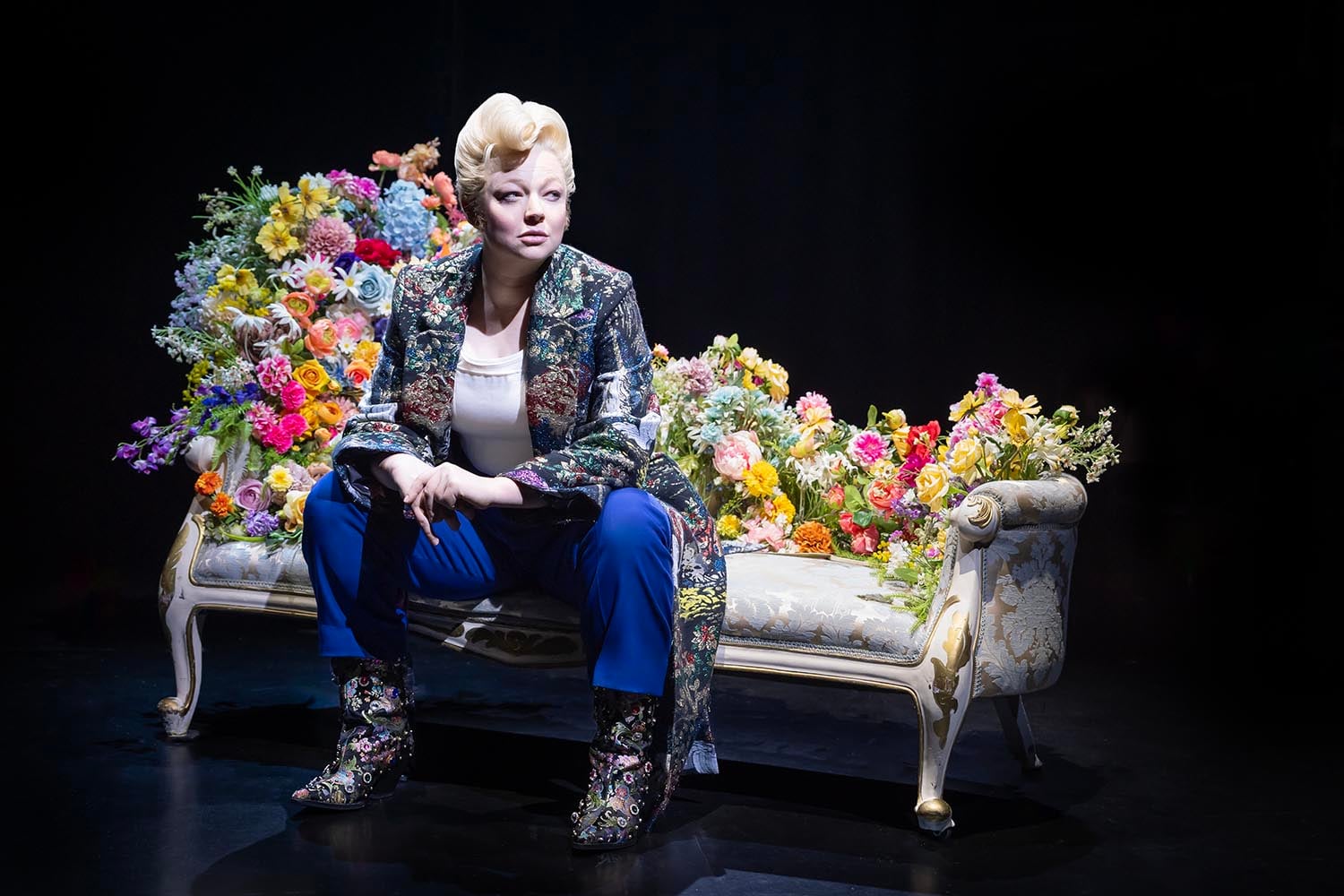
The silliness sticks more than the pathos in The Picture of Dorian Gray, a multimedia tour de force from the Australian director Kip Williams and his compatriot Snook, who audaciously puts on about every possible variation of English accent across the play’s two hours. This adaptation leans heavily on the novel’s original prose; much of the script is narration that, while a bit of an imaginative disappointment, preserves Wilde’s signature barbed wit to great effect throughout.
Although Snook never leaves the stage, she mainly performs for the cameras that surround her, sometimes from four angles at once, and as the actress hurtles in and out of characters and rapidly changes in and out of wigs, coats, and sideburns, images of her are projected on large screens that descend from the rafters. At some moments, the live Snook interacts with pre-recorded videos of herself in other roles, including a narrator figure that keeps peeking out from the corners of the screens trying to interrupt and take over the storytelling.
Williams’s chaotic vision for this story is well-matched to a cautionary fairy tale that centers on Dorian’s out-of-control obsession with maintaining his youthful appearance; an enchanted portrait in Dorian’s attic wrinkles hideously—the physical manifestation of his debauchery and criminality—even as his own face stays forever young. The multiplying digital portraits of Snook, in multiple guises and from all perspectives, amplify Dorian’s fixation on self-image.
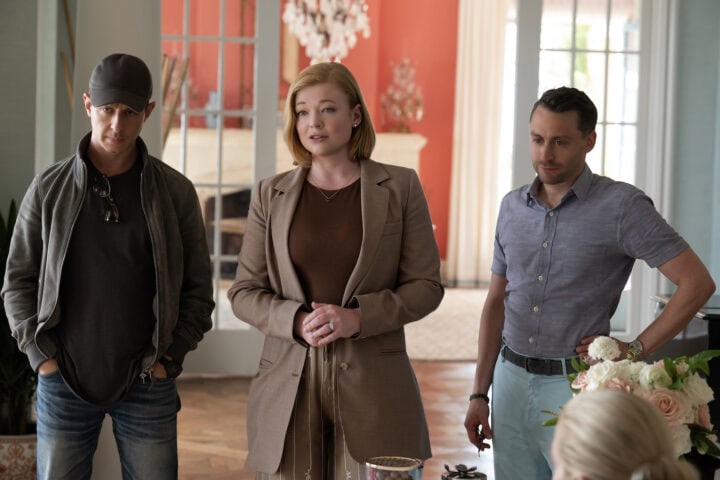
The script is also a cozy fit for an actress who shakes off the metropolitan ruggedness of Succession’s Shiv Roy to show that she can play just about everything else. Snook is funniest in her rapid pivots between clowning and narratorial reserve, and she’s unafraid to be a melodramatic goofball. “We were quite close,” the painter character says of his relationship with Dorian in the opening scene, and Snook gets quite close indeed, sticking her nose into the camera lens. At one point, she swaps the cameras for an iPhone, mugging with selfie filters to illustrate the contrast between Dorian’s spotless face and the magically aging portrait. After one particularly vicious bout of hedonism, Snook even dances deliriously with the camera operators.
The show excites most when the focus is on the real Snook. The pre-recorded content, while tricksily edited to allow Snook to engage in fully staged scenes with several versions of herself, can feel like Williams’s staging is taking the easy way out. The story arrives not at a theatrical climax but a filmic one, a chase scene through the woods that’s basically just a short movie.
Perhaps it’s because so much of the story relies in pre-recorded video that the tale’s emotional underbelly—the deep self-loathing that drives Wilde’s characterization and Dorian’s thinly shrouded queerness that marginalizes him even as he gains prestige—never really kicks in. Still, David Bergman’s virtuosic video design and Snook’s riotous rollercoaster of a 26-part performance keep The Picture of Dorian Grey riveting and compellingly ridiculous.
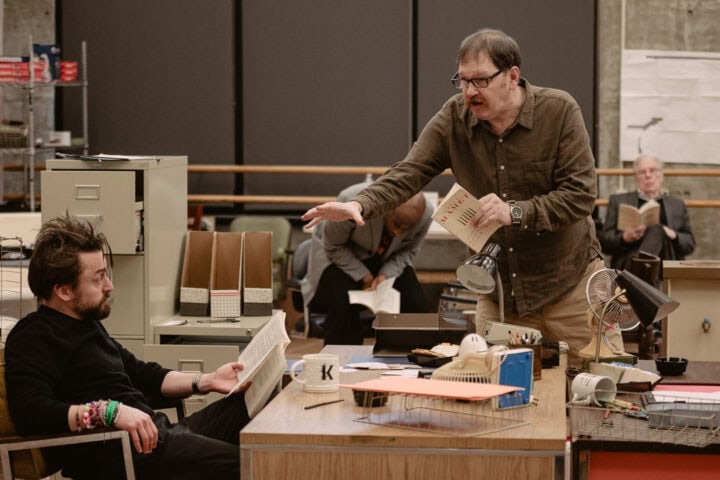
It’s the warmth rather than the whimsy that pilots Operation Mincemeat to an amiable landing. The show tells the true story of an MI5 top secret mission to mislead the Nazis about troop movements by planting fake documents on a supposedly drowned corpse off the coast of Spain. The musical’s own route to washing up on the shores of Broadway seems equally unlikely: It’s the product of the comedy troupe SpitLip (three of the show’s writers also star) and the show worked its way up from tiny venue to tiny venue until it exploded on to the West End in 2023.
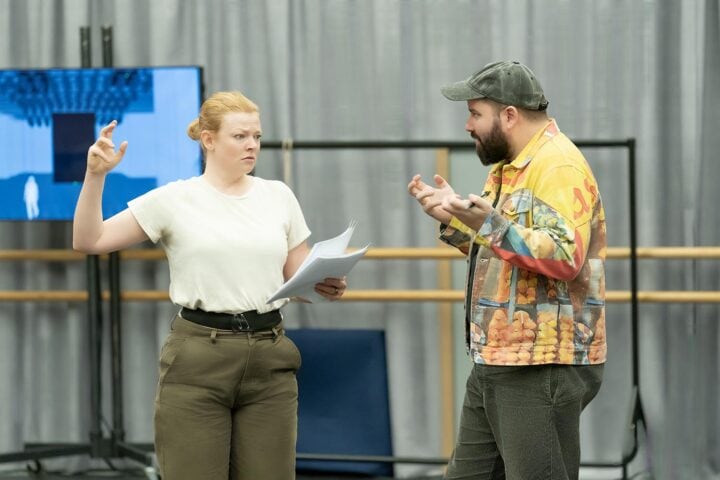
The DIY aesthetic provides Operation Mincemeat’s greatest charm whenever the acting company’s achievement in telling such a sprawling story with so few on-stage resources mirrors the ramshackle stumblings of the MI5 agents toward success. Like Snook, Operation Mincemeat’s feistily vigorous quintet of performers—led by SpitLip members Natasha Hodgson as the stuffily self-important agent Montagu (the company refers to their approach to casting as “gender-blank”) and David Cumming as the timid mastermind Charles Cholmondeley—seem to be chugging energy drinks during all those quick changes.
Unlike in The Picture of Dorian Gray, though, all that inexhaustibility ultimately becomes kind of exhausting. The score, by Hodgson, Cumming, Zoë Roberts, and Felix Hagan, is essentially Hamilton-lite filtered through the poppier sound of Six, plus jazz drums. (The songs tend to go on a bit too long, and the high-speed rap lyrics are often incomprehensible.) And while The Picture of Dorian Gray’s physical comedy feels fresh and surprising, much of the slapstick in Operation Mincemeat registers more as a gesture toward its funnier ancestors—think Fawlty Towers or Monty Python—than the genuine article.
But the show transcends its frivolity in a way that The Picture of Dorian Gray never does in a few affecting tonal heel-turns. As the long-serving secretary Hester, Jak Malone delivers a tender reflection on the pain of separation during wartime in the show’s best song, “Dear Bill.” Hester’s mentorship of a young secretary (Claire-Marie Hall) who’s frustrated that her gender will keep her out of the agency’s seats of power also comes to a head in the thoughtful duet “Useful.” Malone, more so than his castmates, tends to keep his physical humor subtle, relying on small gestures and quiet eyerolls to communicate both the barminess and humanity of his characters. His gentler presence is a balm in the midst of so much manic exuberance.
The Picture of Dorian Gray is now running at the Music Box Theatre, and Operation Mincemeat is now running at the Golden Theatre.
Since 2001, we've brought you uncompromising, candid takes on the world of film, music, television, video games, theater, and more. Independently owned and operated publications like Slant have been hit hard in recent years, but we’re committed to keeping our content free and accessible—meaning no paywalls or fees.
If you like what we do, please consider subscribing to our Patreon or making a donation.