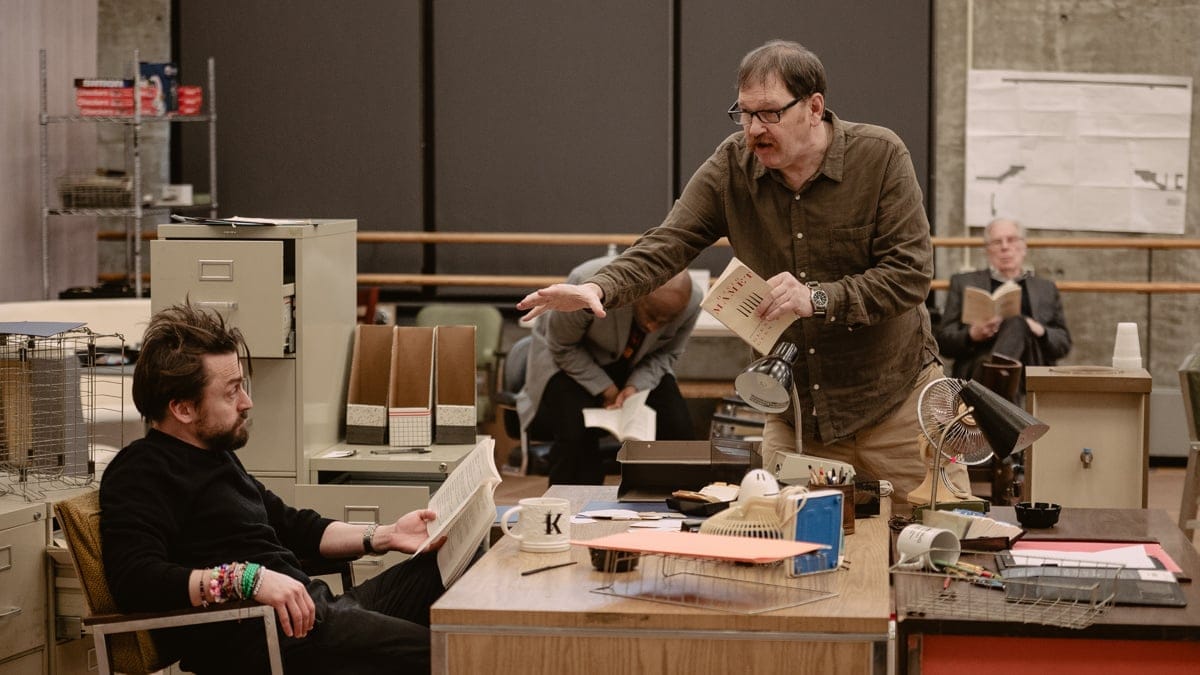
There’s a moment deep into the knives-out rhetorical melee of David Mamet’s Glengarry Glen Ross where a soulless real estate salesman shows a flash of tenderness. Washed-up veteran Shelly Levene (Bob Odenkirk) has just closed a massive sale—“eight units eighty-two grand”—and can’t believe he’s still got it: “I did it. Like in the old days, Ricky. Like I was taught,” he gushes to his protégé Richard Roma (Kieran Culkin). Roma, struck by a bit of sentimentality toward his mentor, responds, “Like you taught me.” Aww. But catch Levene and Roma and their colleagues, each one nastier than the next, at any other moment, and they’re more likely to be ripping each other’s throats out in search of the next actionable customer lead.
For a story to hold our attention, we need to care, even just a little bit, about the characters—to have a stake in whether or not they get the things they want. With Glengarry Glen Ross, which debuted on Broadway in 1984, Mamet boldly attempts to get the audience to invest in a pack of awful people who, deep down, don’t care one lick about each other. And while there’s plenty of virtuosic douchebaggery from Odenkirk, Culkin, and stand-up comedian Bill Burr, more or less playing himself with his signature nuclear shelling of F-bombs, there’s not enough happening between the lines in Patrick Marber’s unchallenging production to close the deal.
Mamet, who won the Pulitzer for Glengarry Glen Ross, doesn’t give a director or a cast much of a helping hand in the play’s difficult three first scenes. A trio of circuitous, monologue-heavy conversations at a Chinese restaurant launch the play. Levene tries to bribe the office manager Williamson (Donald Webber Jr.); Moss (Burr) attempts to enlist a colleague (Michael McKean) to join him in robbing the office; and Roma makes a sales pitch to a stranger (John Pirruccello).
Ultimately, these meandering dialogues are more authorial showmanship than effective character sculpture. It’s impressive, yes, that the initially inscrutable language and culture of the real estate world introduced in those scenes slowly comes into focus for the audience, but that exposition-free runway isn’t worth the ennui of sitting through it.
Even if the play itself poses a problem in its frustrating opening sequence, though, Marber could coax more differentiated performances out of his three leads. Odenkirk, Culkin, and Burr are known for expertly dialing up the rage of their most celebrated roles—Saul Goodman, Roman Roy, and, well, Bill Burr—but their characters here are all just different brands of jerk, finding variety only in the velocity and volume of their anger. (As the play progresses, Odenkirk shades in some of Levene’s hangdog hope to rejuvenate his career, and Culkin is bitingly droll as always, but all the foul-mouthed belligerence blends together across the cast.) Those three stars’ initial scene partners all do subtler work, especially McKean, giving the closest thing to a sympathetic portrayal here as a man discovering that he’s caught in a terrible trap.
Fortunately, Marber takes advantage of the second-act reset to recharge this revival’s energy. As the plot takes on a whodunnit-driven detour, Mamet’s desultory depiction of capitalistic competition sharpens. The salesmen have been so screwed up by the system that they’re blithely screwing each other over on the system’s behalf. Scott Pask’s design for the real estate office, with its boarded-up window, peeling paint, and claustrophobic cubicles, is aptly miserable, and the actors slam doors in each other’s faces and throw their feet on tables with pleasurable force.
In inviting audiences to enjoy the salesmen acting like assholes to each other, Mamet also tacitly invites us to enjoy the assholery directed at off-stage figures who don’t have a chance to spit back. That includes women—there are none, of course, in this play, and a rumored all-female replacement cast will not be forthcoming—and Indian people, at whom the characters sling horrific slurs and insults. Sure, lots of playwrights depict misogynistic and racist behavior without condoning it. The sub-gutter humor of Glengarry Glen Ross’s salesmen, though, is the dark heart of Glengarry Glen Ross itself: There’s a reason that Mamet cut some of those jokes from a past revival, and this production doesn’t make a case for having them restored.
And if there’s a good reason to revive Glengarry Glen Ross again, and Mamet’s cavernously amoral depiction of immorality inside it, Marber hasn’t made that apparent either. One self-serving prick is just like the next? We knew that much already.
Glengarry Glen Ross is now running at the Palace Theatre.
Since 2001, we've brought you uncompromising, candid takes on the world of film, music, television, video games, theater, and more. Independently owned and operated publications like Slant have been hit hard in recent years, but we’re committed to keeping our content free and accessible—meaning no paywalls or fees.
If you like what we do, please consider subscribing to our Patreon or making a donation.