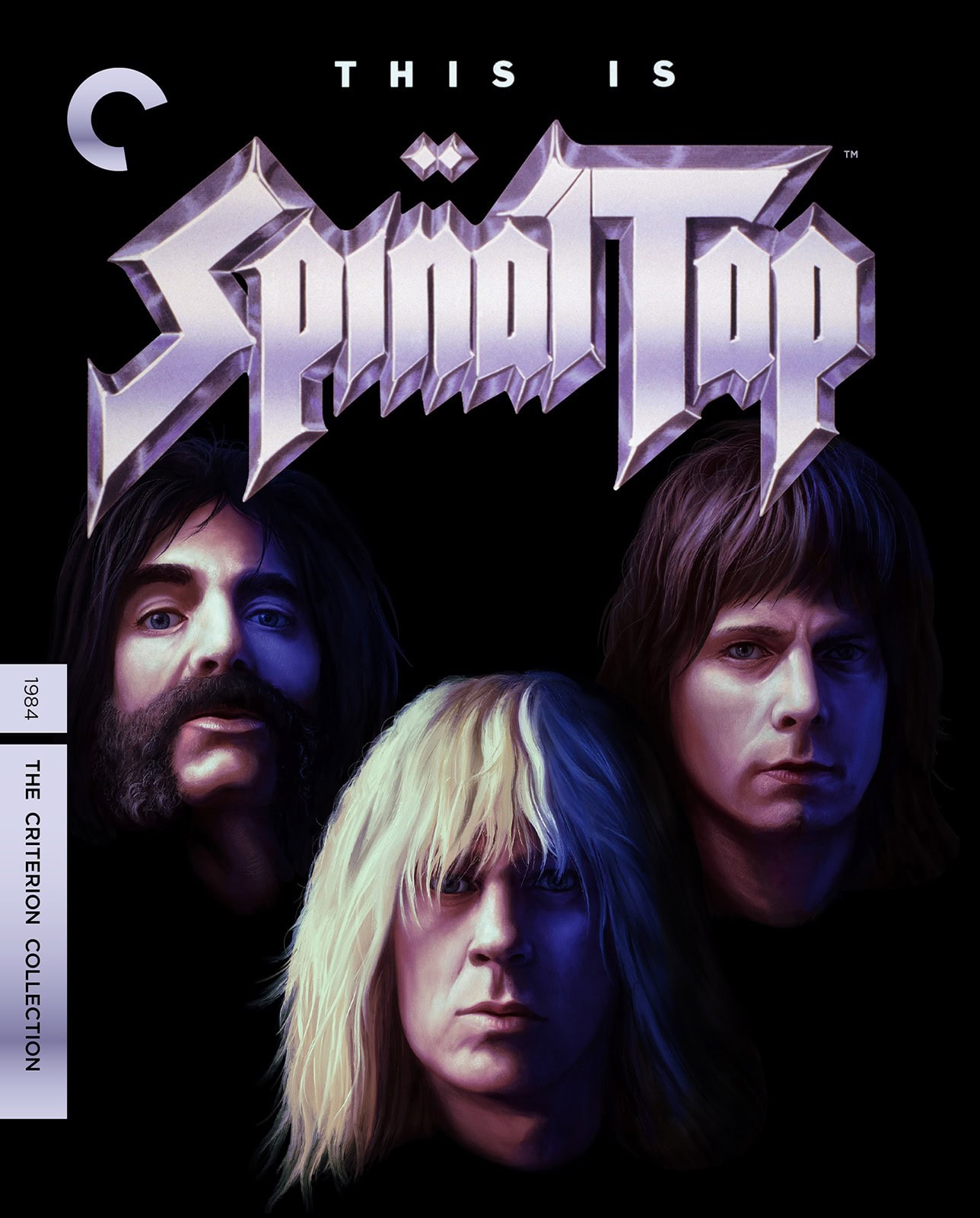
 An instant cult classic, Rob Reiner’s 1984 mockumentary This Is Spinal Tap laid the groundwork for the modern improv comedy with its laser-precise skewering of the heyday of ’80s heavy metal and the vagaries of making it as a touring act. Since its release, it’s assumed a position alongside the likes of Monty Python and the Holy Grail and The Big Lebowski as a comedy whose every line of dialogue has become a kind of masonic handshake among fans who could, were all prints of the film lost, reassemble the screenplay entirely from memory.
Reiner stars as filmmaker Marty DiBergi, a fan of English rock band Spinal Tap who decides to document the group’s United States tour in support of its latest album, Smell the Glove. From the start, though, it’s obvious that Spinal Tap’s best days are behind them, and the film tracks a collapse in slow motion as the band deals with venue downgrades and show cancellations from low ticket sales. Soon, managers, promoters, and industry executives are circling Spinal Tap like the first sharks arriving at a whale fall, eager to pick the carcass clean.
Core band members Nigel Tufnel (Christopher Guest), David St. Hubbins (Michael McKean), and Derek Smalls (Harry Shearer) are all divas whose egos aren’t quite strong enough to stave off their increasing recognition of themselves as over-the-hill dinosaurs. Humiliations abound, from the scathing reviews of music critics dismissive of metal to them getting caught making their bulges seem bigger. The band members constantly attempt to retrieve dignity from the jaws of embarrassment, and their dismissive blitheness is a consistent source of hilarity.
Many of the film’s scenes are inspired by real-life stories of touring woes. An egotistical freakout over inadequate backstage catering nods to Van Halen’s notoriously demanding tour rider. Label objections to the sexist cover art of Spinal Tap’s new album recalls that of early Scorpions records. And the infamous scene of the group inadvertently ordering a minuscule model of Stonehenge is a wry flip of post-Ozzy, post-Dio Black Sabbath’s disastrous decision to craft a one-to-one model of the monument ahead of a tour in venues far too small to accommodate it.
By the same token, the film broadens its perspective beyond metal to take in a larger history of rock fads. In an extended montage of Nigel and David’s collaborative history, the pair try on a number of different hats in their push for pop stardom, beginning in the early ’60s as a skiffle group inspired by Cliff Richard and the Shadows before swapping their suits for paisley to lean into Summer of Love psychedelia, then finally starting Spinal Tap and embracing first-wave heavy metal. Each of the songs played throughout the montage is a perfect parody of a particular fad, and, taken in toto, they clearly poke fun at Spinal Tap as perennial trend-chasers.
And yet, less satirically, that montage is also a straightforward account of just how rapidly rock music evolved from its roots. That each of the songs works as a tune you could have conceivably heard on the radio at the time of their ostensible recording softens the cynicism otherwise on open display in the film by tacitly suggesting that the band became popular for a reason.
With that in mind, the ego clashes between Nigel and David toward the end of the film that threaten to hasten the band’s destruction set up a finale of reconciliation that feels logical and carries some actual emotional weight. Reiner never made another comedy as cutting as This Is Spinal Tap, but in the margins you can catch a glimpse of the sentimentality he would bring to a string of hit films that followed hot on the heels of his feature debut.
Image/Sound
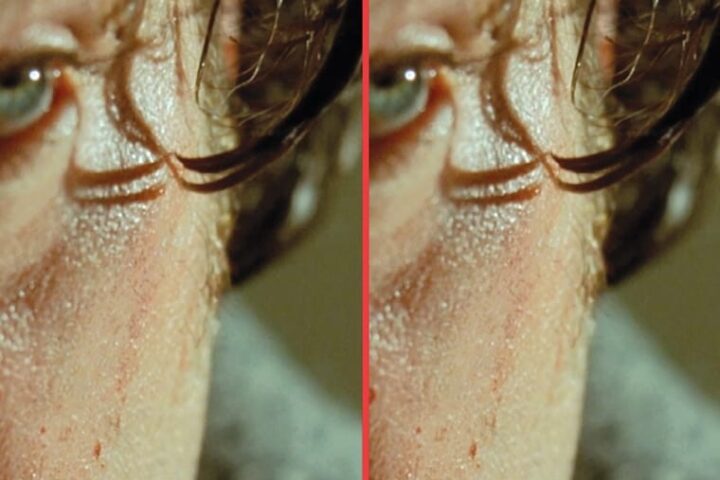
Shot to resemble a classic verité documentary, the film has a naturally rough and unpolished look, and the Criterion Collection’s 4K transfer captures the naturalistic lighting and colors of the 16mm cinematography. Grain distribution is even throughout, and the presentation is free of crushing artifacts. Details that never appeared on prior video releases—the contours of stage makeup, the hilariously foamy texture of the mock Stonehenge—are now perfectly apparent.
The 5.1 audio track is well-balanced, if a bit surprisingly soft during the actual concert scenes. Nonetheless, the soundtrack distributes the individual instruments across all channels, and dialogue is always centered and clear during the off-stage scenes.
Extras
Criterion has done a marvelous job of collating the best extras from This Is Spinal Tap’s various home video releases over the years, beginning with three commentary tracks that have never appeared together on the same disc. On their track, producer Karen Murphy and editors Robert Leighton and Kent Beyda discuss the aesthetic inspirations of the project and how they operated on a small budget, while on theirs, actors Christopher Guest, Michael McKean, and Harry Shearer detail how they tapped into their characters via improvisation.
Most entertaining, though, is the track by Guest, McKean, and Shearer in-character, which amounts almost to an alternate cut of the film as Nigel, David, and Derek air their dissatisfaction with Marty for showing them in a negative light and react defensively to some of the more embarrassing scenes. (Speaking of alternate cuts, this release features a whopping 98 minutes of outtakes under the title The Cutting Room Floor.)
Elsewhere, a host of archival media captures the film’s strange afterlife, in which Spinal Tap occasionally “reunited” for one reason or another: excerpts from the direct-to-video 1992 documentary The Return of Spinal Tap about the band’s real-life gig at the Royal Albert Hall; in-character interviews to promote their standalone 2009 album Back from the Dead; and various short clips of music videos and media appearances.
Also included on this release is a newly recorded conversation between Rob Reiner and comedian and This Is Spinal Tap superfan Patton Oswalt about the film’s legacy. Finally, a booklet essay by culture critic Alex Pappademas ties This Is Spinal Tap’s jokes to various real-life inspirations and looks well beyond the movie to see parallels with real pop stars over the years, some who weren’t even born when the film was released.
Overall
Rob Reiner’s eternally relevant spoof of music business woes and fragile star egos receives a definitive transfer and set of extras from Criterion.
Since 2001, we've brought you uncompromising, candid takes on the world of film, music, television, video games, theater, and more. Independently owned and operated publications like Slant have been hit hard in recent years, but we’re committed to keeping our content free and accessible—meaning no paywalls or fees.
If you like what we do, please consider subscribing to our Patreon or making a donation.