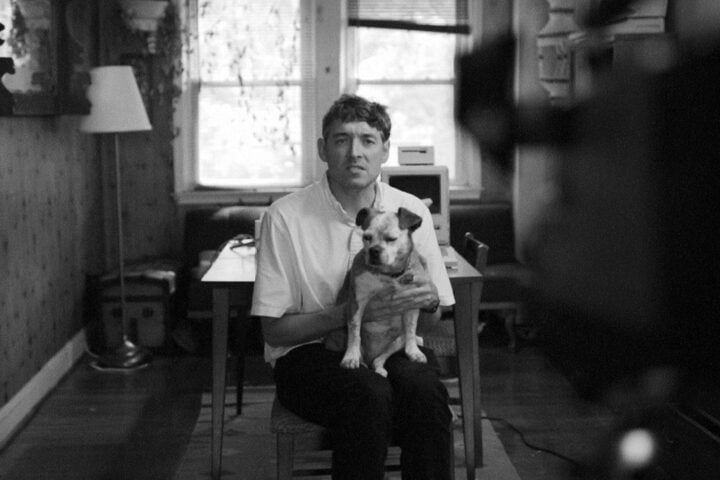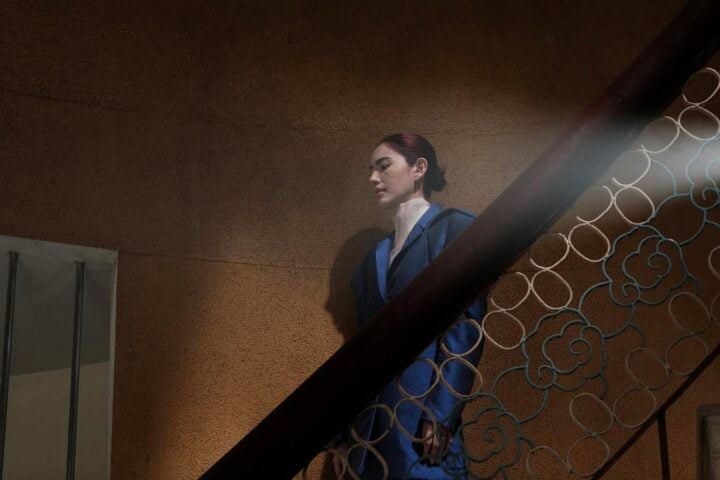
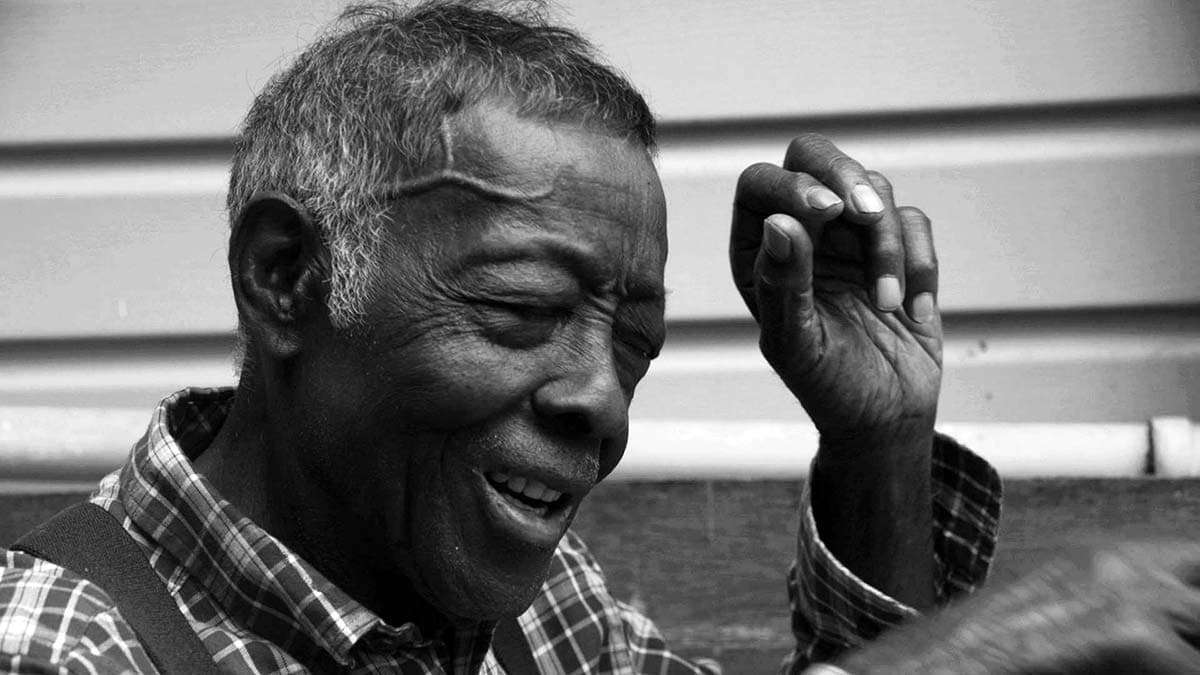
When Filmmaker asked Brittany Shyne to describe her approach to lighting Seeds, the filmmaker stated, “The Georgia and Mississippi sun.” Her pithy reply points to the resourcefulness of her project, for which she served as director, cinematographer, and sound recorder, but it also evinces the film’s attention to the natural textures of the region. Seeds observes the lives of Black farmers in the American South through striking monochrome vignettes, gathering moments of community, scarcity, and tenacity to portray these neglected landowners who endeavor, against all odds, to reap more than their circumstances have sown.
Those circumstances have been shaped by decades of institutional support that overwhelmingly favored white farmers, a longstanding financial injustice that Joe Biden claimed he would rectify upon his election to office in 2021. (A demonstration by the farmers outside the White House around the film’s midpoint prominently features a sign reading “JIM CROW JOE GOTS TO GO.”) The titanic impact of these misdirected resources is substantiated by Willie Head Jr., the primary subject of Seeds, with the statistic that 16 million acres of farmland were Black-owned in 1900, while today that number has fallen to under two million.
Cultivating and maintaining this land is a costly business that few individuals can bear, but farmers, as one subject in Shyne’s documentary aptly puts it, are the “backbone of the world.” A spine is the very thing that’s missing from the bureaucracy that administers the country’s homegrown food supply: At two pivotal points in the film, we witness Head and his peers argue on the phone with representatives from the Department of Agriculture, who pay lip service to racial biases in the system but make no perceivable effort to counteract them.
While these sequences give Seeds its core conceptual thrust, as well as tinge the moments of joy dotted throughout with an air of urgency, they’re mere fragments in Shyne’s sprawling mosaic. Edited by Malika Zouhali-Worrall, the film finds an atypical rhythm removed from narrative function, guiding the viewer at a molasses pace—sometimes enervating, but never uncalled for—via symbolic rhymes and contrasts. The shot that immediately precedes the first failed negotiation depicts a tractor wheel struggling to find purchase in a patch of unstable soil, a collocation that meshes the figurative with the material. Multiple sequences observe massive machinery harvesting cotton, finding iconographic weight in the imagery of Black workers commandeering, however precariously, a process that was historically indentured.
Many sequences are shot through car windows, with Shyne’s crew of one occupying an off-screen role as passenger in the vehicle, bridging allegorical gaps between director and subject. The sense of intimacy is enhanced by the frequent use of close-ups throughout the documentary, though it’s as intensely felt even when the camera is kept at a distance.
Some of the documentary’s most striking images are prolonged shots following people’s movements: children cartwheeling through open fields, farmers combing the ground for fallen walnuts, a woman driving over to check on a friend who suffered a stroke. A standout scene follows Head to the farmhouse, where he speaks directly to Shyne and warns her not to swat the bumblebee that flits near the camera: “I work around them instead of fightin’ ’em,” he says. Another observes Head’s granddaughter bouncing happily in the back of a moving pickup truck, aware of the camera but unperturbed by the filmmaker’s gaze.
Shyne’s lens is held rapt by the ramblings and insights of the elderly, but it springs to life when it’s turned toward the next generation, whose future is of utmost concern in light of the socioeconomic tensions documented by the film. (In fact, nearly all of the subjects fall on the far ends of the age spectrum, with the generation between them conspicuously absent.) Seeds ends with its eldest subject, Carlie Williams, affirming the fact that he’s enjoyed his life in spite of the daily demands of making a living. He and four others are memorialized in the credits, having passed at various points during the shoot. The film pays profound tribute to the perseverance of these figures, sidestepping sentiment and landing on something altogether truer.
Since 2001, we've brought you uncompromising, candid takes on the world of film, music, television, video games, theater, and more. Independently owned and operated publications like Slant have been hit hard in recent years, but we’re committed to keeping our content free and accessible—meaning no paywalls or fees.
If you like what we do, please consider subscribing to our Patreon or making a donation.