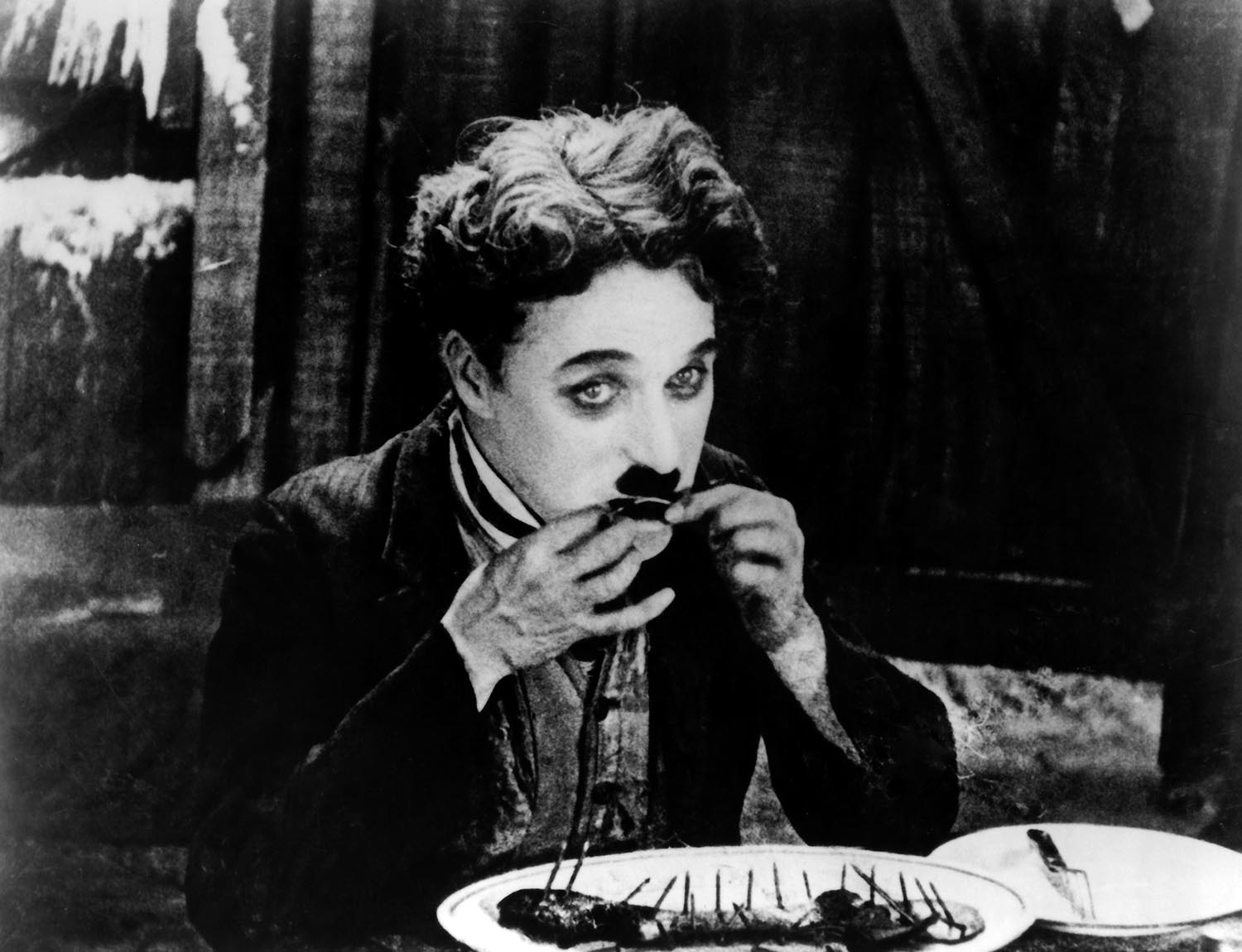
As the San Francisco Silent Film Festival awaits the much-anticipated reopening of a newly renovated Castro Theater, it temporarily pushed its traditional spring dates to late fall and relocated across the bridge to the beautiful Orinda Theater. A jewel of an independent theater that embraces its movie palace past with plush seats, Art Deco flourishes, and classic posters and memorabilia displayed throughout the building, it was a lovely choice for the largest silent film festival in the U.S. This year, the five-day event boasted 19 feature films, 11 shorts, and a fragment of an otherwise lost film, along the usual introductions, presentations on some of the restorations featured at the festival, and live music for every single screening.
SFSFF 2025 opened with a centenary screening of Charlie Chaplin’s The Gold Rush. A massive hit in 1925 and one of Chaplin’s most beloved films, the epic comedy sends the Tramp into the Klondike equipped with little more than his bowler, cane, and baggy pants. It’s the little guy versus greed, hunger, and the fury of nature, his romantic idealism overcoming the cynicism and violence of the culture that (as we see later in the festival) destroyed so many.
Chaplin recut and rereleased the film with music, sound effects, and narration in 1942, trimming scenes, shortening shots, even changing key parts of the narrative, and he attempted to destroy all prints of the original silent version. Luckily some survived and Kevin Brownlow and David Gill made a first pass at restoring the original cut in 1993. This new edition, backed by the Chaplin estate, incorporates additional material from archives around the world.
In the “Amazing Tales from the Archives” presentation the next day, Arnold Lozano of the Chaplin Office in Paris and Elena Tammaccaro of L’Immagine Ritrovato in Bologna, which scanned, reconstructed, and restored the film, compared shots and sequences from the various elements available and illustrated how reinstating a key moment reshot for the 1942 release adds pathos to the Tramp’s odyssey. While the 1942 revision is still favored by the Chaplin estate as the “official” version (following Chaplin’s wishes), the original silent release is now back to its full glory, or as close as we’re likely to get. The screening was accompanied by a live orchestra performing Timothy Brock’s adaptation of the score Chaplin composed for the 1942 release.
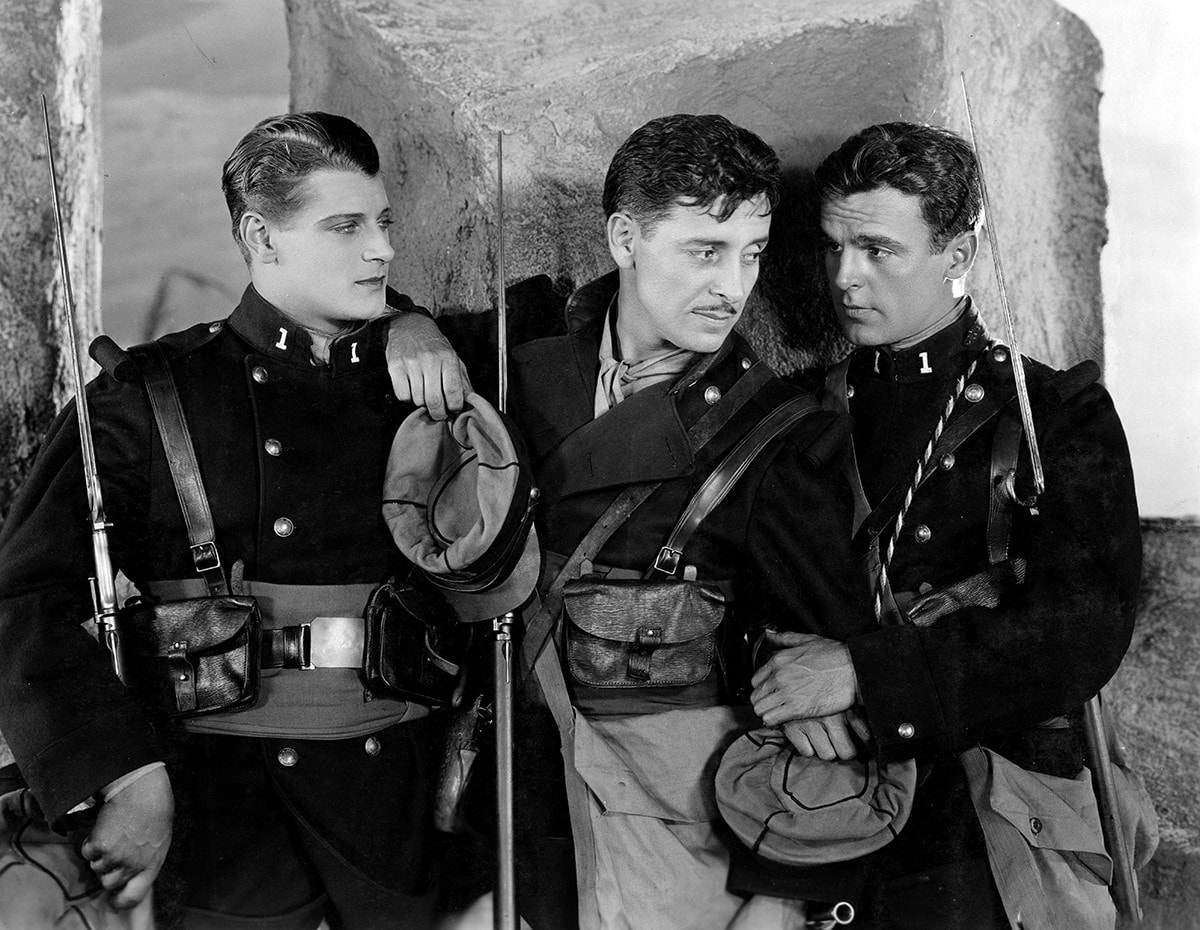
The restoration of Beau Geste, Herbert Brenon’s riveting 1926 French Foreign Legion adventure, was a revelation for me. It’s a rousing piece of “big boys own adventure” that opens with the mystery of a seemingly haunted fort with disappearing corpses, rewinds to a bucolic English childhood and a jewel theft, and anchors itself on the love and loyalty of three brothers who leave home to lose themselves in an African outpost. Brenon’s muscular direction gives us treachery and brotherhood with an epic scope—the shots of the vast desert give the California location an exotic feel—and a jingoistic sensibility common to the era. The Arabs are faceless bad guys and only the Brit and American soldiers are granted a sense of honor.
Those caveats aside, it’s a blast. Ronald Colman smiles through his sacrifice as the eldest Geste brother with a deft flair, Alice Joyce suggests the weight of the world behind her sad eyes, Noah Beery takes sadistic glee in his command, and a shifty William Powell is a scheming, toadying crook hiding out in the Legion. The dynamic score by the Mont Alto Motion Picture Orchestra, expanded to nine members for this presentation, builds on the original score composed by Hugo Reisenfeld and complements the shifting moods and building drama beautifully.
Constant revivals, re-releases, and recut editions left the original materials in such poor condition that Beau Geste was incomplete and effectively unavailable for decades apart from 16mm collector prints. The restoration was undertaken by veterans Robert Harris and James Mockoski, who formed a new company, Artcraft, to restore the silent films of the Paramount Pictures vaults and Paramount collection at the Library of Congress. In this case, it also meant a search for materials to reconstruct the full cut of the film’s original roadshow release. Mockoski walked audiences through the challenges they faced, including combining frames from damaged or compromised materials to create a complete image. The results are nothing short of remarkable, and film lovers will be able to see for themselves with a Blu-ray release (complete the with Mont Alto score) from the new Artcraft home video imprint at the end of November.
Beau Geste was one of three films, alongside 1926’s The New Klondike and 1921’s The Affairs of Anatol, restored and presented by Artcraft at the festival. Lewis Milestone’s The New Klondike, a baseball film that turns into satire of the 1920s real estate bubble in Florida, is a comic lark with Thomas Meighan as an aging pitcher and Paul Kelly as a dim-witted but loyal small-town batter who submits to the real-estate hustle. And Cecil B. DeMille’s The Affairs of Anatol is a lavish sex comedy that softens the scandalous play by Arthur Schnitzer. The wry mix of spectacle, sex, and social satire stars Wallace Reid as the newlywed society man who neglects is young wife (Gloria Swanson) to “save” beautiful young women from their sinful choices.
Reid’s Anatol is less a philanderer than a self-righteous boob with poor instincts, and the production applies a moral suture over the saucy suggestions. Along with its supporting cast of rising stars, among them Monte Blue as a country rube and Bebe Daniels as the deliciously named Satan Synne, The Affairs of Anatol’s extravagant sets and costuming help turn the film into a gorgeous spectacle of excess and decadence. The studio sprung for Handscheigl color (a process of painting color directly on the print with stencils) for the art title cards and a few eye-popping shots in the film and this edition restores the color to its full, rich glory.
One of the great abilities of cinema is to transport audiences to other lands, other cultures, other ways of life. A work of proto-poetic realism, 1924’s Island Fisherman stars an intent, young Charles Vanel as Yann, a dreamy fisherman who spends months working the dangerous waters of Iceland and treats the sea as a lover as much as a force of nature, much to the anguish of his village sweetheart (Sandra Milovanoff). Vanel’s gentle manner and impassive face gives him an almost spiritual quality, suggesting a tranquility in his connection to the ocean. Director Jacques de Baroncelli, meanwhile, enriches the village life with the rhythms and rituals of a traditional culture completely disconnected from the rush of the urban world and its enticements.
Lars Hanson is the rugged and rebellious son of a farm owner who leaves his inheritance behind for the itinerate life of a lumberjack in The Song of the Scarlet Flower, from 1919. Directed by Mauritz Stiller, this adaptation of Johannes Linnankoski’s novel plays with the idealistic image of the defiant individual whose embrace of life is undercut by his reckless romances and the suffering of a young woman left behind in the wreckage of his willfulness. The scene where he confronts his culpability and selfishness, speaking to his reflection in bar mirror that soon responds, is superb, even if the price paid for his lesson is the death of an innocent. Yet compared to the Christian moralizing of so many Hollywood epics, both Island Fisherman and The Song of the Scarlet Flower have an almost pantheistic quality, with heroes more beholden to the majesty and power of the seas, forests, and rivers than any religion.
Czech actress Anny Ondra is best known to western audiences for her work with Alfred Hitchcock, notably his landmark debut sound thriller Blackmail, but she was a major star in Europe before coming to England. The 1928 German film Saxophone Susy shows an effervescent side of the actress as a fun-loving heiress who swaps identities with a friend to become a stage dancer. There’s romance and a comedy of errors in what is best described as a silent musical, a bubbly confection with dance numbers, a theme song (with lyrics splashed across the screen), and an utterly winning leading lady setting the rhythm.
Anna May Wong left America for Europe in the late 1920s in search of parts beyond the stereotyped supporting roles Hollywood had to offer. Richard Eichberg developed Song, a 1928 German melodrama set in the far east, specifically for Wong, who plays a street girl taken in by a beefy, hot-tempered knife-thrower (Heinrich George). He develops a new act with her but has never gotten over his previous love, a self-absorbed ballerina (Lila Lee), and can’t see Song’s love for him. Playing the gamut from plucky urchin to glamorous showgirl, and is magnificent, worldly yet innocent and compassionate, in a rare role with depth and dimension.
Ernst Lubitsch’s Kohlhiesel’s Daughters, a 1920 reworking of The Taming of the Shrew as a Bavarian farce, stars a delightful Henny Porten as both Liesel, the brawny, ill-tempered older sister who doubles as the tavern’s bouncer, and the sweet, flirtatious Gretel. It’s fun to see a young Emil Jannings as Gretel’s boisterous suitor, the town roughneck who’s clearly the perfect match for Liesel. A hit in Europe but never released theatrically in the U.S. and unavailable on video, it shows a rowdy and rambunctious Lubitsch going all in on physical comedy—an entire room is systematically upended in one scene as Jannings plays the tyrannical husband—that becomes a form of courtship. Lubitsch cited it as one his favorites of his German films and there is hope for an eventual disc release of this restoration from Germany’s Murnau Stiftung.
Other highlights of this year’s festival included new restorations of three Sherlock Holmes two-reel mysteries from England, Clarence Brown’s 1928 gold rush drama The Trail of ‘98 (the hard-scrabble flip side of Chaplin’s Gold Rush), Carl Theodor Dreyer’s 1925 dramedy Master of the House, Tod Browning’s horror classic The Unknown from 1927 starring Lon Chaney and Joan Crawford, and The Devil’s Circus, Danish filmmaker Benjamin Christensen’s 1926 American debut, as well as the recently unearthed My Son, a thought-lost Russian melodrama from 1928, incomplete but eye-opening in its powerful intimacy. The festival will return to the Castro in May 2026, back in its longtime home and familiar spring slot.
The San Francisco Silent Film Festival ran from November 12—16.
Since 2001, we've brought you uncompromising, candid takes on the world of film, music, television, video games, theater, and more. Independently owned and operated publications like Slant have been hit hard in recent years, but we’re committed to keeping our content free and accessible—meaning no paywalls or fees.
If you like what we do, please consider subscribing to our Patreon or making a donation.