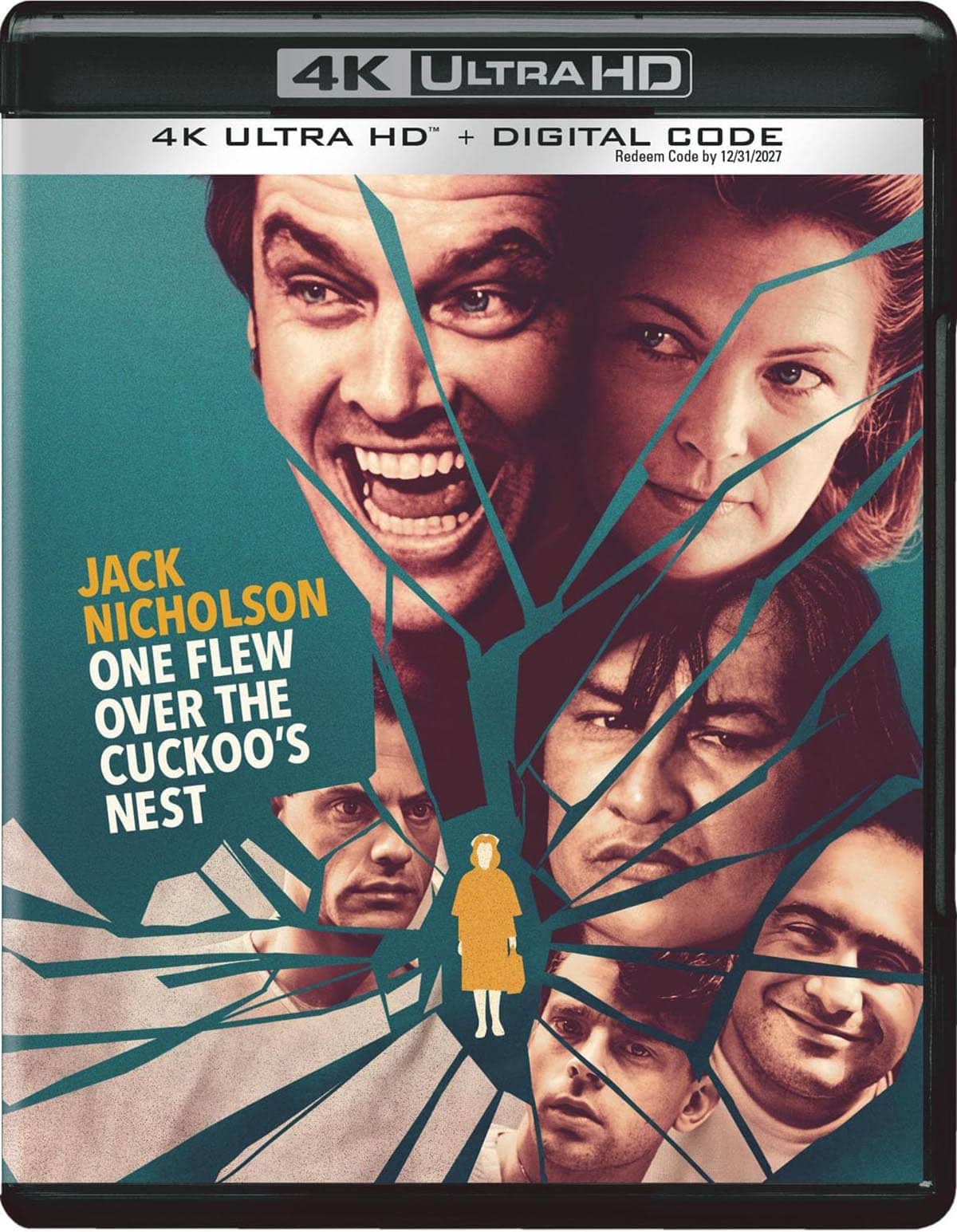
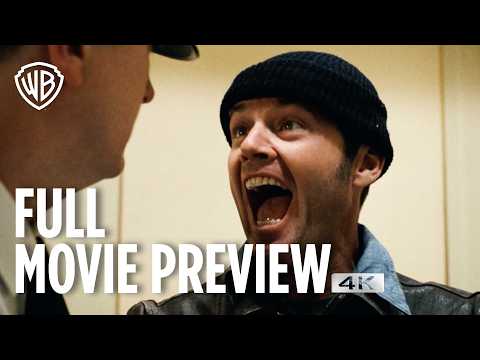
 Milos Forman’s One Flew Over the Cuckoo’s Nest begins with a sort of perp walk in reverse. R.P. McMurphy (Jack Nicholson) strolls into a mental institution for the first time, escorted by prison guards and grinning from ear to ear. His handcuffs get released and a sudden, freeing sense of exhilaration washes over him. McMurphy then stares up a spiral staircase at a few curious patients, hooting into the air and spontaneously kissing one of the guards—a performer center stage in the spotlight.
This man is obviously not mentally ill, or at least not in the same sense as the various other patients that we glimpse in a slow, methodical montage preceding our memorable introduction to McMurphy. No, McMurphy is an emotional opportunist, but over the course of the meticulously constructed film, this very sane disregard for authority will evolve from simple selfishness into a more complex brand of selflessness, one that ferociously confronts stigmas around the mentally ill.
At first, McMurphy sees life inside the mental institution as an upgrade from his stint in prison, but soon the cuckoo’s nest begins to dull his free spiritedness. As McMurphy tests the limits of power instituted by Nurse Ratched (Louise Fletcher) and her staff of orderlies, his acts of disobedience intensify, yielding varying responses from the other patients. Some, like the stuttering Billy Bibbit (Brad Dourif), relish McMurphy’s outlandishness, while others, like the repressed academic Dale Harding (William Redfield), question it at every turn. Stuck in the middle is the ostensibly deaf-mute Chief Bromden (Will Sampson), a tall Native American who silently observes the proceedings with one foot on each side of the opinion aisle.
This collective of unsettled men makes for a film completely dependent on the relationship between physical performance and subtle camera movement. Forman allows his actors to be consumed by their parts, giving them the temporal freedom to build their characters from the ground up—seemingly on the fly and with all the tools in their personal arsenal. But the Method performances wouldn’t be nearly as effective without Haskel Wexler’s wonderfully fluid and roving camera, a sly but giving fly-on-the-wall perspective that feels startlingly objective. These two forces of nature, the act of inhabitation and documentation, form the aesthetic bond that feeds into One Flew Over the Cuckoo’s Nest’s thematic treatise on individuality and freedom.
This dynamic works best during the buildup to and aftermath of those scenes that the film is most known for. It’s in McMurphy staring down Nurse Ratched before joyously recreating the World Series game for his baseball-deprived compatriots, and in Chief smiling proudly as he watches McMurphy run up and down the basketball court yelling obscenities. “They were working on him, just like they’re working on you,” Chief says at one point to McMurphy, warning his friend about the dangers of challenging institutional power. It’s one of many quiet moments of reflection in a film that gives voice to the angst of a generation, as well as to the timeless tension between the need for conformity and the desire for individual distinction.
Image/Sound
One Flew Over the Cuckoo’s Nest’s cinematography has long been served well on home video, but Warner’s new 4K transfer offers a definitive presentation. The whites of the hospital staff’s uniforms look sharper than ever set against the drab grays of the mental institution’s walls, while the dirt and sweat stains of the patients’ clothes have never appeared so uncomfortably vivid on video. Black levels are deep, and with enough subtle gradations in shadowy areas, while the few overlit exterior scenes render powerful use of shades of yellow and blue with an intensity that further emphasizes the brief sense of freedom that the characters feel.
The disc comes with both the original stereo and a remastered 5.1 surround track. Both tracks are clearly mixed, with dialogue resolved with excellent clarity, but the surround track brings the ambient noises in crowded scenes, including the echoing through the large hospital rooms and the occasional music blaring on radios and the hospital PA system, to more immersive life.
Extras
Warner’s release curiously omits Milos Forman’s commentary track from the distributor’s 2010 Blu-ray but otherwise ports over most (but not all) of the deleted scenes included on that release, as well as the feature-length documentary “Completely Cuckoo.” The latter contains rare interviews, on-set footage, and archival clips that paint an expansive picture of the film’s production process. The feature spans from Kirk Douglas’s adaptation of Ken Kesey’s book for the stage to son Michael’s long gestating desire to make a film version. Many of the now-famous cast members fondly remember the unique experiences of shooting on location in the Oregon State Mental Hospital, and rare rehearsal footage makes for fascinating film history.
Alongside these archival extras, Warner adds two new features that both stem from a Zoom reunion between producer Michael Douglas and actors Danny DeVito, Christopher Lloyd, and Brad Dourif. The sweeter of the two discussions sees the actors, now in their 70s and 80s, looking back fondly on the film. It’s most engaging in the brief moments where they scrutinize their co-stars’ work, as when Lloyd discusses Louise Fletcher’s performance and her minuscule, lived-in gestures and body language with a tone that suggests that he’s lost none of the respect and admiration that he had for her on set. The other discussion focuses more specifically on the cast’s memories of the filming itself and watching Forman direct.
Overall
One Flew Over the Cuckoo’s Nest receives a wonderful new transfer, though the inexplicable absence of some archival extras knocks an otherwise perfect release.
Since 2001, we've brought you uncompromising, candid takes on the world of film, music, television, video games, theater, and more. Independently owned and operated publications like Slant have been hit hard in recent years, but we’re committed to keeping our content free and accessible—meaning no paywalls or fees.
If you like what we do, please consider subscribing to our Patreon or making a donation.