Osgood Perkins’s recent films are distinctly entwined with their marketing, and Keeper is no exception. The viral campaign for last year’s Longlegs, recalling those of The Blair Witch Project and the original Paranormal Activity, left a trail of breadcrumbs that teased its target audience with the perpetual promise of something more. But Perkins’s dreary and derivative thriller pulled a similar act of tantalization, reneging on this vow by trudging through a series of murders with no meaningful sense of mystery or revelation.
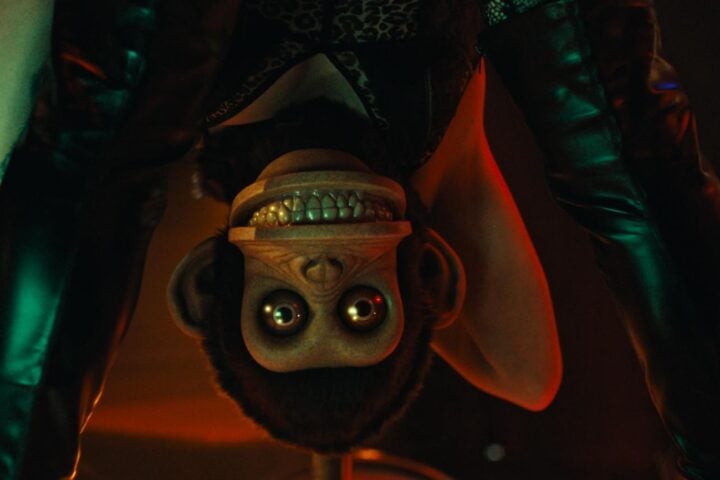
Similarly, the trailers for this year’s The Monkey leaned into vulgarity and gallows humor, offering up the film’s money shots with little sense of tension or tact. The film itself was tactless in splicing together slaughter and slapstick, hitting the same beat, over and over again, as the rictus-grinning monkey at its center. Flash forward a few months and Keeper’s marketing follows the lead of that cursed simian toy, winding up for yet another bang of a one-note drum.
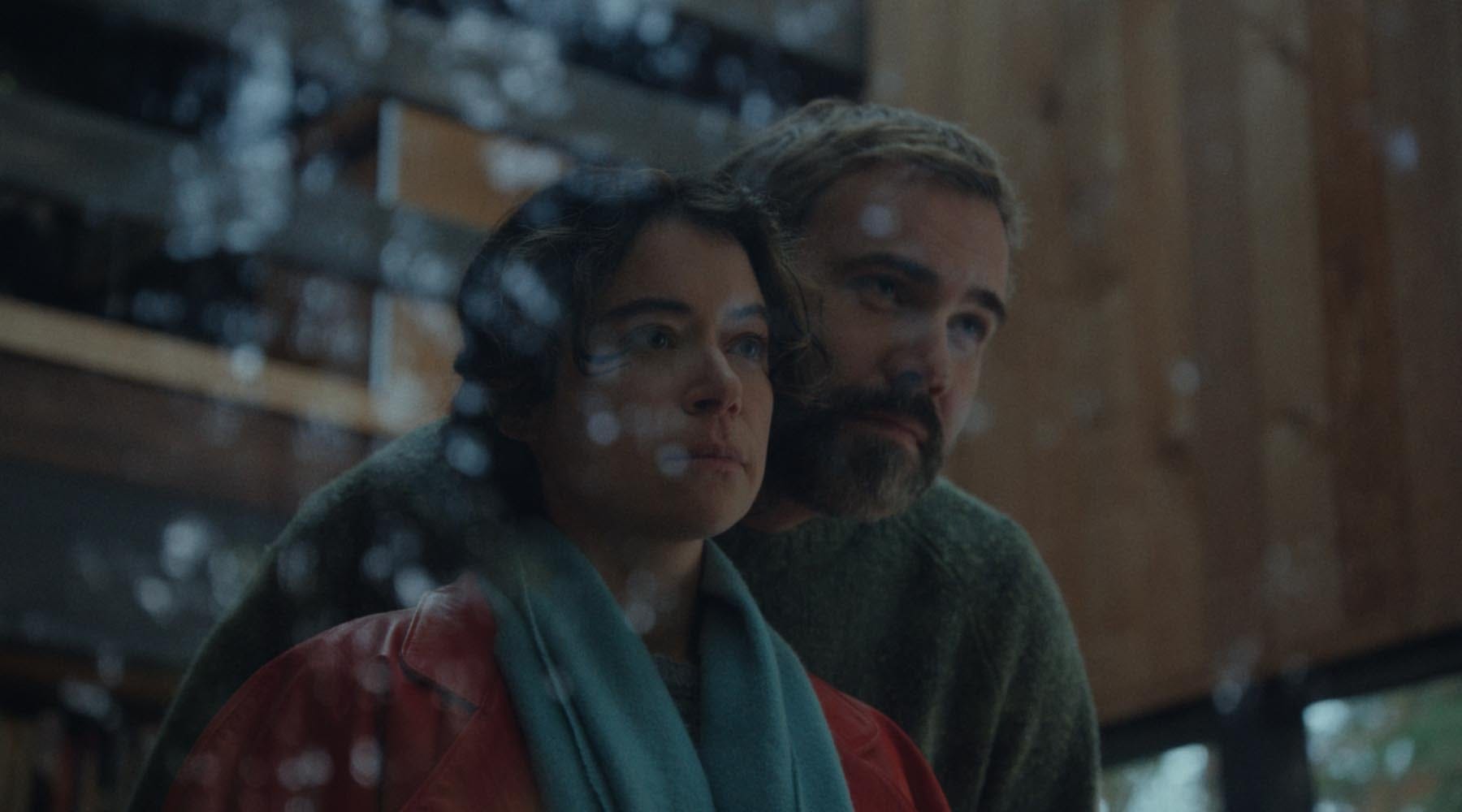
Keeper’s early teasers tended toward eerie, cyclical imagery, implying a perspective shift between Liz (Tatiana Maslany), a young artist, and Malcolm (Rossif Sutherland), her doctor boyfriend, in order to evoke the enigmas of coupledom, none of which the film has any interest in exploring. Later trailers were no less fuzzy on plot details, opting to reveal nearly all of the film’s hokey creature designs, intercut with quotes from famous filmmakers singing Perkins’s praises (including Eli Roth risibly claiming that the Keeper is “like a surreal David Lynch movie”). The film honors its marketing by having virtually no plot to speak of, and by piling on vague, portentous flourishes in hopes of generating intrigue. It does not once come close.
After a fetishistic montage of beautiful women through the ages morphs into close-ups of their screaming, blood-spattered faces, we follow Liz and Malcolm, looking to celebrate their one-year dating anniversary, to the latter’s lavish countryside cottage, where creepy happenings lead poor Liz to believe that Malcolm isn’t the man she thought he was. From there, Perkins’s film, written by Nick Lepard, plays out how you’d expect it to from that description, revealing its hand in the first 10 minutes and trying desperately to shuffle the deck for the next 90.
As Liz encounters one apparition after another, it becomes increasingly clear that Perkins mistakes abstruseness for surrealism, and an oppressive atmosphere for palpable tension. He gets a kick out of obstructing more than half the frame for no apparent reason, padding out his scenes with ominous pillow shots, and pushing his visual and aural motifs well beyond their breaking point. A simple sequence of Liz taking a bath is extended to parodic lengths as multiple sources of potential peril float around her head, as though Perkins couldn’t decide on a scare.
Through it all, Maslany is left totally adrift with no characterization to stand on, reduced almost entirely to reaction shots. Liz is passive, static, and gossamer-thin, told she’s “not like the other girls” by Keeper’s dastardly men and eventually positioned as the same in the film’s glib conclusion. She’s a woman in danger, full stop, and Perkins seems to thrill at the chance to watch her wriggle. If only he’d share such thrills with the rest of us.
Keeper is a latter-day Perkins horror film through and through: assiduously advertised, sloppily scripted, stylistically constipated, plated with sarcasm, and never, ever frightening. The upside of such marketing is that what you see is what you get, but the downside is that Perkins has already won by making you look in the first place.
Since 2001, we've brought you uncompromising, candid takes on the world of film, music, television, video games, theater, and more. Independently owned and operated publications like Slant have been hit hard in recent years, but we’re committed to keeping our content free and accessible—meaning no paywalls or fees.
If you like what we do, please consider subscribing to our Patreon or making a donation.