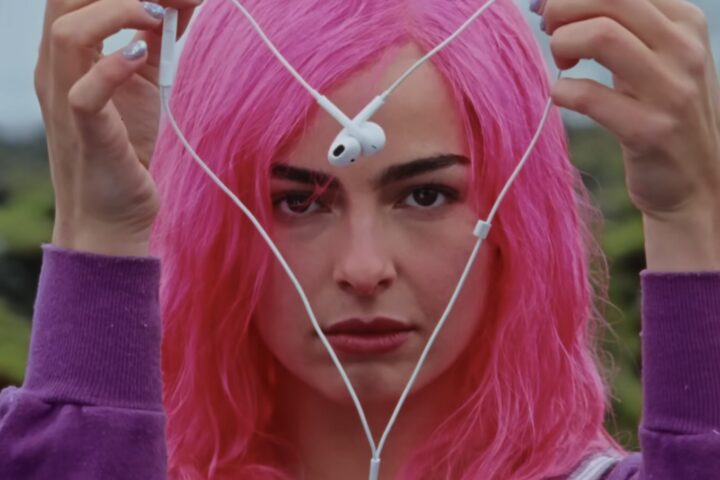
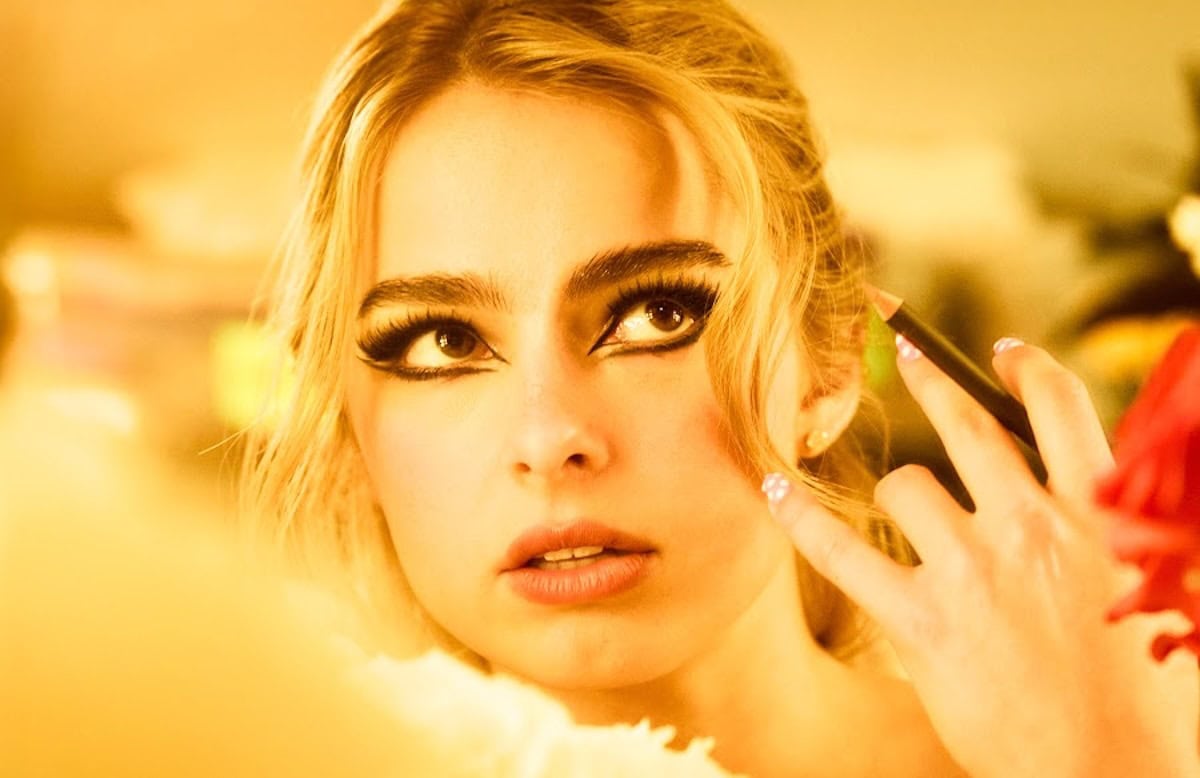
Addison Rae’s debut album, Addison, is the hard-won culmination of the TikTok star’s lengthy and public-facing reinvention. It’s a slinky and scintillating album, poised between self-mythology and self-discovery: “Tell me who I am,” she sings in the opening seconds of “Fame Is a Gun”—at once a challenge and a plea.
Throughout Addison’s fleet 33 minutes of breathy, sparkling, unapologetic pop, Rae makes roundabout moves to tell us who she is. That the singer never really arrives at an answer is part of what gives the album its conceptual thrust. Addison’s pleasures are right there on the surface, and though it’s compelling as a response to an identity crisis, the music speaks for itself.
Last summer, Rae began teasing her debut album with a series of singles, each accompanied by a formally expressive music video, including “Diet Pepsi,” a synth-addled slice of unrefined Americana directed with tongue-in-cheek verve by Sean Price Williams, and the glitzy “Fame Is a Gun,” which epitomizes the mystique germane to the stardom that Rae set her sights on. These sumptuously cinematic pinup fantasias find the artist fully committed to embodying the sensual delights of a given track, reveling in her own image and taking evident joy in moving her body. Rae’s videos amount to a fabulous visual record of her playful process of becoming.
Though Rae’s lyrics tend toward abstraction, chasing gut feelings and mental pictures, the singles tell a coherent story—so much so that the album itself seems, at first, underwhelming after all of that expertly curated buildup. But repeat listens coax out Addison’s infectious charms. The thrumming “New York” kicks the album off with an intoxicating bang, while “Summer Forever,” a sweetly juvenile torch song steeped in wispy nostalgia, buoys a transition between the sauntering swing of Addison’s first half and its more clear-eyed wind-down.

The album’s back half, which underscores Rae’s introspection with rich, ebullient beats, reaches a fluttering apex with “Times Like These.” Though the song’s lyrics suggest a woman overwhelmed by the very things she’s manifested, Rae’s tenor is unshakably celebratory. Even the gloomy strings of the minute-long interlude that follows, “Life’s No Fun Through Clear Waters,” are brightened by the affirmation of the song’s eponymous mantra. When the album’s closing track, “Headphones On,” rolls around, familiar in theme and temperament, it feels at once like a homecoming and a new beginning.
Born to parents who amassed colossal TikTok followings of their own and practically raised her on the platform, Rae’s fame was never quite her own. “Misunderstood but I’m not gonna sweat it/Isn’t it all for the show?/Wearing a smile on my face for protection/Turning my tears into gold,” she chants on “In the Rain,” a shuffling, downcast bop that dredges up the embarrassments of her rise to prominence before ultimately casting them aside.
Pop music as a Trojan horse to contend with the terms of the spotlight is a long and storied tradition, from the public crash-outs that shaped Britney Spears and Miley Cyrus’s best albums to the more ground-level burnout that Charli XCX wove into Brat. But aside from Addison’s thematic intimations—by turns winking and sincere—the music itself is the work of someone eager to honor and build off of the artistry of others: Rae pays homage to Björk’s Debut and Madonna’s Ray of Light in the same breath as she does Lana Del Rey and Lady Gaga (both shouted out as a dream blunt rotation on “Money Is Everything”).
While Addison draws influence from a history of wide-ranging heavy-hitters, its dreamily stratified, pulsating soundscapes—co-crafted with writer-producers Luka Kloser and Elvira Andlerfjard—bear a personal stamp even when Rae’s lyrics play it safe. Her aesthetic oozes confidence and self-possession: “I know how to make the hard things look really easy,” she coos on “High Fashion,” conveniently summarizing the album’s achievements. Like so much good pop music, Addison makes hard work seem like second nature.
Since 2001, we've brought you uncompromising, candid takes on the world of film, music, television, video games, theater, and more. Independently owned and operated publications like Slant have been hit hard in recent years, but we’re committed to keeping our content free and accessible—meaning no paywalls or fees.
If you like what we do, please consider subscribing to our Patreon or making a donation.