In the opening minutes of Rabbit Trap, we hear the following: “With your eyes, you enter the world. With your ears, the world enters you.” With this whispered aphorism, writer-director Bryn Chainey’s debut feature sets up a discrepancy between sound and image. Whereas most films subordinate the former to the later, this refined work of folk horror emphasizes sound as a kind of primal force, making the most of its soundtrack to haunt the audience.
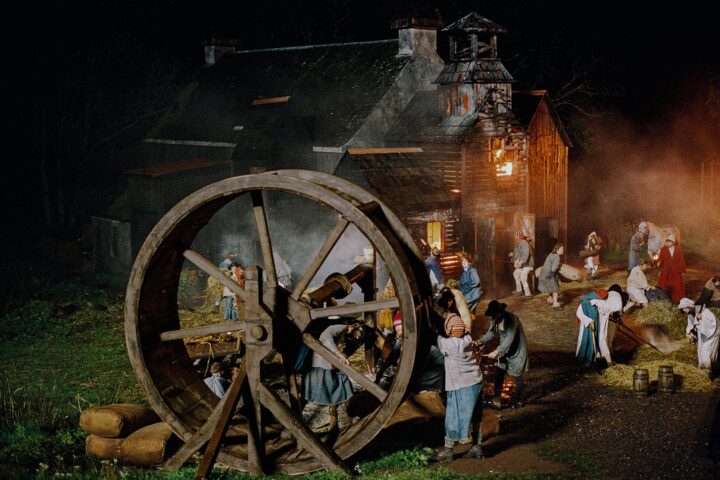
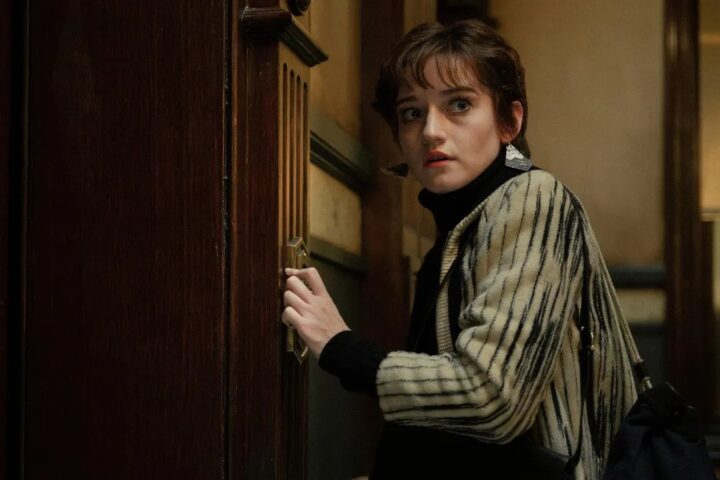
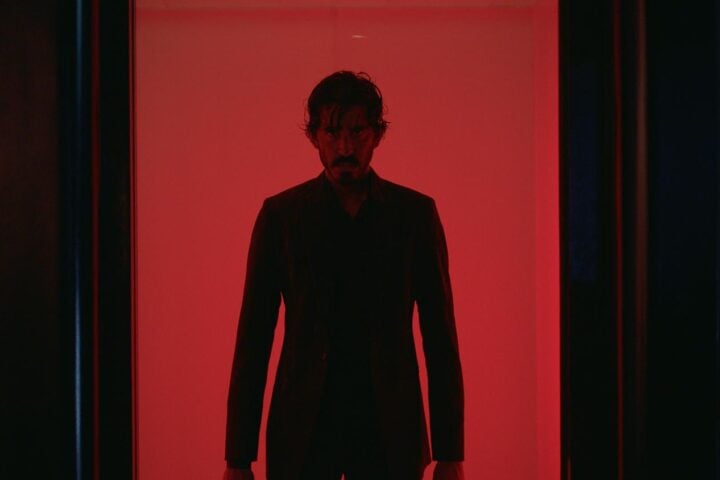
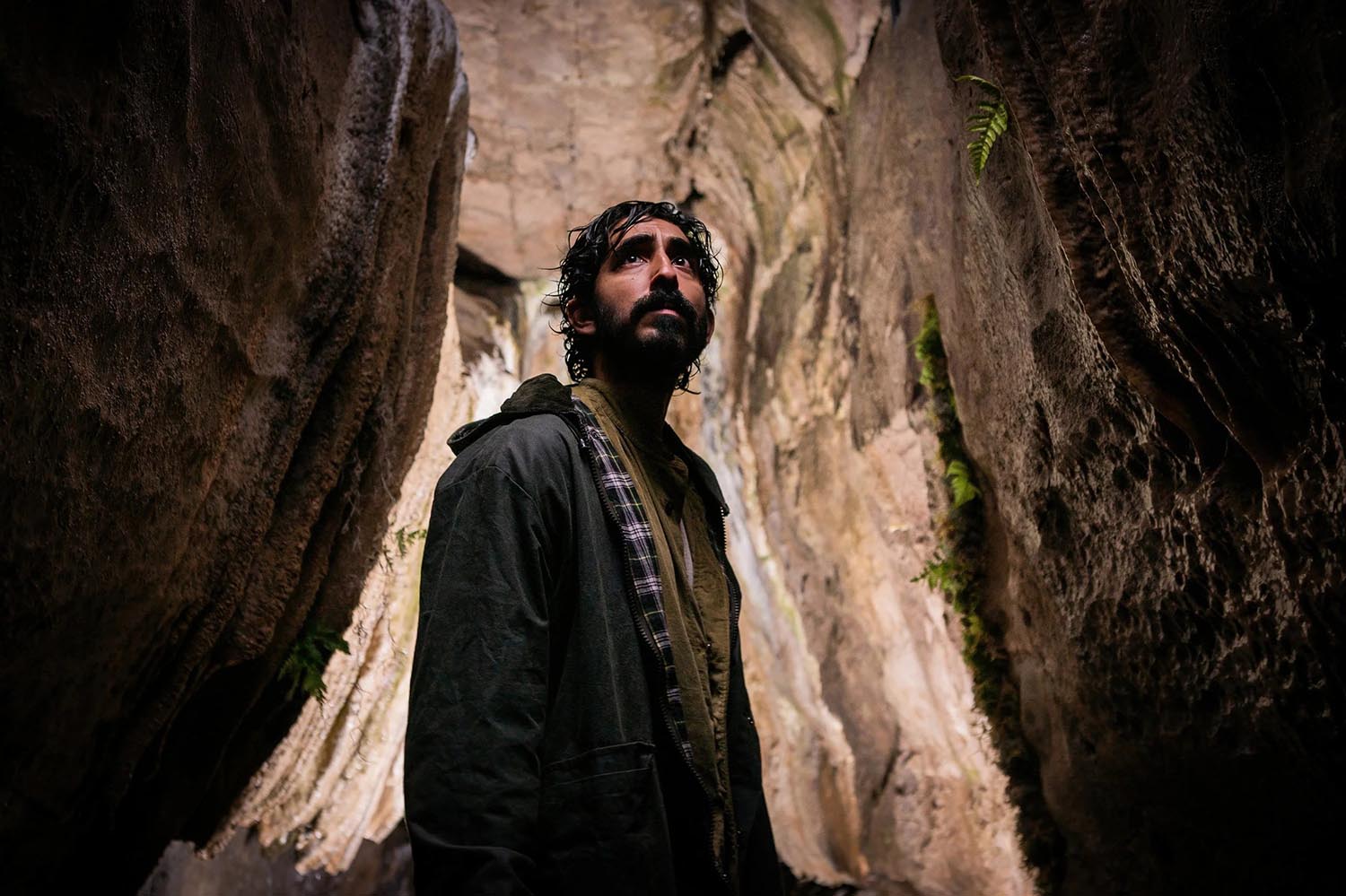
Set in 1976, Rabbit Trap follows a married couple who’ve moved from London into an isolated cottage in Wales. Daphne (Rosy McEwen) is an electronic musician, not famous but influential, as she puts it, who specializes in manipulating field recordings. Her husband and assistant, Darcy (Dev Patel), suffers from nightmares by night and wanders the marshy countryside with a microphone by day, recording material for Daphne’s next project. The morning after he captures a ghostly sound near a circle of mushrooms, a child (Jade Croot) oddly knowledgeable about trapping and local folklore shows up on their doorstep and slowly begins to infiltrate their home.
Rabbit Trap invites comparison to Flux Gourmet and Enys Men, films in which sound is a character in its own right. Chainey’s background as a poet comes through in the script, and all three leads bring out the rhythm in their lines, drawing out the silences between each calibrated phrase. Shadowy natural lighting encourages us to pay close attention to auditory cues. The characters’ own field recordings serve as a basis for the original score by Lucrecia Dalt, which is rich in eerie distortions and ethereal wails that lend an uncanniness to otherwise ordinary images, or heighten the surrealism of others. Audio decay enters though the ear, just as the literal decay of the bogs begins to encroach on the interior of the cottage.
Rabbit Trap is also beautifully shot, and not without inventive visual tricks, as when Daphne allows a spider to crawl from her hand onto a windowpane, through which she sees the boy watching their house from the hillside. But it’s when the film plays in the gaps between sound and image that it’s most disturbing. Sound effects often supersede the images, hinting at unseen presences. Rare is the horror film that draws on fairy mythology, but these aren’t your typical fairies. Echoes and murmurs in the fog, harbingers of rot, they’re sonic wills o’ the wisp following inscrutable rules that only Croot’s character seems to understand.
Throughout the film, such willingness on Chainey’s part to withhold crucial visual or sonic information signals a refreshing trust in the viewers to exercise imagination and make their own connections. A scene in which Darcy shares a recording with Daphne, of a story from his past that he doesn’t yet have the strength to say directly, is affecting precisely because we can’t hear his words but can see how they move her, as she listens through her headphones.
As it turns out, horror is a genre perfectly suited to Chainey’s soundtrack-forward style of filmmaking. His use of sound effects plays with the psychological phenomenon that what we imagine is almost always more terrifying than what we can see, since we know a thing primarily by seeing it, and knowledge dispels fear. Rabbit Trap’s climactic scene is pointedly not a visual set piece, hinging instead on a bedtime story the images of which live solely in our minds. By not definitively putting the film’s sources of horror to rest, this ending presents a view as despairing as it is poignant, of storytelling as a trap we set for ourselves and willingly trip.
Since 2001, we've brought you uncompromising, candid takes on the world of film, music, television, video games, theater, and more. Independently owned and operated publications like Slant have been hit hard in recent years, but we’re committed to keeping our content free and accessible—meaning no paywalls or fees.
If you like what we do, please consider subscribing to our Patreon or making a donation.