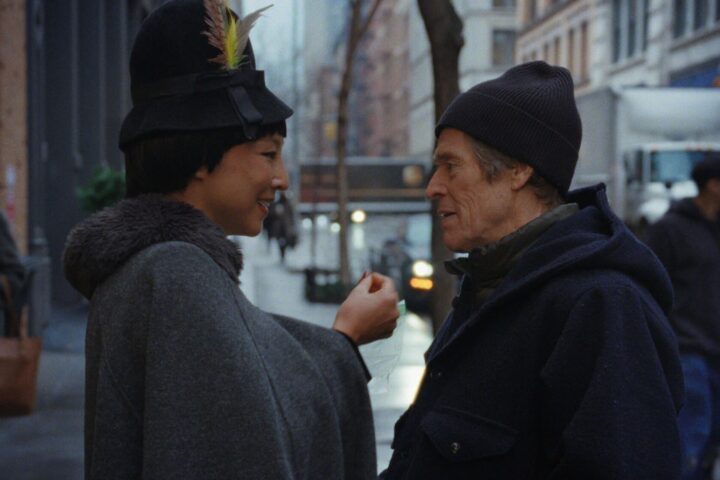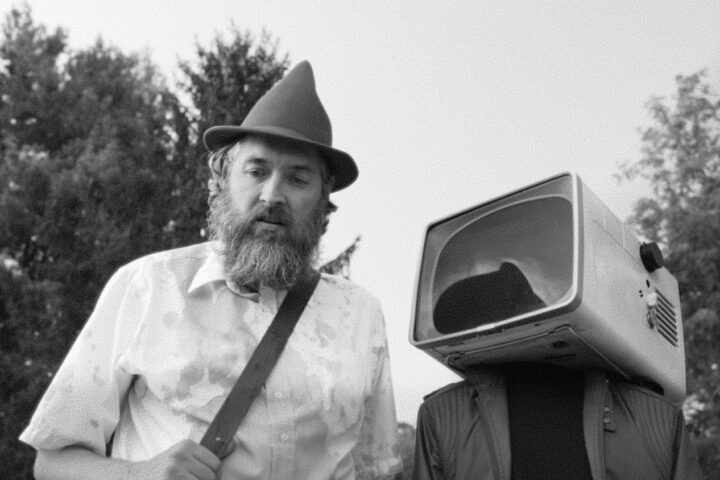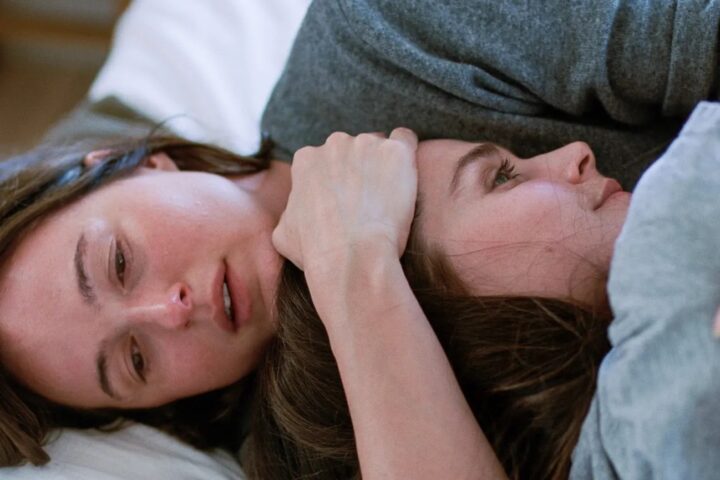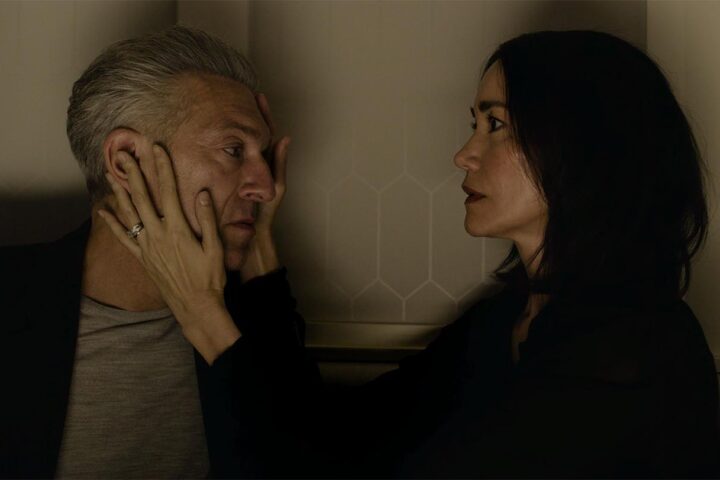
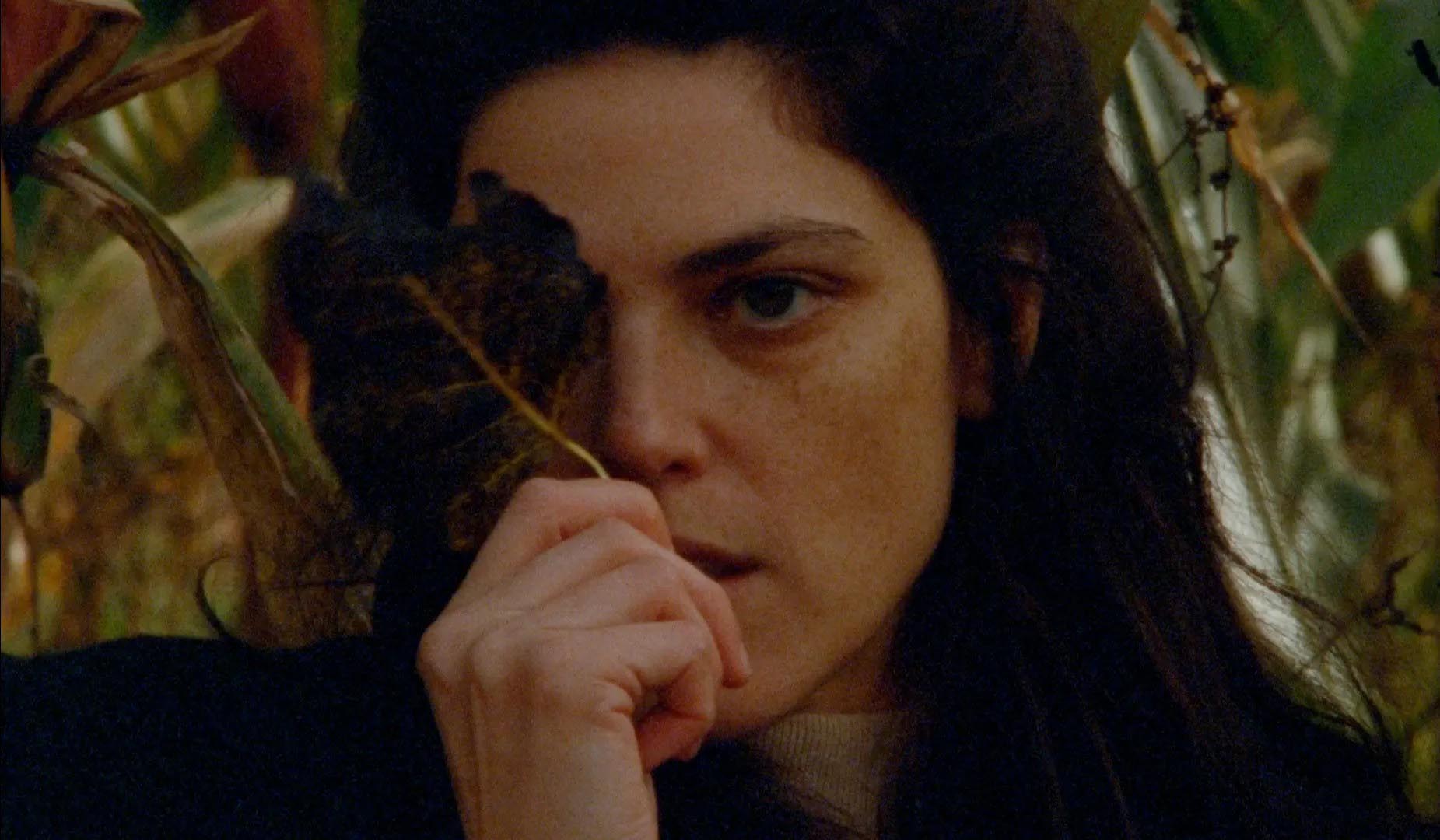
With Invention, director Courtney Stephens and writer-actor Callie Hernandez tell a very “American” story. In spite of its disarming, self-deprecating tone, the film depicts a culture of artifice held together with little more than dodgy credit and naïveté, where we’re happy to celebrate scammers if they can bamboozle enough of us into investing in their “therapeutic objects.” Invention, in this land of boosterism, has as much to do with reinventing the self as it does with patenting ideas for novel stress-reduction gadgets.
Invention blends fiction and autobiography to fascinating implications. The plot follows Carrie (Callie Hernandez), a cynical woman whose rather idiosyncratic father has recently died. Hernandez plays a lightly fictionalized version of herself here, with her real father, likewise deceased, making ghostly appearances throughout the film via various ’90s infomercials, in which he leverages his MD to hawk miracle cures beyond the pale of Western medicine.
Dr. J leaves Carrie a patent for an “electromagnetic healing device,” along with the prototype. While coming to terms with her grief, she navigates what an executor calls the “legal limbo” of her father’s estate. The appearance in the film of an Alice in Wonderland-themed corn maze becomes a fitting image for this dual process, where nothing is firmly rooted in reality.
For much of the film, Callie’s expression hovers between boredom and bemusement at the credulity of others she cannot share. The plot meanders at a stoned pace, its images suspended in a thin glaze. Non-naturalistic performances create the impression that characters are played by non-actors. The effect is further enhanced by a synth soundtrack that toes the line between elevator muzak and eerie jazz worthy of Angelo Baladamenti.
All this lo-finess gives the film a charming, intimate feel while furthering its themes of artifice. At a glance, it might resemble a documentary, with a handful of scenes preceded by a crewmember clapping their hands to facilitate sound synchronization, or even reshot to include dialogue improvised on set, reminding us of the porous membrane between reality and fiction.
Hernandez and Stephens’s script crackles with a dry, offhand humor slipped where least expected, but this lightness is deceptive. In this fake-it-till-you-make-it society, not even death is the baseline reality that it would seem. Despite one of Dr. J’s cooky patients suggesting that he was “offed” to protect pharmaceutical interests, it’s implied that this man who dedicated his life to selling miracle cures succumbed to cancer. Conspiracy theory, the shadow twin of reckless self-deception, lurks just under the surface of normality.
Invention never quite culminates in anything, its narrative strands fraying at the ends. Whether or not this anti-climax intentionally reflects the insolubility of grief, we’re left with the haunting image of a digital castle, arising from a montage of infomercial snippets. Strobing colors recall 2001: A Space Odyssey’s Star Gate sequence. It’s tempting to say that Invention is itself the real healing machine, but perhaps it would be more apt to call it a diagnostic device, issuing a dire warning that, in America, we may be long-since trapped on a plane of pure virtuality.
Since 2001, we've brought you uncompromising, candid takes on the world of film, music, television, video games, theater, and more. Independently owned and operated publications like Slant have been hit hard in recent years, but we’re committed to keeping our content free and accessible—meaning no paywalls or fees.
If you like what we do, please consider subscribing to our Patreon or making a donation.