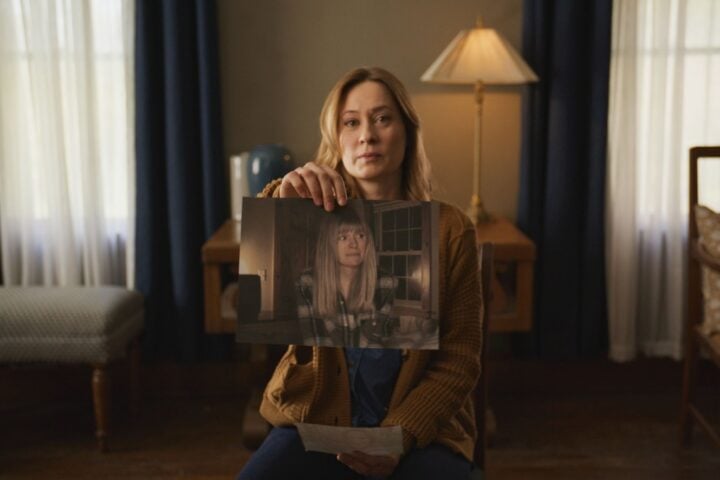
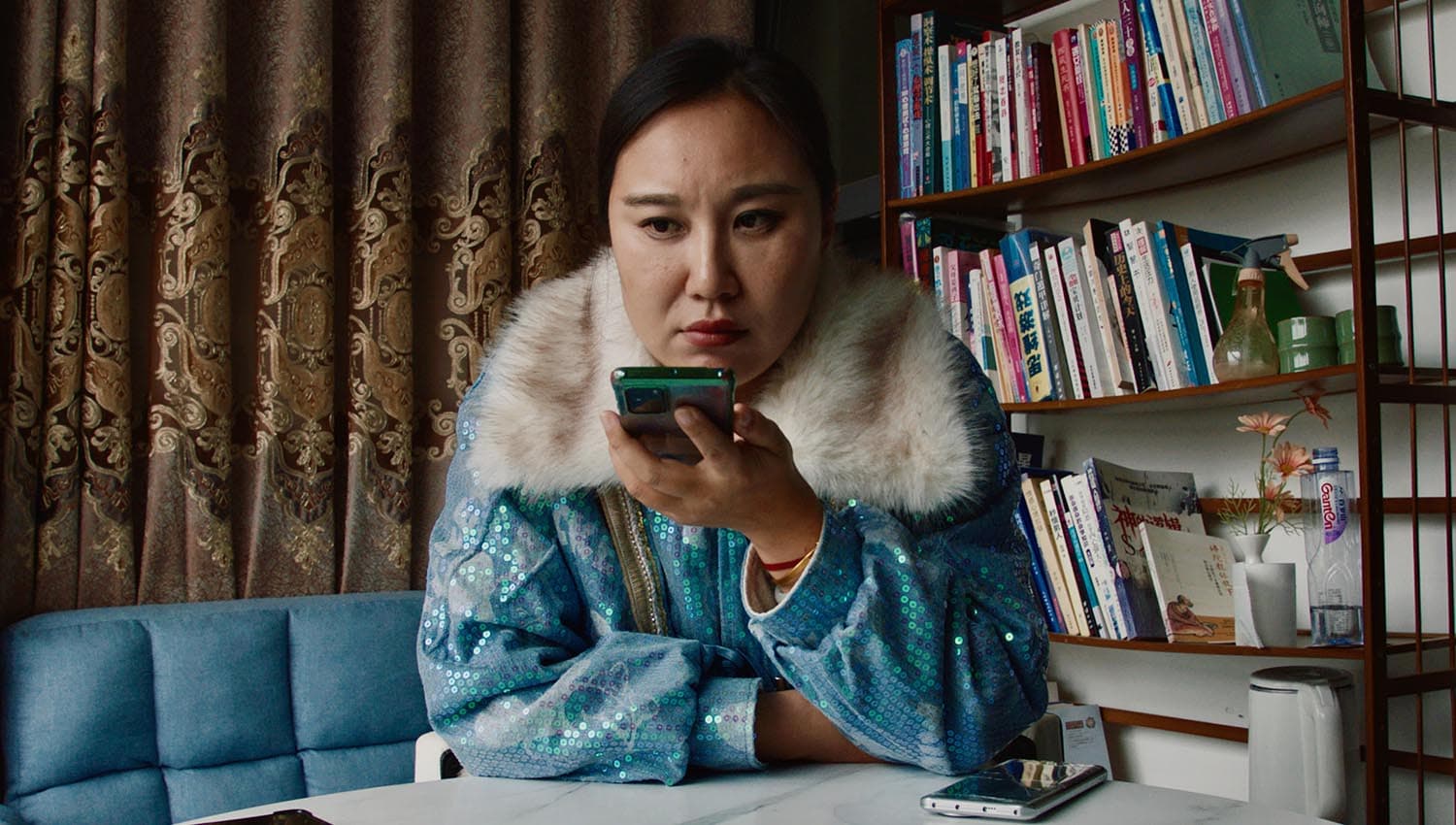
Elizabeth Lo’s new documentary, Mistress Dispeller, opens with a title card explaining that nothing we’re about to see was scripted or re-enacted. At first, this seems like a pretty generic bit of documentary boilerplate, but once we’ve seen how intimate and unguarded the things that Lo gets on camera are, as well as how elegantly they’re captured, the knowledge that it was all achieved completely organically becomes pretty remarkable.
The title of Lo’s film refers to a private investigator-like service available to married women in China who’ve discovered that their husbands are cheating on them. Unlike a private investigator, the dispeller isn’t tasked with gathering evidence of the affair in order to expedite the divorce process but to chase the other woman away so that the marriage can continue.
The documentary proper begins with middle-aged married couple Mr. and Mrs. Li having dinner at home. At this point, Mr. Li believes that he’s taking part in a documentary about love and dating in modern China. During the meal, the husband and wife barely talk to one another, with Mr. Li opening his mouth only to shovel in more food and explaining that he’ll be going out once they’re done. On his way out, the camera captures his reflection dancing across the smiling family photos that line the walls. And as we watch the door close behind him, the mirror next to it catches his wife’s pained expression—a perfectly composed image of an unhappy marriage.
Mrs. Li knows that her husband is cheating on her but is ashamed to confront him directly, so she calls professional dispeller Wang Zhenxi to help resolve things. In their first meeting, Mrs. Li admits that she “could imagine an affair happening in any family, except my own.” Later, with a mixture of rage and sorrow, we’ll hear her tell her husband that she “doesn’t know where his heart has gone.” The film abounds in such eloquent and poignant musings from its subjects.
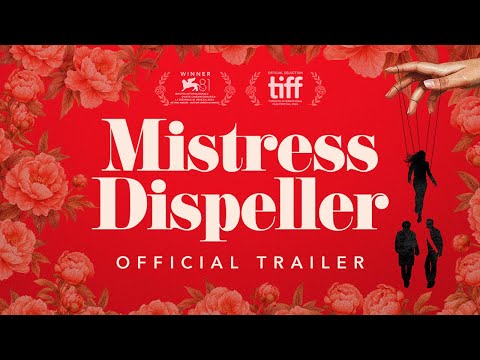
The melancholy of the Li household is quickly broken by the introduction of Wang, who performs her role with the zealous intensity of someone who doesn’t just love their job but really believes in it. Her zany schemes involve having Mrs. Li introduce her to Mr. Li as a new friend. While the three of them are having lunch, Wang slyly instructs Mrs. Li to storm out so that she can cajole the husband into confessing. Which he does almost immediately, despite the fact that he’s just met this woman, thinks that she’s a friend of his wife, and knows that everything he says is being recorded. It’s a truth known to priests, bartenders, and homicide detectives the world over: Guilty people really do want to unburden themselves.
From there, Wang convinces the husband to introduce her to his mistress, Fei Fei, and slowly works to persuade them to break up. It’s all so profoundly, almost hilariously unhealthy: a cottage industry that exists to help married couples not talk to each other. It’s even unnerving witnessing how excited Wang seems by her work and the schemes she gets to construct, often seeming like she’s one bright idea away from donning a trench coat and a fake moustache. But Mistress Dispeller isn’t a damning expose of the industry. In fact, it shows little desire to judge anyone, which is perhaps part of the reason that all of the participants re-consented to taking part once the shoot concluded and the film’s true subject was made clear to them.
The members of the love triangle are each given equal chance to explain themselves. Some of the ideas about relationships that they espouse seem pretty questionable; for example, Wang is convinced that all mistresses are essentially unhappy women, lacking in self-esteem. But they’re all compassionate toward each other and Mistress Dispeller shows the same compassion toward them. Lo is nothing if not sensitively attuned to the feelings of her subjects and how they’re shaped by cultural norms, and her film is mostly an investigation into what people are really looking for and why it’s so hard to find, or to keep once they’ve found it.
Here and there, this wise and melancholic film inserts shots and montages that place Mr. and Mrs. Li’s domestic drama in a larger context. Drone shots capture bustling walkways and people going about their lives within towering apartment buildings. We stop by briefly at speed-dating events and matchmaking services that hawk their philosophies of love. One sequence shows lines of bachelors and bachelorettes, with the camera slowly panning across their faces to the tune of an upbeat French pop track. And the cumulative effect of all this material is a profound sense of what it means to be looking for “the one” in a country of 1.4 billion people.
Since 2001, we've brought you uncompromising, candid takes on the world of film, music, television, video games, theater, and more. Independently owned and operated publications like Slant have been hit hard in recent years, but we’re committed to keeping our content free and accessible—meaning no paywalls or fees.
If you like what we do, please consider subscribing to our Patreon or making a donation.